
- 😷 A fairly low-key week for the most part, as I was working as best as possible while getting over the cold I got last week.
- 🚀 Saturday I did make it out to our final staff meeting for Norwescon, where we close out this year’s convention with going over our “onions and roses”; the things that could have gone better, and the things that went well. After that was the post-convention social. Nice way to wrap up the week.
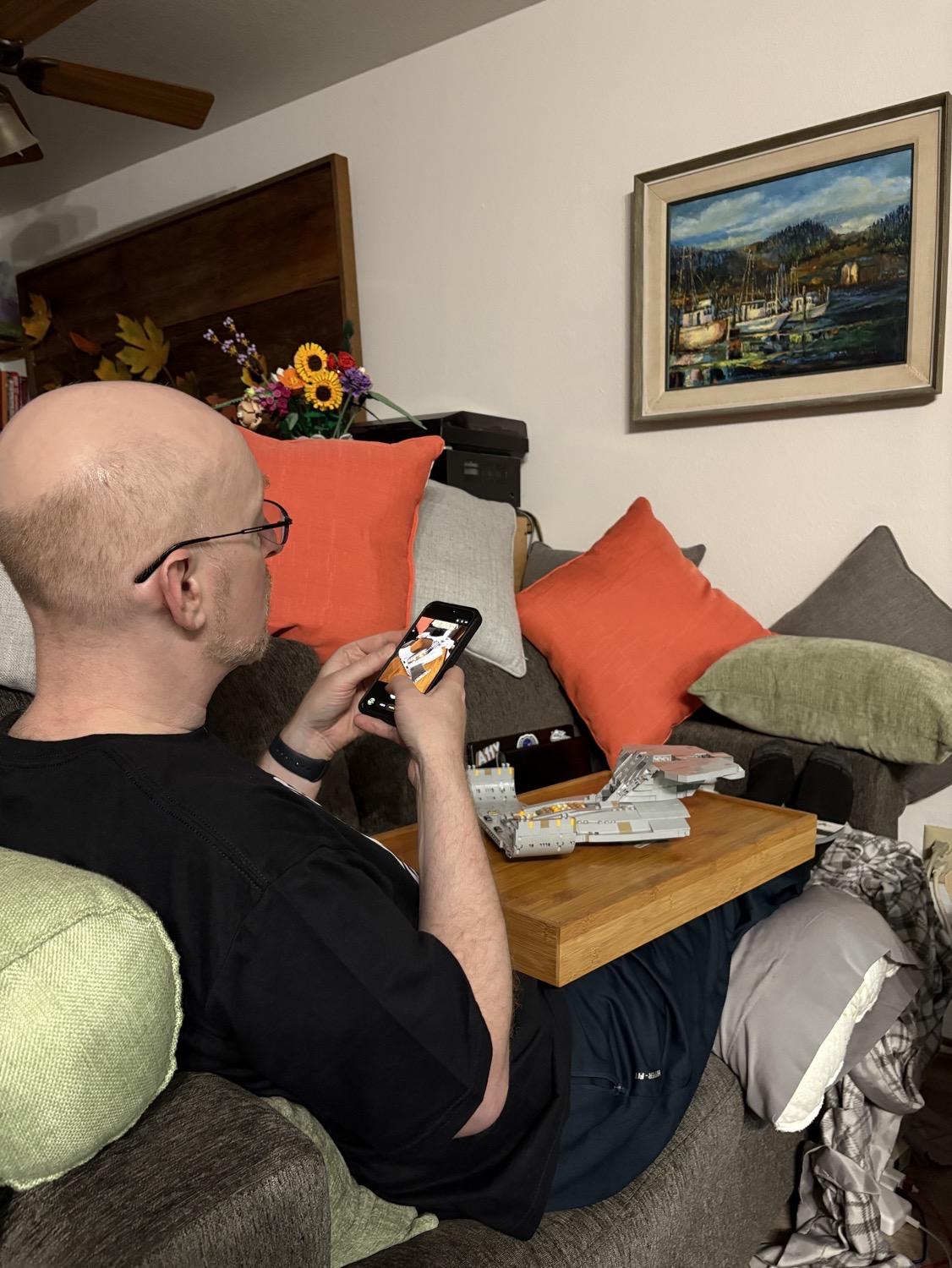
📸 Photos

📚 Reading
Finally got around to getting to the next book in my Hugo Best Novel reading project and finished Robert Charles Wilson’s Spin.
🎧 Listening
This week’s new album was Laibach’s just-released Musick, which I am very much enjoying. They’ve gone full-on electropop, while still being very Laibach, leaning into the “taking over the top goth-industrial seriousness to hilariously ridiculous extremes” aesthetic that they’re so good at. Definitely pushing my “perkygoth” buttons.
🔗 Linking
-
The M2x2: A neat 3D-printed enclosure for a Mac Mini, designed to look like a classic LEGO computer brick.
-
Alexander Hanff at That Privacy Guy: Google Chrome silently installs a 4 GB AI model on your device without consent. At a billion-device scale the climate costs are insane.: “Google Chrome is reaching into users’ machines and writing a 4 GB on-device AI model file to disk without asking. The file is named
weights.bin. It lives inOptGuideOnDeviceModel. It is the weights for Gemini Nano, Google’s on-device LLM. Chrome did not ask. Chrome does not surface it. If the user deletes it, Chrome re-downloads it.” -
Sergey Tkachenko at WinAero: Google Chrome Secretly Downloads Huge Local AI Models: Includes pointers for removing the 4 GB file, though you’ll need to figure out where to add the backslashes in the file path.
-
Kai Kupferschmidt at Science: Reality Check: “[Hany] Farid, a specialist at the University of California (UC), Berkeley, is one of the world’s leading experts in determining whether a photo or video has been manipulated. Since helping to found the field of digital forensics more than 20 years ago, he has kept pace with massive technological change.” Includes some good tips on using real-world geometry to spot some common errors in AI-generated images.
-
whatcable: “macOS menu bar app that tells you, in plain English, what each USB-C cable plugged into your Mac can actually do.”
-
Terry Godier: The Boring Internet: “Personal sites are coming back. RSS feeds are coming back. Webrings are coming back. Mastodon is, for all its quirks, a federated SMTP-shaped thing for short messages and not a platform in the old sense. Small internet radio stations still broadcast from servers with ugly URLs. Newsletters still arrive through SMTP. Software projects still publish changelogs through feeds. ¶ Communities still gather in places too small to be interesting to investors.”