The great things you find while cleaning out drawers for a move… #djwoody #djwüdi #thelostabby #gigsmusictheatre #anchorage #alaska #1990s #goth #industrial


Enthusiastically Ambiverted Hopepunk
Music is a necessity. Though I focus mostly on alternative/industrial/EBM/electronic styles, my tastes are eclectic and wide-ranging.
The great things you find while cleaning out drawers for a move… #djwoody #djwüdi #thelostabby #gigsmusictheatre #anchorage #alaska #1990s #goth #industrial
We’re once again in the holiday season, which means it’s time for everyone’s favorite winter song debate: Is Baby, It’s Cold Outside acceptable or not?
Personally, while I certainly understand why lots of people today find it objectionable (and are even rewriting the lyrics), particularly due to the “hey, what’s in that drink?” line, I think it’s important to look at the original context of the song:
I’ve heard the take on “Baby” as “rapey” a couple of times over the years and the concern about the song usually centers in on one line: “Say, what’s in this drink,” which many contemporary listeners assume is a reference to a date rape drug. But narrowing in on this particular line divorces it from its own internal context, and having only passing familiarity with the song divorces it from its cultural context.
The structure of “Baby” is a back and forth conversation between the male and female singers. Every line the woman utters is answered by him, until they come together at the end of the song. When we just look at “Say, what’s in this drink,” we ignore the lines that proceed and follow this, which are what indicates to the listener how we’re supposed to read the context.
Personally, I’m a fan of the song. And thanks to that Wikipedia article I linked up above, it turns out that though written in 1944, it was broadly popularized in the 1949 film Neptune’s Daughter (which I’ve never seen), in which it’s performed twice: once by Ricardo Montalbán (Khan!) and Esther Williams, which in staging, I have to admit, seems to hew fairly close to today’s interpretation of the song, with Montalbán coming across as predatory; then again by Red Skelton and Betty Garrett, in which the roles are reversed as Garrett tries to keep Skelton from leaving.
\[embed\]https://www.youtube.com/watch?v=7MFJ7ie_yGU[/embed]
If you’re not a fan, I totally understand — but for me, it will remain a staple of my winter playlists.
While getting ready for bed, I noticed I’d gotten a souvenir from Frank N. Furter, who sat on my lap during part of “I’m Going Home” and kissed my cheek as he moved on. 💋 #rhps #rockyhorrorpictureshow #lettherebelips

Don’t dream it…be it! #rhps #rockyhorrorpictureshow

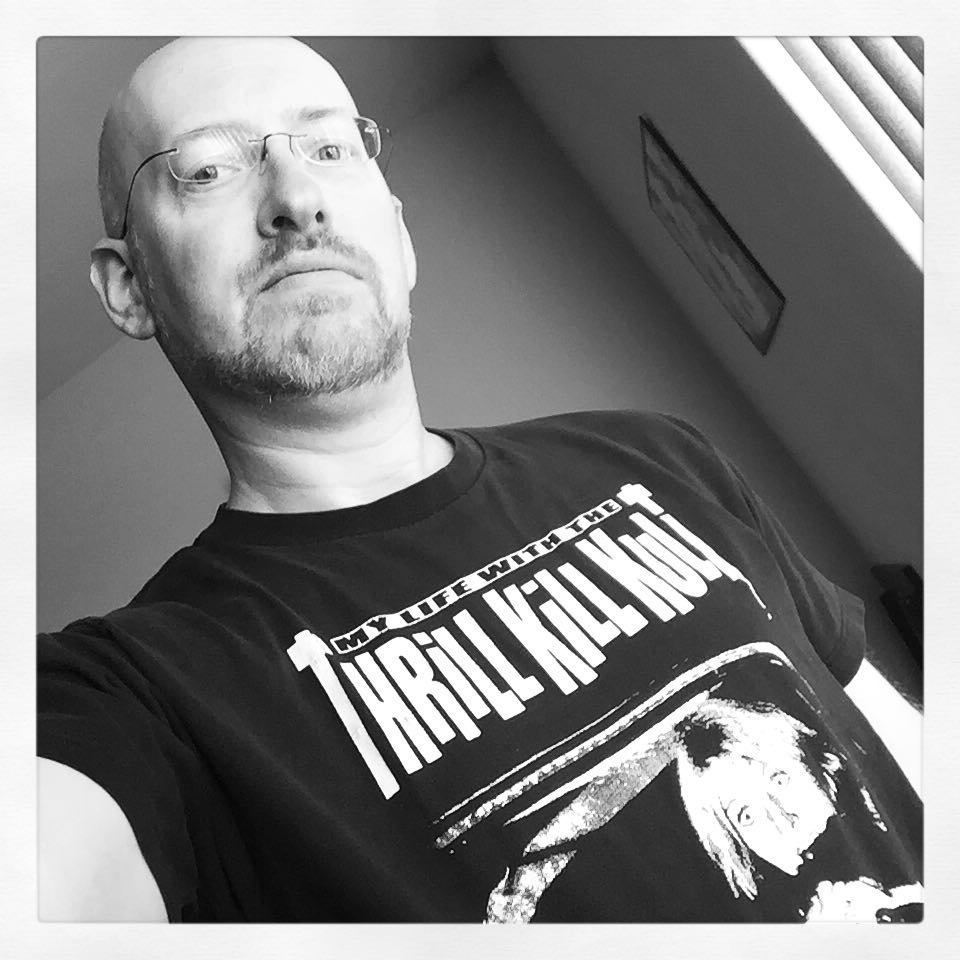
Dug down to one of my older t-shirts today. I don’t get out to many concerts; I’m glad that #mlwttkk was one that I made it to. (157/366)
Gotta keep practicing! (38/366)

DJ Wüdi emerging from hibernation and prepping for @norwescon #nwc39. Gear is an iPad and @numark_dj iDJ Pro. (2/366)

Lo-Fidelity All Stars’ “Battle Flag” is one of the few times when I’ve heard a group release a de-profanitized radio-friendly edit of a track that I actually prefer to the original uncensored version. Not that I have any problems with the uncensored version, but rather than simply mask out the profanity with silence, beeps, or word substitutions, they use a drawn-out stutter effect on the words immediately preceding or following the censored word. Not only is it a neat sounding effect on its own, but it’s an effect that they use elsewhere in the song as well, so it doesn’t stick out as much due to only appearing when they’re removing words.
Plus, it’s a pretty cool song, whichever version pops up. Good sound, heavy beats, some organ riffing, and a nice slow-ish tempo that works really well on a dance floor.
For comparison purposes…
Original:
Radio edit:
Normally I’d wait until a night out at the Mercury to debut this, but I don’t know when I’ll next be able to be all goth clubby, so here we are. Thanks to Mickey for posting a photo of someone else with this shirt, and Gracy for tracking down where to buy it. :D #goth #eldergoth #depechemode #joydivision #thecure #messingwithpeoplecanbefun

I’m sadly lacking in photos (that I haven’t already posted) worthy of #worldgothday, so in lieu of a photo, here’s a #throwbackthursday sketch given to me in 1998 by Jon Hannah, back when I was doing the alt/goth/industrial DJ thing at Gig’s (and/or the Lost Abbey). On the original, text underneath reads, “A DJ’s life is full of difficult choices.”
