Once again, I’ve read through all of the nominated works for this year’s Philip K. Dick Awards — and there’s still almost two full months to go before the award ceremony! I think this is the fastest I’ve gotten through all of the year’s nominees. (Of course, it helped that two of them were short enough that I got through them both within 24 hours.) Here are my thoughts on each of the nominated books, in order from my least favorite to my personal favorite and pick for the award (if I got a vote, which I don’t, and I’ve yet to pick a winner, so perhaps it’s best not to put too much stock in my opinion…).
- The Mercy Journals, by Claudia Casper: Not as much of a dreary slog as I’d anticipated (not due to the author at all, but to the setting), but still a post-apocalyptic “everything sucks and we’re trying desperately to survive” slog. While I can recognize that it’s well written, I was tired of post-apocalyptic slogs even before it looked like they were going to be even more prescient than I’d ever thought (this one even has a US/Mexico border wall), which I know colors my impression of the book. At least this one does have moments of peace, beauty, and hope here and there; even filtered through the lens of a wounded, PTSD-suffering ex-soldier, those moments were appreciated.
- Graft, by Matt Hill: A rather bleak and dismal look at human trafficking in a future where the victims are cybernetically modified on the other side of a trans-dimensional portal. I’m not entirely sure if it was my unfamiliarity with British slang or the author’s style, but it took a long time for me to find the rhythm and really get into the book; that, coupled with the near-total lack of joy or any form of happiness, made this one a bit of a slog for me.
- Consider, by Kristy Acevedo: Apparently I enjoy pre-apocalyptic stories more than post-apocalyptic stories. This was an enjoyable read, as the teen heroine struggles with family and anxiety as the end of the world approaches. The mystery of the vortexes and what, if anything, lies on the other side had me unsure just how the book would wrap up, and while I’m not entirely sure about the end, I don’t find it entirely objectionable, either. Not sure if this will be my final pick, but it was the most enjoyable for me so far (with three of the six nominees read).
- Super Extra Grande, by Yoss, translated by David Frye: A fun, quick read. In a future where faster than light travel was discovered by an Ecuadorian priest, and Spanglish is the common language used among the seven known intelligent races, a “veterinarian to giants” has to rescue two people from a 200-kilometer wide amoeba. Neat to see a future where Hispanic culture has become prominent, and there’s a lot of humor (and one literal laugh-out-loud moment for me).
- Unpronounceable, by Susan diRende: The funniest of this year’s PK Dick nominees, and another short, quick read. When professional diplomats can’t make any headway in connecting with an alien race of pink blobs, who better to send than a smartass Jersey girl? I got a lot of laughs out of this one, and Rose makes a perfect (if nontraditional) ambassador.
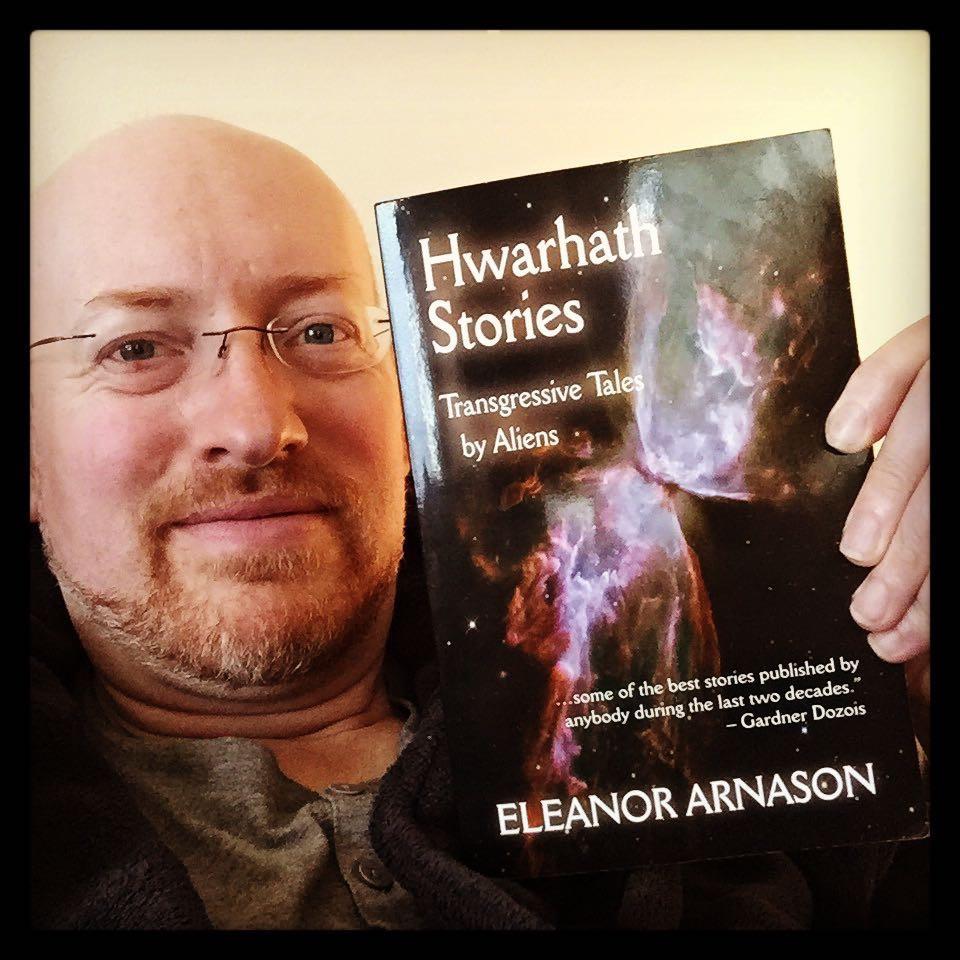
- Hwarhath Stories: Transgressive Tales by Aliens, by Eleanor Arnason: Thoroughly enjoyed this one. A collection of stories, most essentially folk tales, all originally from the only other intelligent alien life humanity has encountered. Similar to us in many ways, dissimilar in others, the stories both expose us to the history and culture of this world and comment on its morals and beliefs…and, of course, by doing so, allows us to examine our own. It frequently reminded me of Barry B. Longyear’s The Enemy Papers, another collection of stories examining alien history and culture that I very much enjoyed (and now want to re-read, as it’s been a long time). Apparently I have a thing for sociological science fiction.