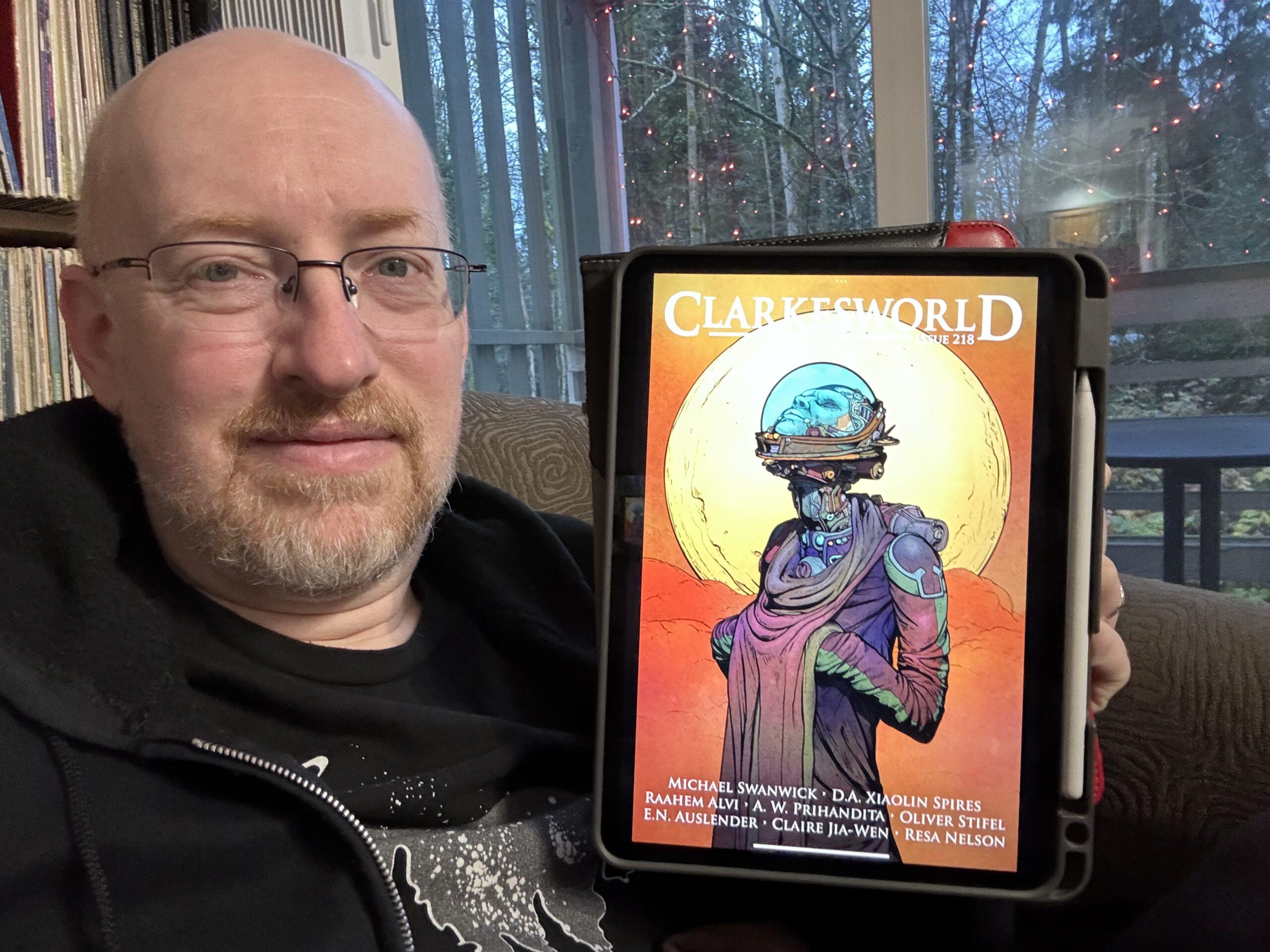
76/2024 – ⭐️⭐️⭐️
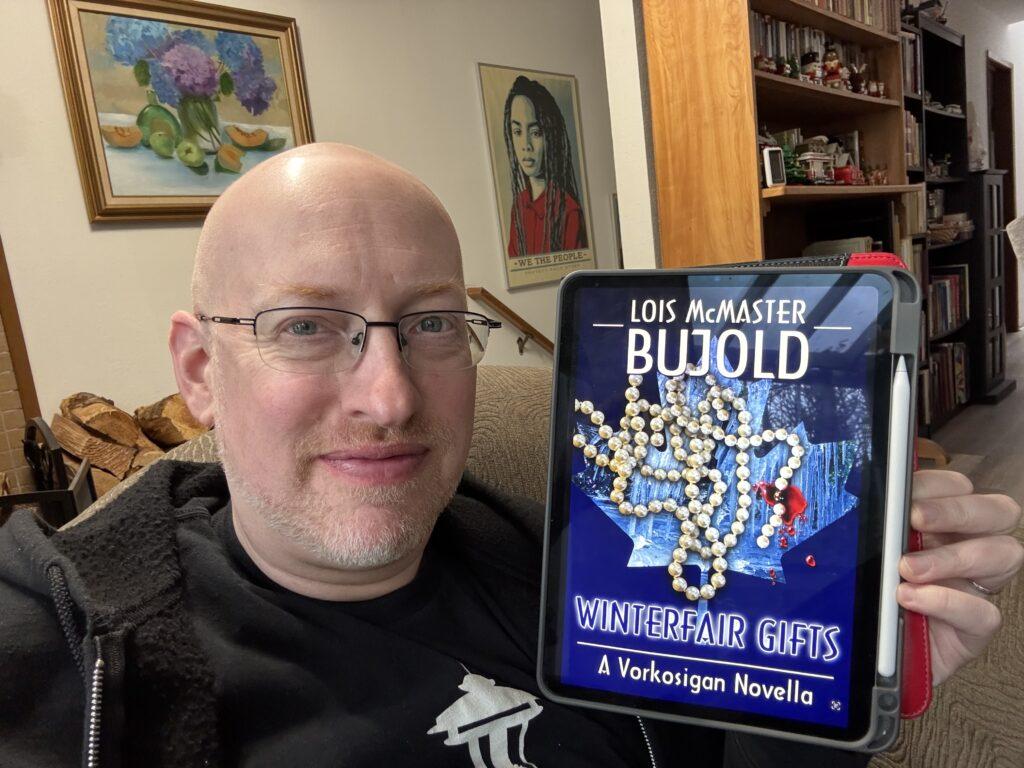
A fun, quick read, as two of Miles’ current and former staff uncover a plot to foil Miles’ wedding.

Enthusiastically Ambiverted Hopepunk
 Michael Hanscom
 76/2024 – ⭐️⭐️⭐️
A fun, quick read, as two of Miles’ current and former staff uncover a plot to foil Miles’ wedding.
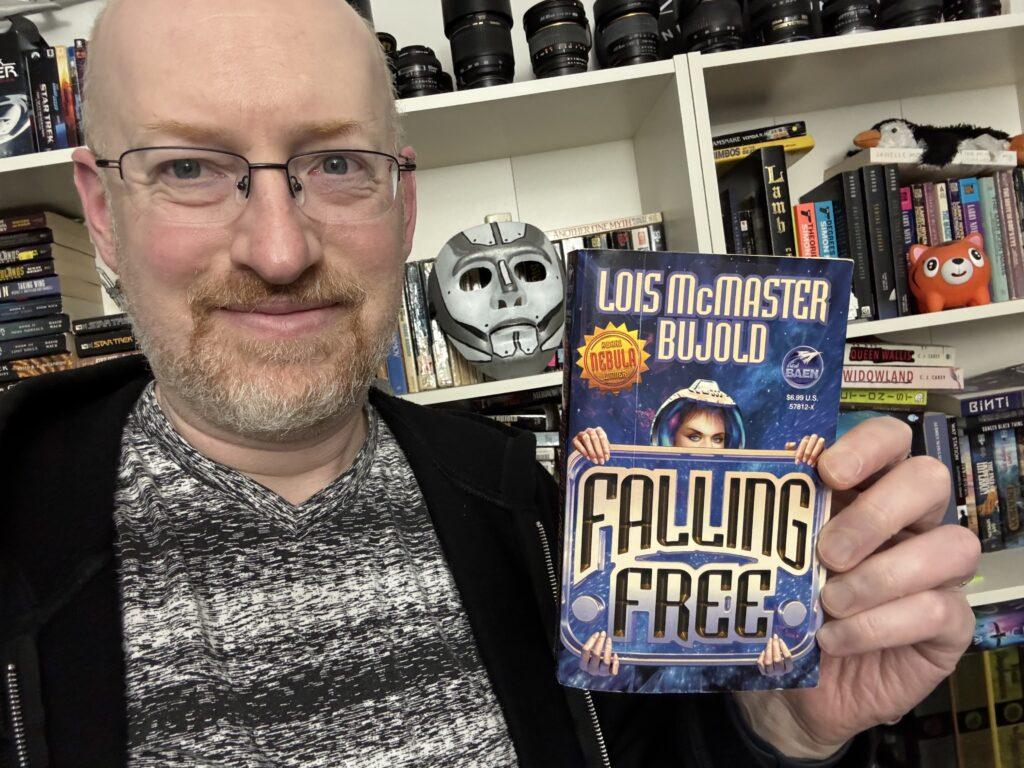
75/2024 – ⭐️⭐️⭐️
A two-century prequel to the Vorkosigan saga, as the Quaddies — humans genetically engineered for zero-G, complete with a second pair of arms rather than legs — make a break for freedom. Not quite as good as later Vorkosigan books, but also one of the earliest written, and still very enjoyable, with some neat feats of sci-fi engineering balancing out the less well-developed characters.
🎥 Carry-On (2024): ⭐️⭐️
This really wants to be a modern Die Hard — complete with opening with a shot of a plane landing directly overhead — but having just watched Die Hard (as we do every Christmas Eve), I can safely say this is no Die Hard. It’s paced a bit too slow for an action/suspense film (Die Hard is 15 minutes longer, but this one feels longer), Edgerton only seems to have one expression and doesn’t remotely embody the relatable “everyman” that Willis did, and too much of what happens happens because the plot needs it to happen, not because it makes sense. The most interesting part was a fun action sequence that’s shot entirely from within a car (which doesn’t involve any of the main characters). But at least the TSA gets their “no, really, they’re just good people trying to do their Very Important Jobs” propaganda in for the holidays!
(Spoilers follow…)
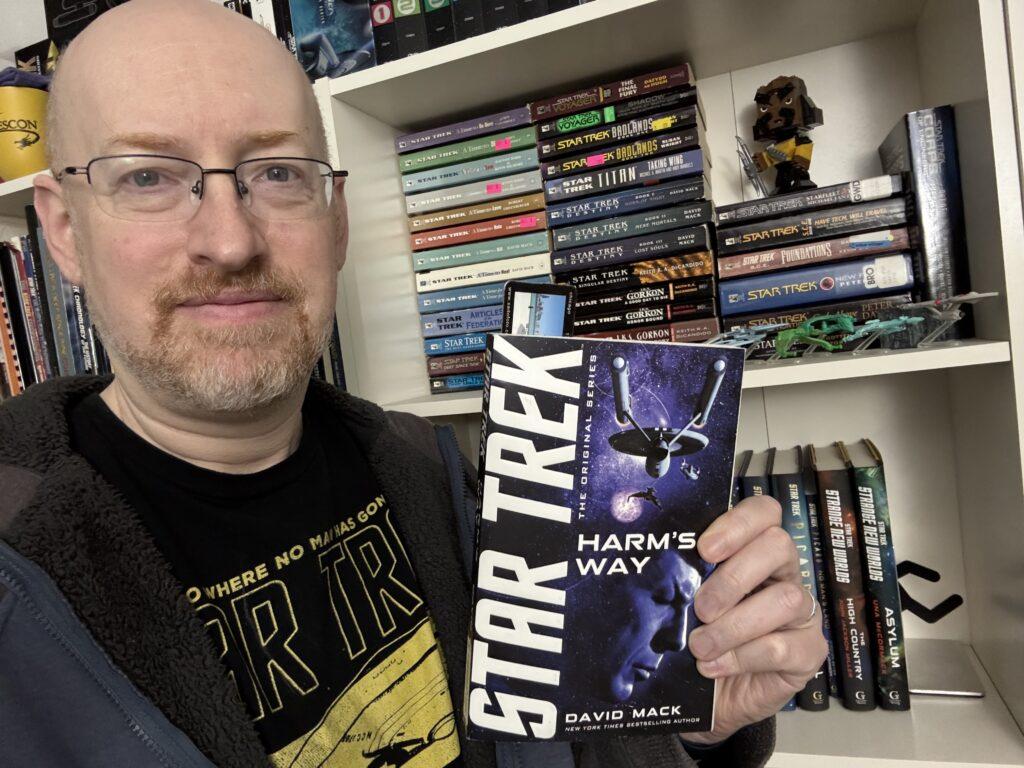
74/2024 – ⭐️⭐️
Though officially a TOS adventure, this is really mostly a part of the Vanguard spinoff book series, which I read so long ago as to have forgotten both characters and key points. As a result, it felt like I was reading a mid-series book, and missing much of the necessary context. The primary foe is so overwhelmingly powerful that there’s an extended battle sequence in the latter half of the book that feels very out of place; perhaps it works within the greater Vanguard storyline, but to me, it was just troubling and very un-Trek. Klingon characters include pre-“Day of the Dove” Kang and Mara, which does expand their characters in interesting ways and hints at background motivations for future Federation/Klingon developments, but also doesn’t really mesh with what I remember of Kang and Mara’s actions in the episode (though, admittedly, it’s been a few years since I watched it, and I’m relying partially on Memory Alpha’s plot summary here). All in all, an uneven Trek adventure, and not one of my favorites.
For my own purposes, a (not comprehensive) list of currently known milkshake ducks in my media libraries, how I’m treating their work in my own consumption habits, and any rationales or justifications for these decisions. You may not agree with any or all of this, and that’s fine. This is kind of an exercise to help me figure out why I’ve made the decisions I have, and perhaps, whether I should rethink or change those.
This is being actively updated as my mind processes, and likely will continue to be updated as I think and if (or, unfortunately, when) more people out themselves as belonging to this category.
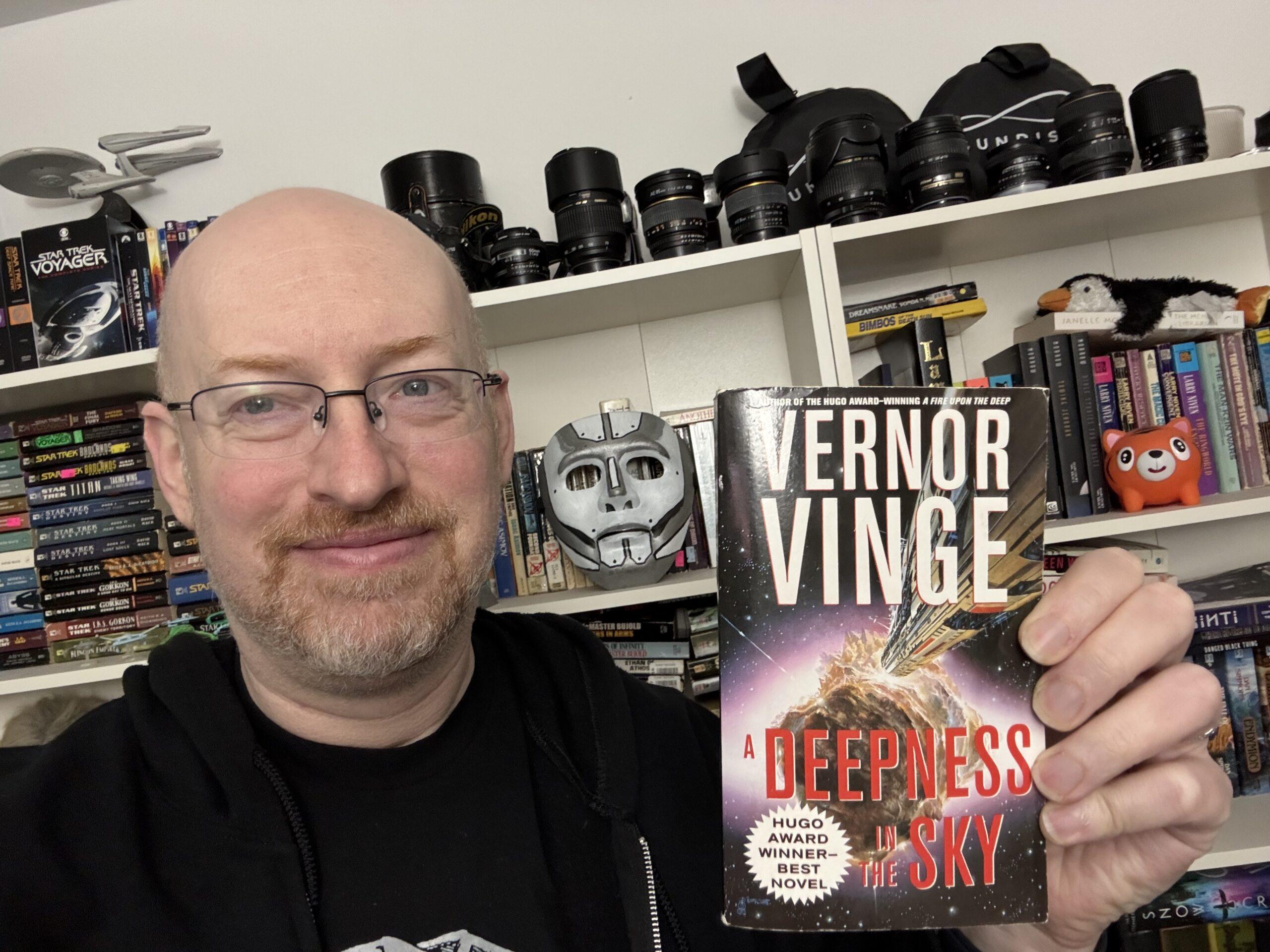
73/2024 – ⭐️⭐️⭐️⭐️⭐️ 2000 Hugo Best Novel
Interstellar travel spanning centuries, plans and plots spanning decades and more, first contact, an alien civilization presented in both very relateable and very alien ways…all sorts of good stuff here. Technically in the same universe as Vinge’s A Fire Upon the Deep, but so removed in space and time as to be standalone, with only a few connections to the other. Really enjoyed how Vinge presented the Spiders, and the revelations towards the end that I didn’t guess at all. An excellent read.
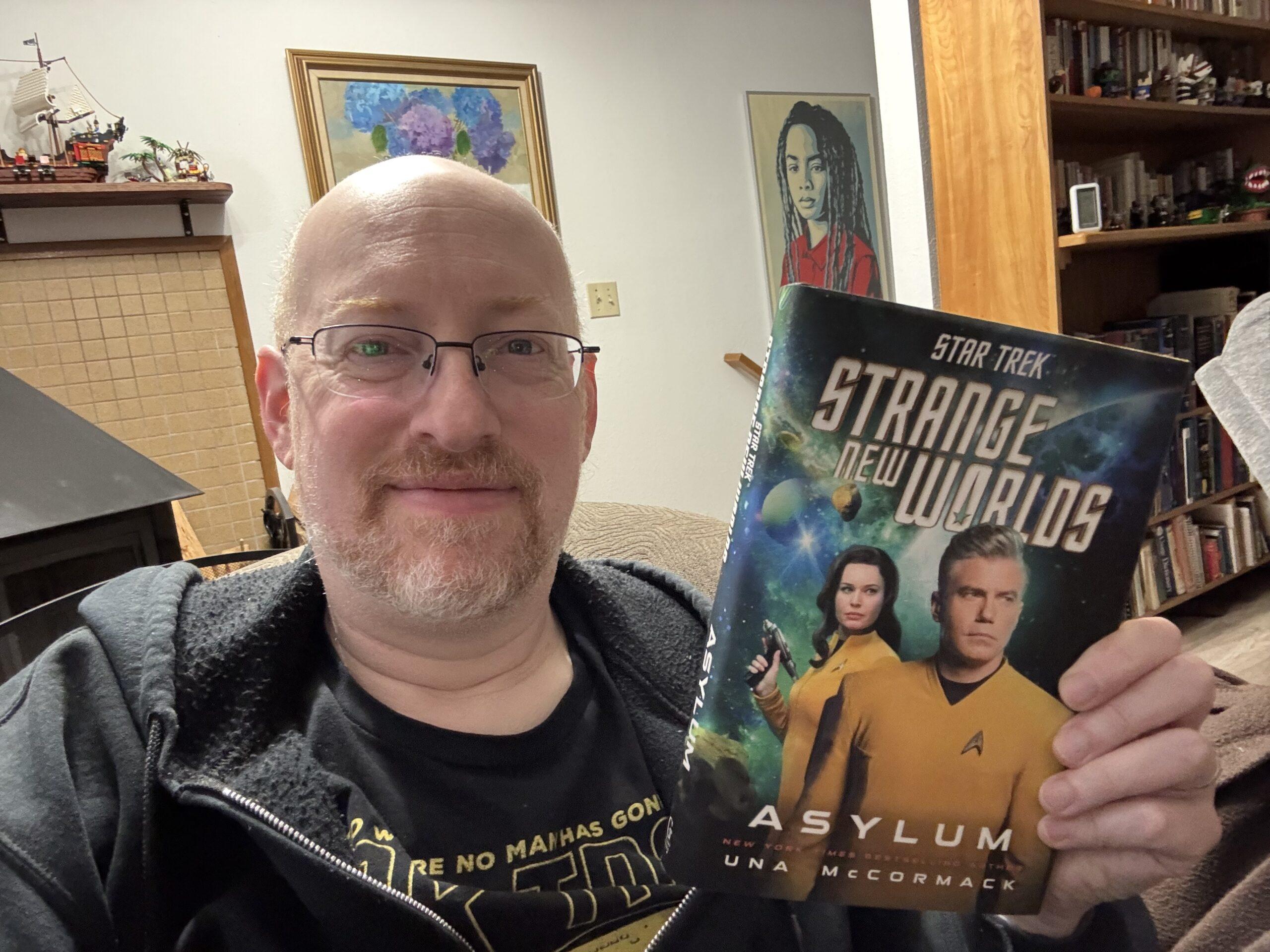
72/2024 – ⭐️⭐️⭐️⭐️
As always, Trek is at its best when it’s looking at modern issues through an SF lens. On the surface, this is about Pike and Number One at Starfleet Academy, paired with a later mission that ties back to those experiences. But when dealing with minority ethnic groups reacting to years of oppression, there’s a lot more there as well. Plus, of course, some very entertaining ties to wider Trek lore.
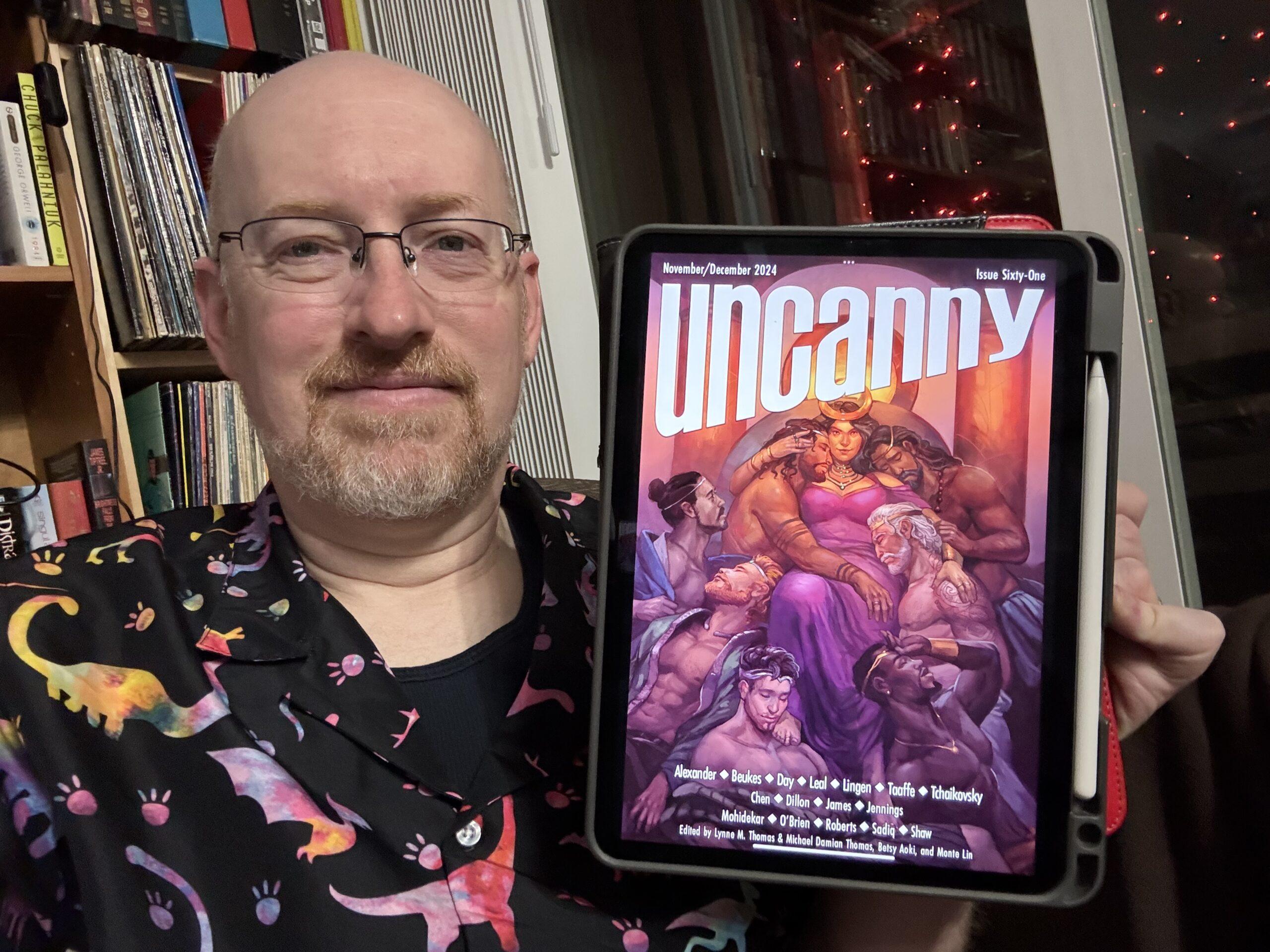
71/2024 – ⭐️⭐️⭐️
Favorites this issue were “Woodmask” by Adrian Tchaikovsky and “Ancestor Heart” by Naomi Day.
I’ve been reading John Gruber’s Daring Fireball for years. His posts generally fall into one of three categories: Apple and tech sphere commentary that I tend to respect and appreciate reading, even when I don’t necessarily agree; baseball blather that I don’t care at all about; and occasional current events and political commentary that sometimes works for me, sometimes doesn’t.
But last week he surprised me with a remarkably blatant and forthright declaration of uncaring privilege. I’ve let it sit for a few days, but kept coming back to it, so here we are.
In responding to a post by Anil Dash about Substack, primarily advocating for writers to stop calling their posts/newsletters “Substacks” and therefore doing Substack’s marketing for them, Gruber notes Dash’s reminder that Substack has no issues with platforming Nazis and others on the far-right.
And his take is, despite many people whose opinions he says he respects refusing to support Substack because of this policy, he hasn’t personally seen stuff like this, so he doesn’t care. Literally, that’s what he said:
I know a bunch of good, smart people who see Substack like Dash does, and refuse to pay for any publication on Substack’s platform because of their “Hey we’re just a neutral publishing platform, not an editor, let alone a censor” stance. What I can say, personally, is that I read and pay for several publications on Substack, and for the last few weeks I’ve tried using their iOS app (more on this in a moment), and I’ve never once seen a whiff of anything even vaguely right-wing, let alone hateful. Not a whiff. If it’s there, I never see it. If I never see it, I don’t care.
Sure, this is a pretty common attitude to have. But it’s surprising to me to see it stated so publicly and blatantly. Instead of listening to and believing Dash and the other people in Gruber’s circles who have called Substack out on this (and it’s not like it’s difficult to find people talking about this: here’s TechCrunch, The Verge, the New York Times, and NBC News, and that’s just the first four links on a Duck Duck Go search for “substack won’t ban nazis“), he just shrugs it all away with “if I never see it, I don’t care”.
Look, lots of people publish on Substack. Not everyone is going to want to cut it out entirely, especially if writers they rely on use that as their primary or sole outlet. I have a few people I read regularly that still publish on Substack (I just read what I can for free via RSS rather than supporting Substack by subscribing to the paid content).
But even in that case, a thoughtful response would be closer to “I understand and support your choice, though for these reasons, I’m not going to walk away entirely”, not, “if I never see it, I don’t care.”
Just…ugh. Do better.
70/2024 – ⭐️⭐️⭐️
Favorites this month were “LuvHome™” by Resa Nelson, “Luminous Glass, Vibrant Seeds” by D.A. Xiaolin Spires, “Negative Scholarship on the Fifth State of Being” by A. W. Prihandita, and “Unquiet Graves” by Michael Swanwick.