Amazon’s Ring Considering Facial Recognition

Ring just gets creepier and creepier. While the basic home security idea isn’t bad, the implementation, especially when combined with the (existing or just discussed) partnerships with law enforcement, giving them unfettered access to the video captured by the cameras, is really, really disturbing.

(I have friends who have Ring cameras, some of whom have been very glad to have them when weird things have happened at their place. I don’t want to discount the benefits that these systems can provide. But for people who have been considering a Ring system, it’s worth thinking seriously about the potential wider concerns with the system and considering other options; for those who do have a Ring system, it might be worth reviewing the settings to see how much, if any, of the data sharing can be opted out of.)

In its public-relations efforts, Ring has maintained that only thieves and would-be criminals need to worry about the company’s surveillance network and the Neighbors app. From the way Ring’s products are designed to the way they’re marketed, the notion of “suspicion” remains front and center; Ring promises a future in which “suspicious” people up to “suspicious” things can be safely monitored and deterred from afar.

But “suspicious” is an entirely squishy concept with some very potentially dangerous interpretations, a byword of dog-whistling neighborhood racists who hope to drape garden-variety prejudice beneath the mantle of public safety. The fact remains that anyone moving past a home equipped with Ring cameras is unavoidably sucked into a tech company dragnet, potential fodder for overeager chatter among the suburban xenophobe set. To civil libertarians, privacy scholars, and anyone generally nervous about the prospect of their neighbors forming a collective, artificially intelligent video panopticon maintained by Amazon for unregulated use by police, Ring’s potential consequences for a community are clear.

A “proactive” approach to information sharing could mean flagging someone who happens to cross into a Ring video camera’s frame based on some cross-referenced list of “suspects,” however defined. Paired with the reference to a facial recognition watch list and Ring’s generally cozy relationship with local police departments across the country, it’s easy to imagine a system in which individuals are arbitrarily profiled, tracked, and silently reported upon based on a system owned and operated solely by Amazon, without legal recourse or any semblance of due process.
No Love for White Gloves, or: the Cotton Menace: “Rare books, unlike many museum objects, are still used today in the same way that they would have been when they were new centuries ago – they’re held and opened, and their pages are turned. It would make sense that these historical objects should be handled with white gloves to keep them clean, right? WRONG! Well, mostly. But we’ll get to that part later.”

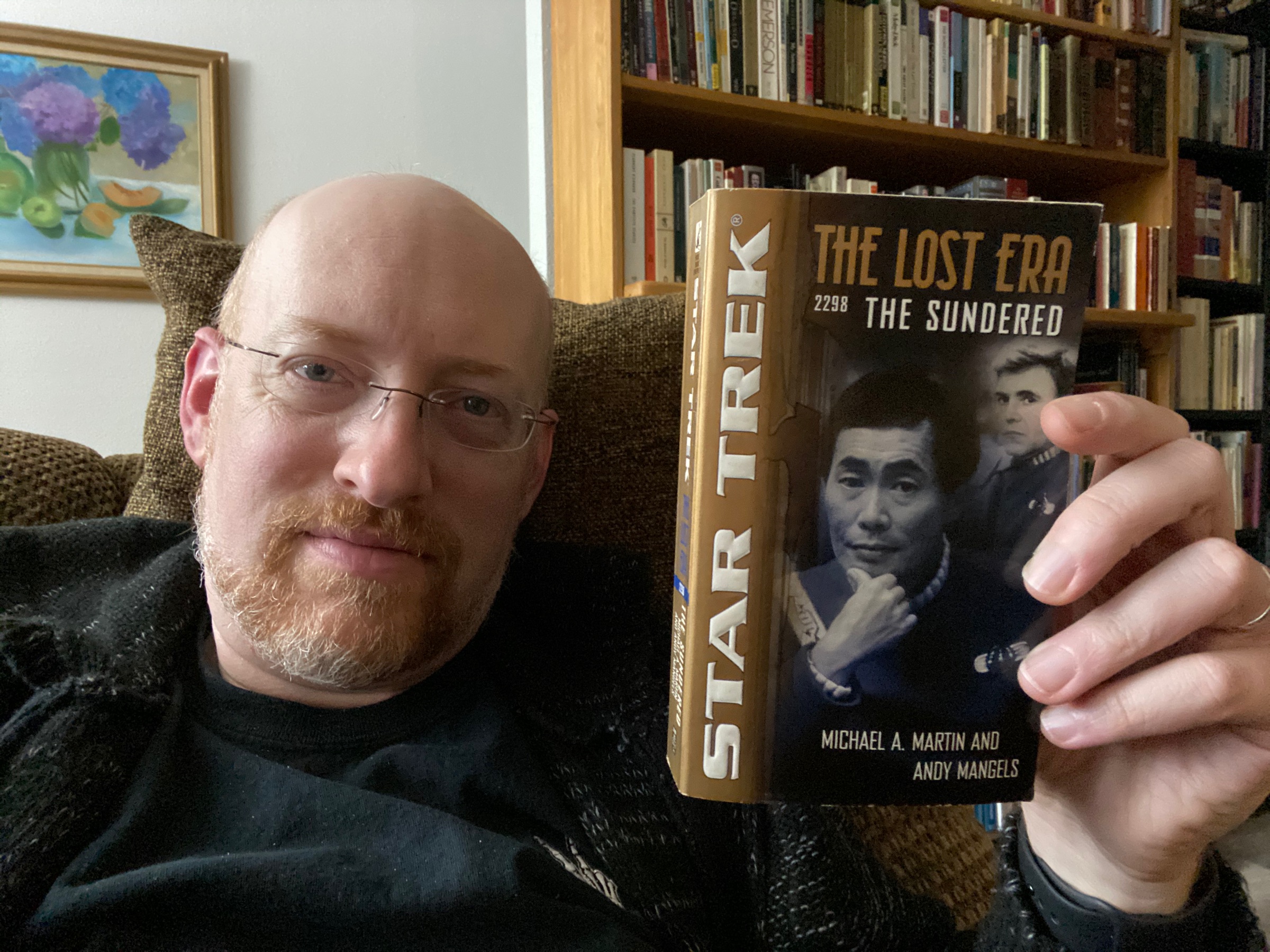
📚 fifty-four of 2019: The Sundered, by Michael A. Martin and Andy Mangels. ⭐️⭐️⭐️

Captain Sulu and the crew of the Excelsior mix it up with Tholians and a mysterious new race with ties to Earth. A good, easy bit of fluff to spend a quiet day reading. 🖖

📚 fifty-three of 2019: Kushiel’s Dart, by Jacqueline Carey. ⭐️⭐️⭐️

Not bad, and I enjoyed the sexual politics, but not my thing. This is definitely (mostly) in the “life in medieval Europe” style of fantasy, which I’m less enamored of than more fantastical fantasy.

Monty Python and Enjoying Problematic Media

There are the Monty Python skits everyone knows and remembers fondly. Then…there are the others.

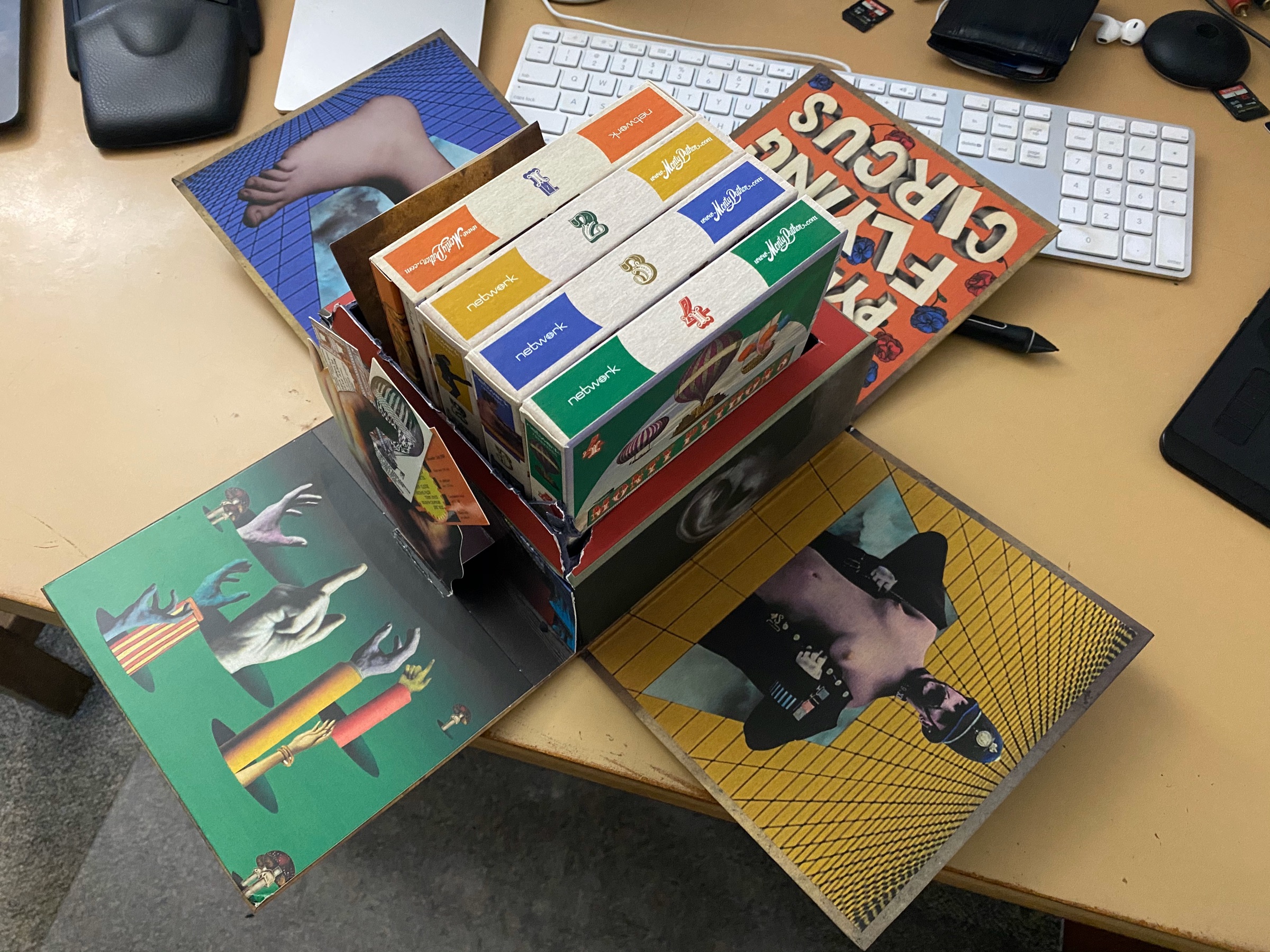
One of the interesting things about going through all four seasons of Monty Python (not watching, but stepping and skimming through as I add chapter markers for the skits to my rips of the just-released restored box set) is realizing just how frequently blackface (and full-body makeup) appears. It’s not every skit or even every episode, but it’s not just a one-off occurrence, either.

I’m sure this isn’t exactly breaking news, nor particularly surprising to those who have a more in-depth familiarity with Monty Python over the years than I have. I watched it in my youth, I know the most popular sketches, have watched and own many of the movies, and so on, but haven’t just sat and watched the shows themselves in ages (and I have to wonder how much the shows I saw were edited for US/PBS broadcast when I was first seeing them). And while the full rewatch will happen a bit later, after I’m done getting the rips chapterized, converted to .mp4, and added to my Plex server, even this quick skim through has been a somewhat eye-opening experience.

This doesn’t mean I’m no longer a fan of Monty Python. But it’s another reminder that it’s okay to be a fan of problematic media, but you should be able and willing to recognize and think critically about those parts that are problematic, rather than just glossing over them or shrugging them off.

Short Treks E07: “Ask Not”: A bit predictable — I figured out what was going on long before the reveal — but still enjoyable, and better than the last two. About those views of Engineering, though…how is there room for all that with all the empty space around the turbolifts? 🖖

Editing Chapter Markers in .mkv files

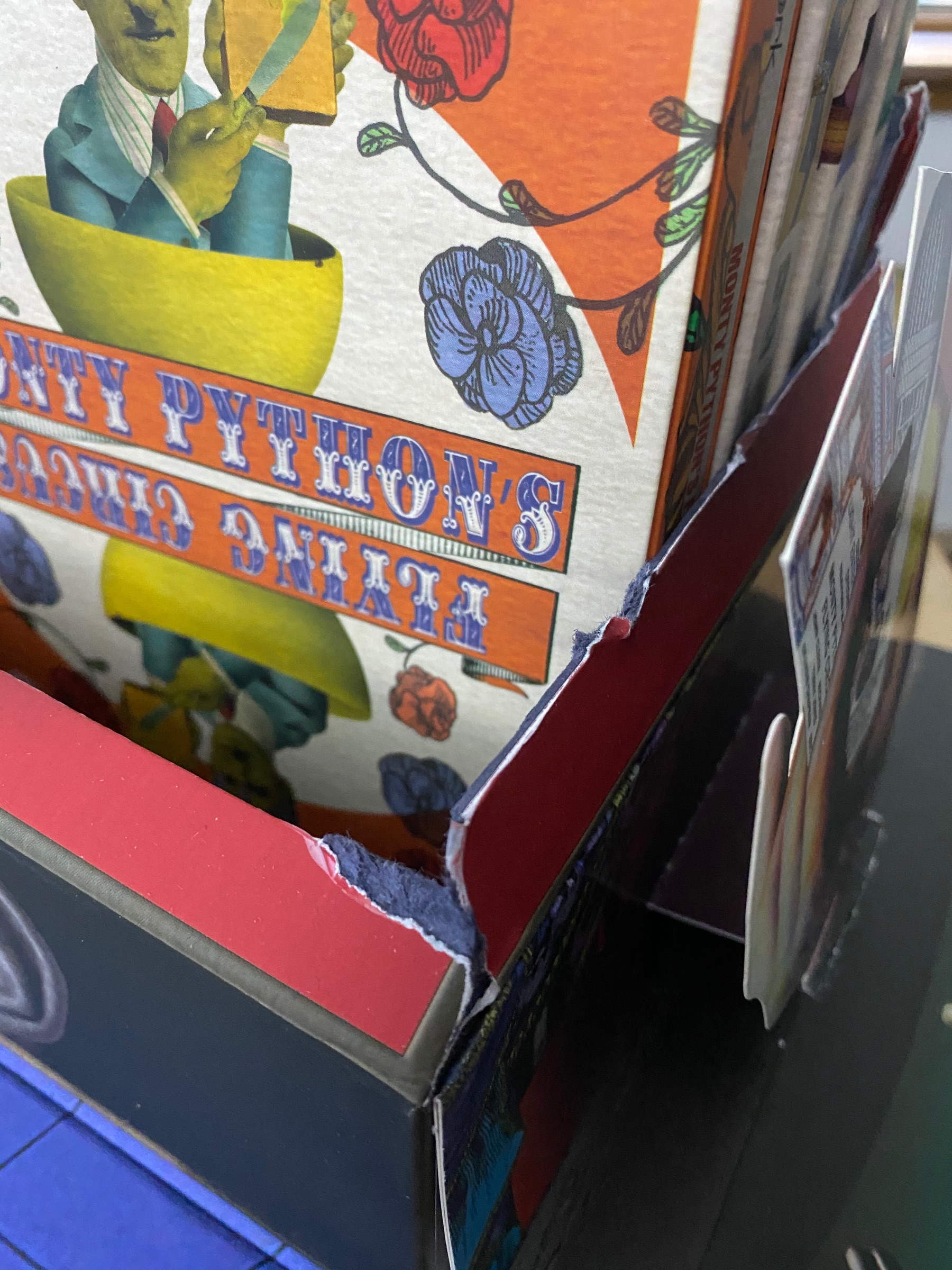
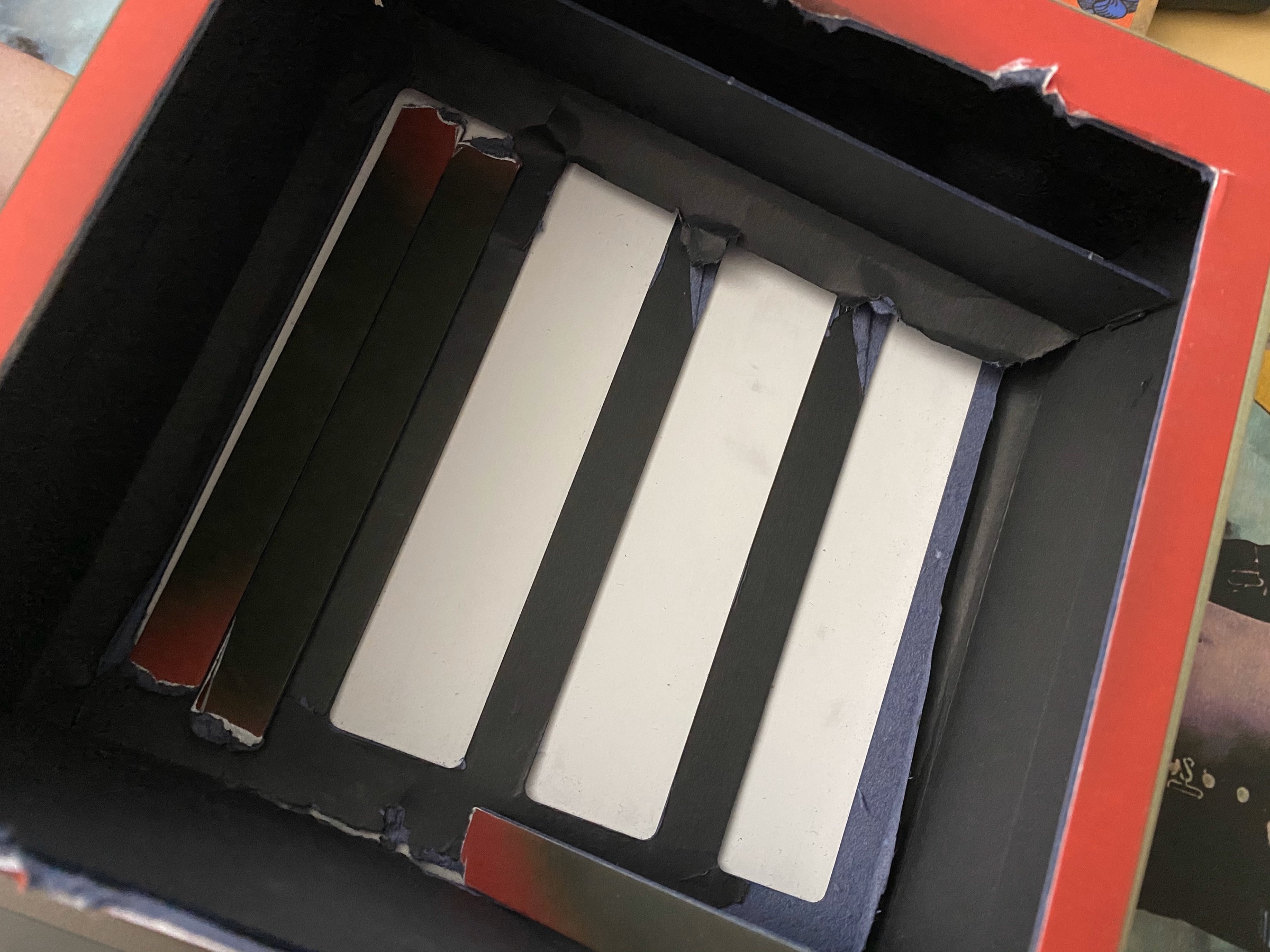
A gorgeous, fully restored Monty Python’s Flying Circus Norwegian Blu-ray Edition box set has just been released, and while I can definitely say that it looks great, others have reviewed it far more comprehensively than I’m able to do, and if you’re into the technical details, there’s some fascinating information about the restoration process in this article.

However, there is one small thing about the set that is a little unfortunate: Each episode only has three chapter stops.

Since I’m in the habit of ripping all of my DVDs and Blu-rays for storage and playback through my Plex media server, I decided to see if there was something I could do about that. Turns out there is! Here’s a rundown of the process, in case anyone else is curious (or if I need to remind myself how to do it for future projects).

  1. Rip the disc using MakeMKV to individual .mkv files for each episode (and while you’re doing so, you might want to pay attention to the subtitles as well.

  2. For each episode, open the .mkv file with the MKVToolNix GUI. Go to the “Chapter Editor” tab, and (at least in this case) remove the existing chapters.

  3. At the same time, open the .mkv file with a video player that allows for frame-by-frame scanning and that can display timecodes down to the millisecond (I use Aegisub).

  4. In MKVToolnix, use the “Add Chapter” button to create the first chapter; you’ll see it appear in the “Chapters:” list. Click on the chapter to enable editing. Set the start time to “00:00:00.000”. Optionally (but recommended), set the “Name” for the chapter: This could be as simple as “Chapter 1”, or a more descriptive chapter name (in this particular case, the highly detailed books of notes that came with the Monty Python set came in very handy for identifying the chapters and titles).

  5. Scan through the video file with your video player until you find the end point of the opening chapter/beginning point of the next chapter. Read the timecode from the video player, and use that to set the “End:” time in MKVToolnix (for example, “00:00:30.831” is zero hours, zero minutes, 30.831 seconds into the video).

  6. Click the “Add chapter” button to add the next chapter, and set its start time to the same timecode as the end time of the prior chapter.

  7. Continue on until all chapters have been defined.

  8. Once all chapters are defined, in MKVToolnix’s “Chapter Editor” window, choose “Save to Matroska file”. Select the .mkv file you’re working with, and click “Save”. Don’t worry if you get a warning that the file will be replaced, MKVToolnix will only replace the chapter markers, and will not wipe out the rest of the file.

Once that’s done, the .mkv file will have correct chapter markers set. If you then do any further encoding (such as converting from .mkv to .mp4 with Handbrake, which I do for my video storage to save space), those chapter markers will be preserve. This makes skipping around and finding particular points in the video (in this particular case, going directly to specific sketches within each episode) much easier.

It’s the one downside to an otherwise incredible set, and while this solution isn’t exactly simple or fast, neither is it terribly difficult or time consuming, and makes for a much better final experience.

Bonus: If others are ripping their Python box sets and would prefer not to go through the trouble of finding the chapter stops themselves, here’s a 73KB .zip file with .xml files for (nearly*) every episode’s chapter stops as I defined them. These files should be importable into MKVToolnix, replacing steps four through seven above (and saving you a lot of time).

* At present, I’m missing files for episodes 12 and 13 of Series 1, as I seem to have gotten a bad pressing of disc 2 of that set. I’ll add those two episodes and remove this qualifier once I’ve received a replacement disc.

New addition to the library: Number 230 of 1,250 signed copies of #nwc37 Special Guest of Honor Seanan McGuire’s collection Laughter at the Academy, from #nwc42 Spotlight Publisher Subterranean Press! Supporting Norwescon and our GoH’s one book at a time. :) 📚

Old mashup from DJ Wüdi: Just Can’t Get Flexible in 1999 (Depeche Mode “Flexible” and “Just Can’t Get Enough” vs. Prince “1999”).

The only inspiration I can remember for these is that I like the source songs and I had the acapella for “1999”. I do like the way it came out.

🎵