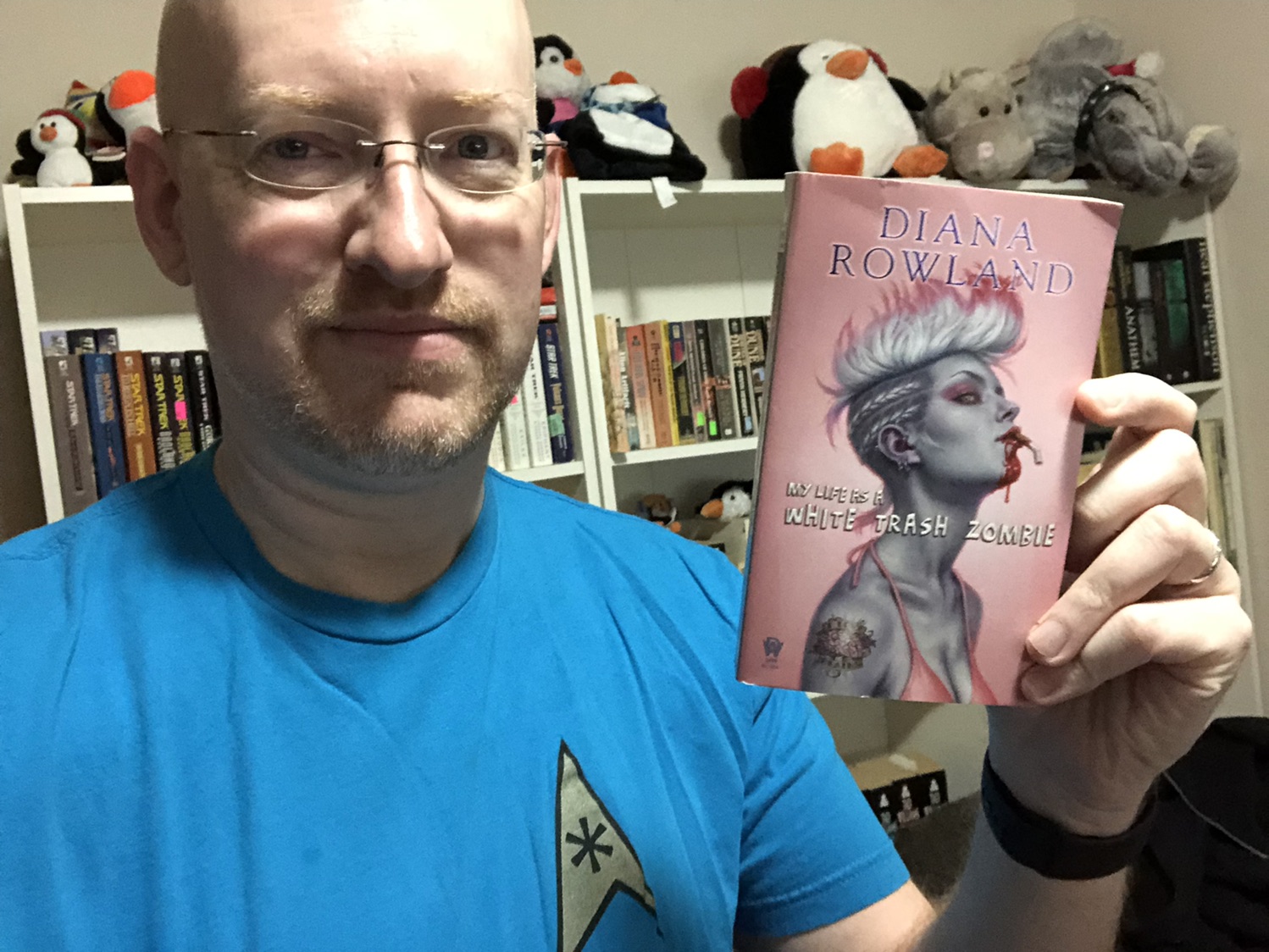
Book twenty-eight of 2019: My Life as a White Trash Zombie, by Diana Rowland. ⭐️⭐️⭐️ 📚
An enjoyable bit of modern zombie fun. Superficial similarities to I, Zombie (recently dead 20-something woman works in a morgue for easy access to brains), but goes its own way.
Book twenty-seven of 2019: The Forever Machine, by Mark Clifton & Frank Riley ⭐️⭐️ 1955 Hugo Best Novel 📚
Odd mix of early postulation about how AI might affect society and almost new-age “woo” of psychoanalysis rejuvenating the physical body to youth. Not very engaging.
While I didn’t know how little support Florida gave its less privileged residents, the common themes in all these stories really are glaringly obvious once pointed out.
“Another tedious, liberal, PC scold,” you may think as you read the headline for this piece. “Why can’t we just have fun and enjoy a hilarious meme in peace?” Well, you can enjoy “Florida man” all you want, but by any objective metric, it’s worth noting that “Florida man” memes—just like all “dumb criminal” or “weird crime” stories—are little more than a socially acceptable way of gawking at and belittling the dispossessed and indigent.
The reason Florida seems to have more “bizarre news” stories is because it leaves tens of thousands of people with financial, mental health and drug problems to fend for themselves, and then, under the banner of transparency, hands over the inevitable result of this lack of support to a click-hungry press. To paraphrase another viral tweet, it monetizes the rot.
“Florida man” isn’t an accident. It’s the logical byproduct of a state whose politics have been defined by cruel, racist indifference to the poor for decades.
(For me, at least, since I show up on Wednesday. Other staff members show up earlier, the con itself formally starts on Thursday. But for me, just four weeks to go!)
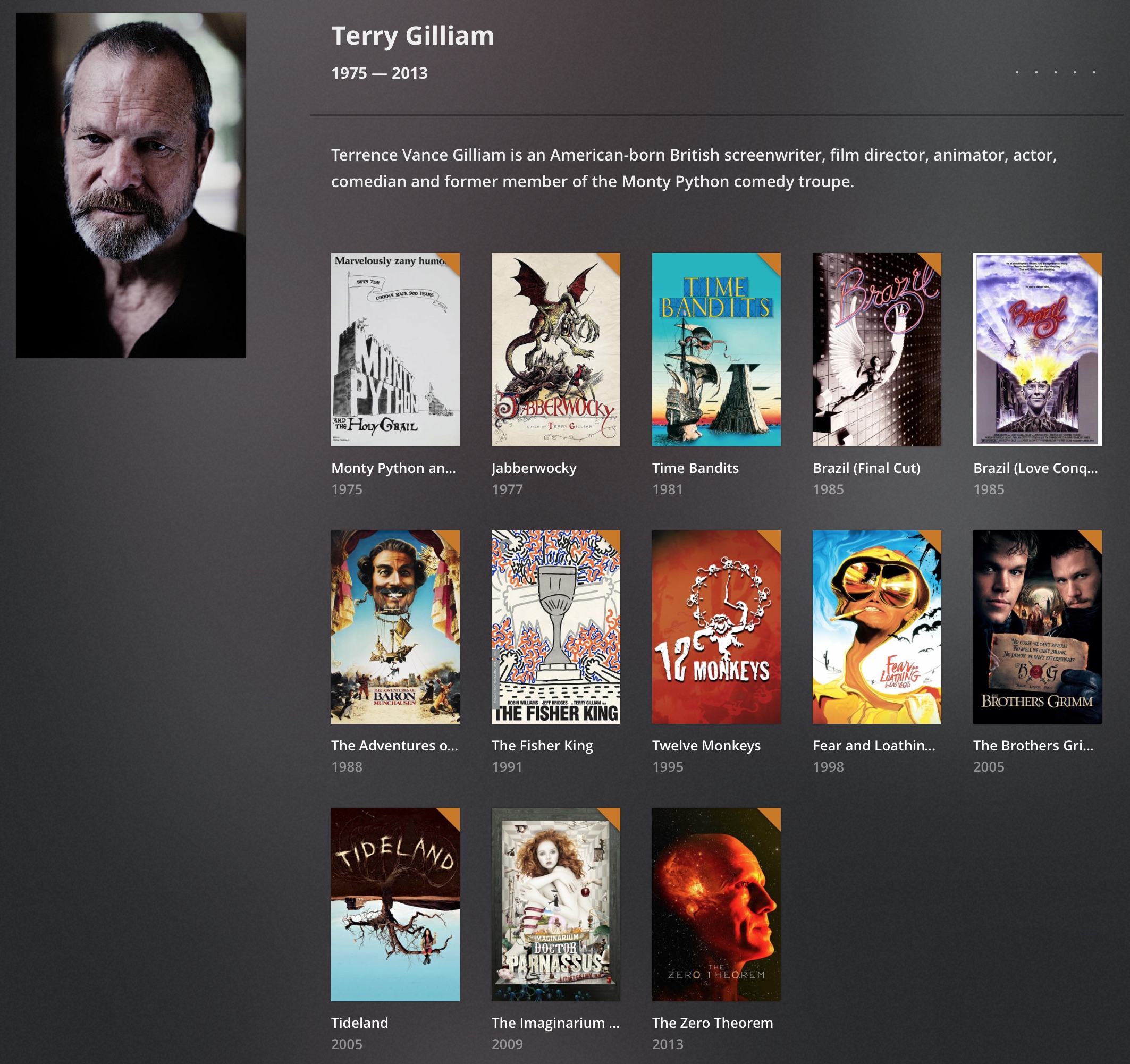
A collection I’ve wanted for a long time, and finally completed: All of Terry Gilliam’s films (except for The Man Who Killed Don Quixote, which isn’t out yet) are on my Plex server in HD. He’s just the sort of gloriously weird that works well for me.
It’s funny, though, thinking about it. I tend to think of myself as not being a big fan of dystopian fiction*, and yet that’s a large part of his work. But even in his darker films that don’t always end on happy notes, there’s often a definite line of optimism, hope, and the characters fighting against that dystopia — I think there’s a good argument to be made that there’s a hopepunk element to much of his work, which is why it resonates with me.
* I’m certainly less so now than I was in my youth when I first discovered Gilliam. Something about being aware of the dystopia we live in makes it a lot less escapist, doesn’t it? And, unfortunately, there’s definitely evidence that Gilliam doesn’t always recognize his own racial and sexual privilege, with his unfortunate comments about the #metoo movement and diversity in media programming, which could also partially explain his draw towards dystopian fiction: He can view it from what he perceives to be a “safe” distance, just as I did when I first discovered it. Meanwhile, there are lots of people (who, as I think about it, I really don’t think I can remember much representation of in his films) who are far more intimately, immediately familiar with the realities of living in dystopian worlds.
Huh. Well, that went astray from my original intention of “hey, I’ve got all the movies I can from one of my favorite directors!”
Book twenty-four of 2019: The Demolished Man, by Alfred Bester. ⭐️⭐️⭐️⭐️ 1953 Hugo Best Novel
Psychic police are now something of an SF trope, but this was apparently one of the first to use this idea, and its implementation (both in plot and typography) is still effective.
Celebrating π Day by eating a square piece of lasagne for dinner, soon to be followed by a shapeless mass of ice cream. But the ice cream is out of a round container, so that counts, right?