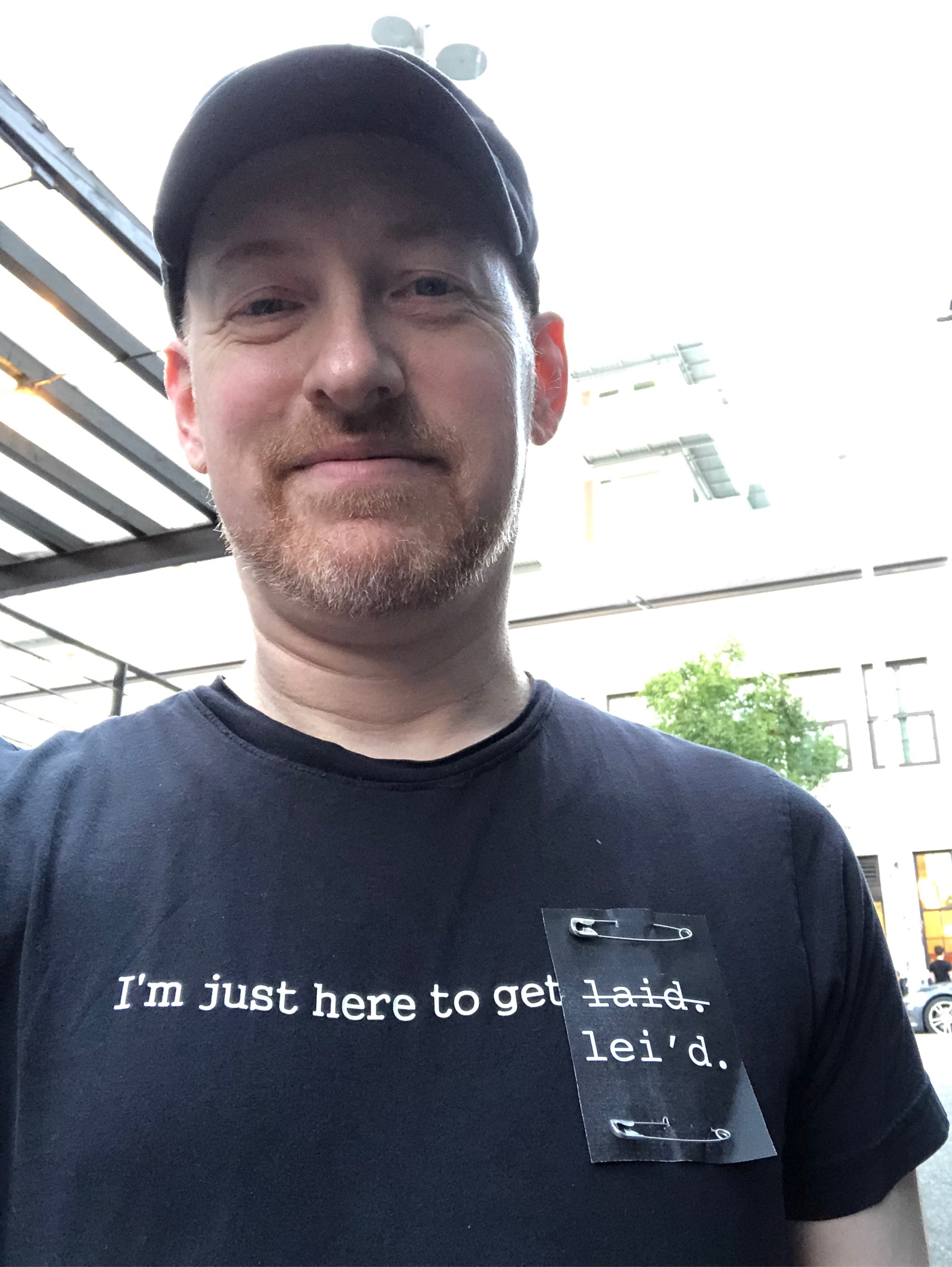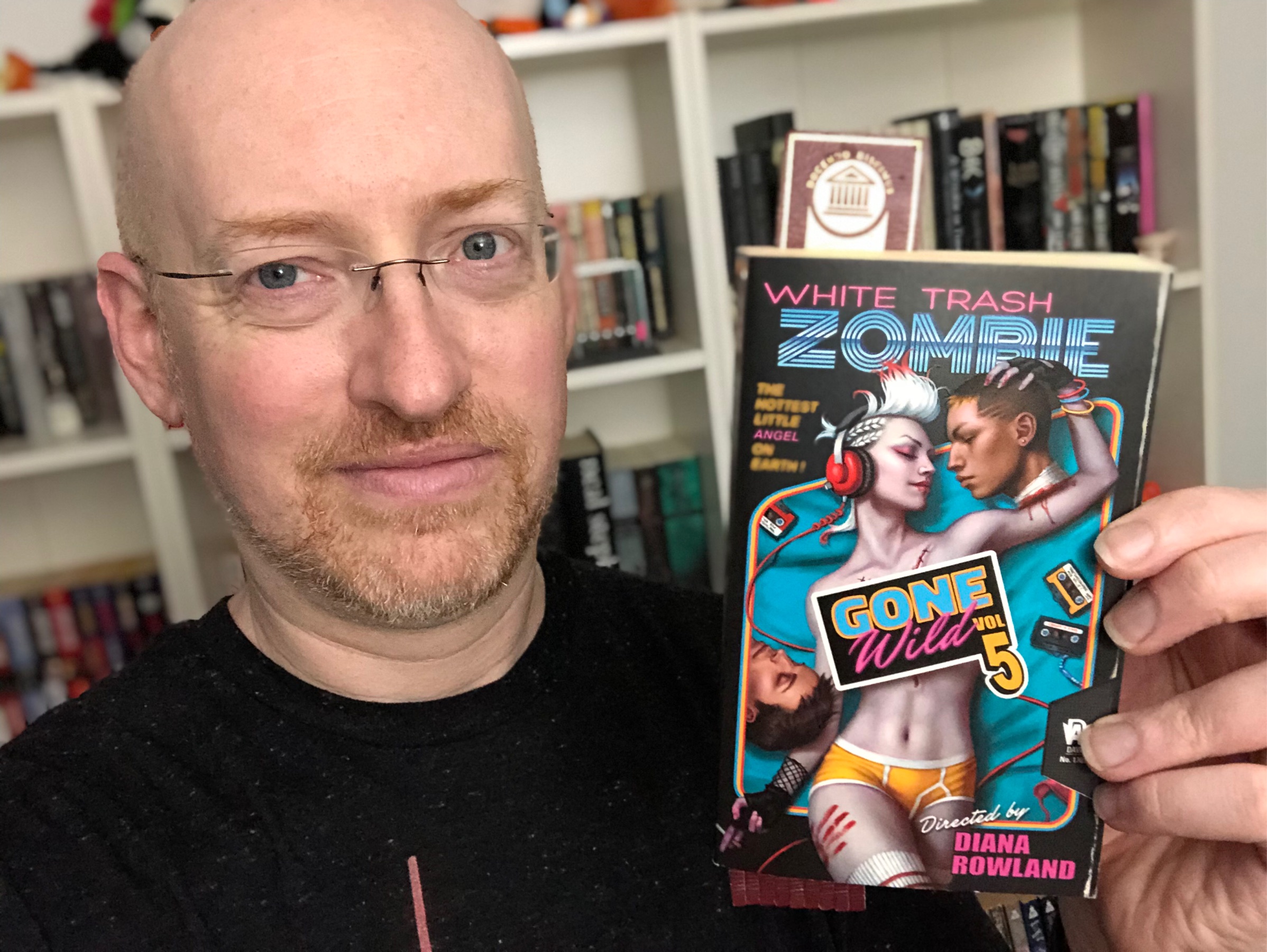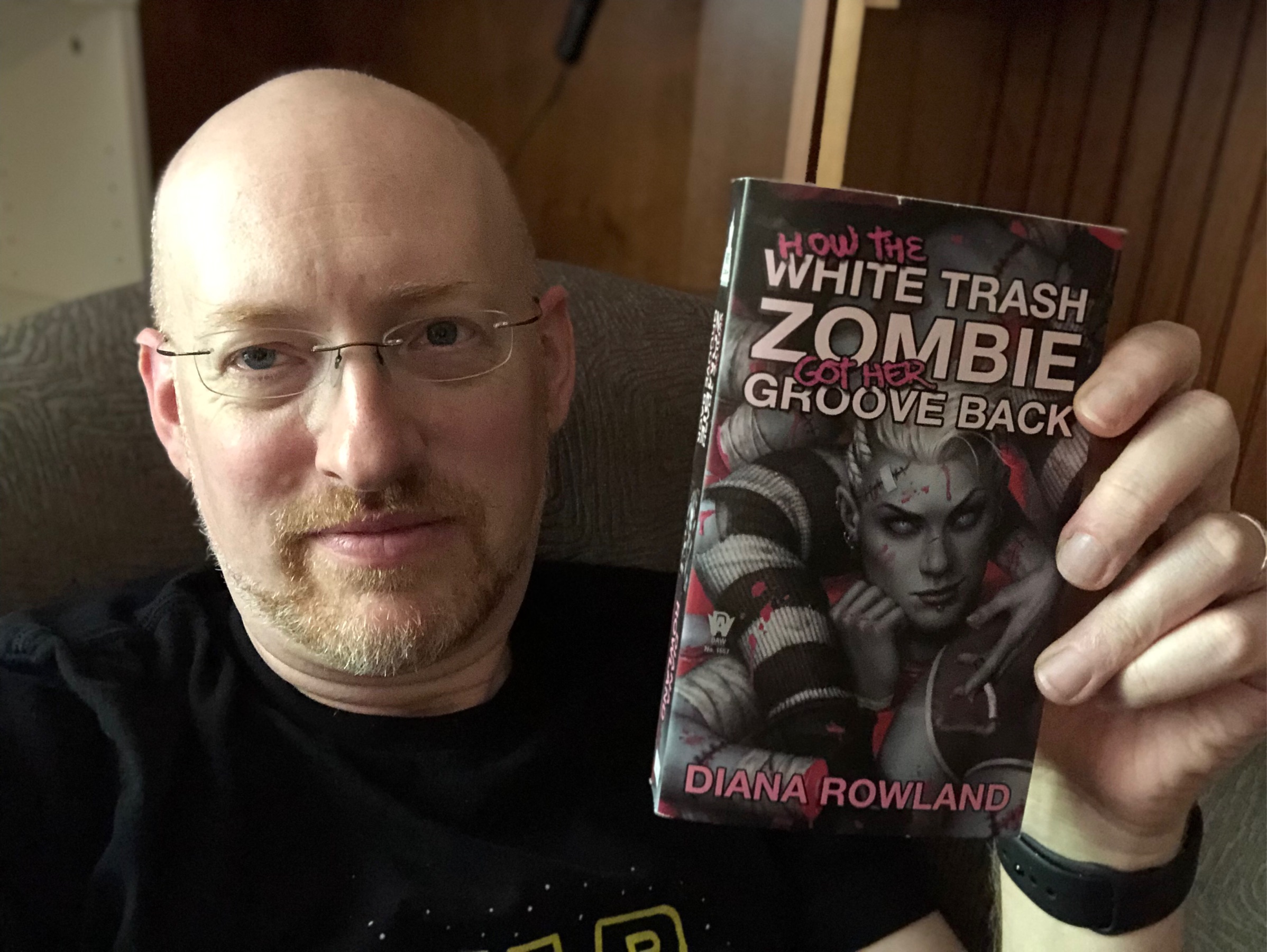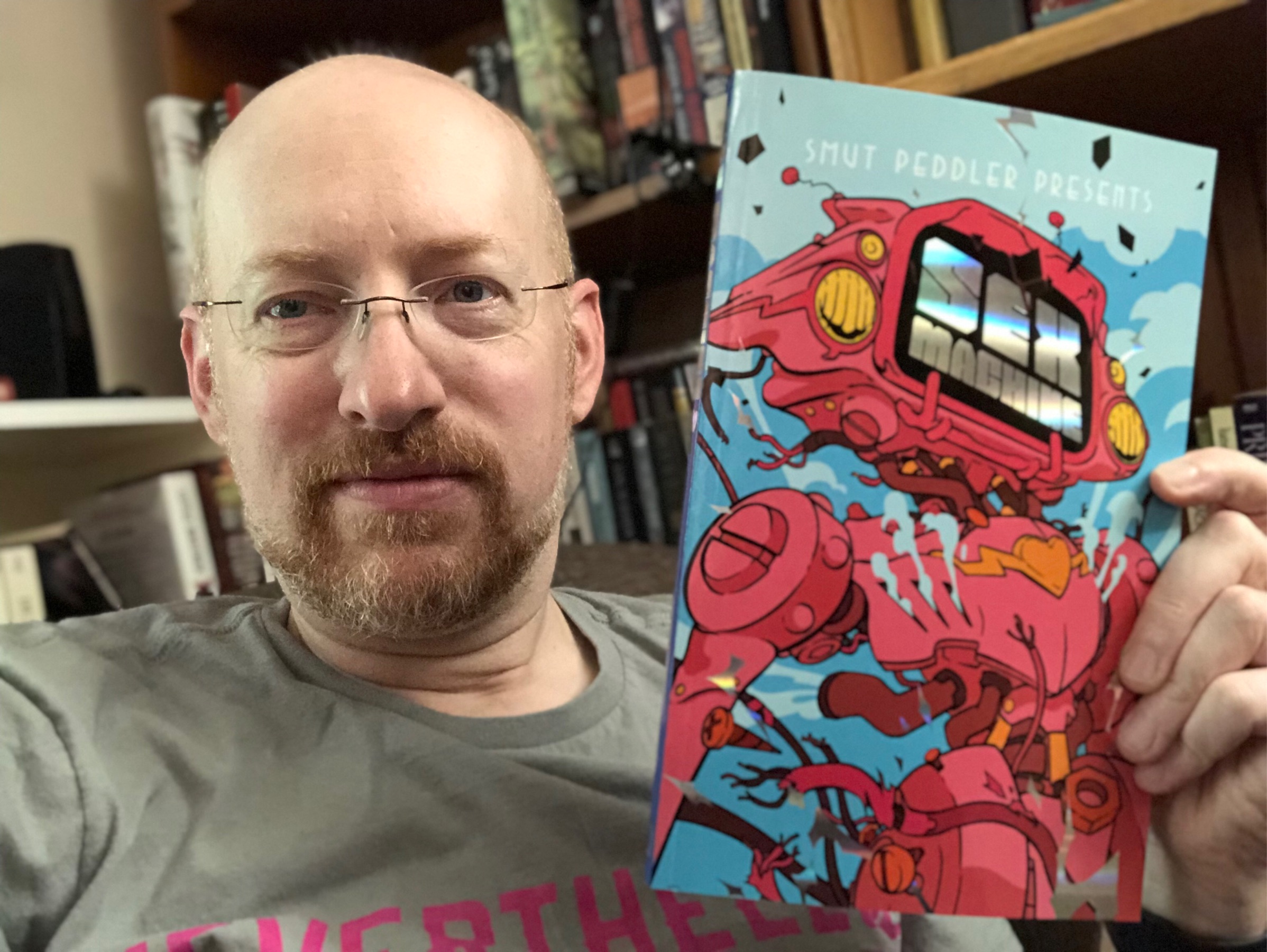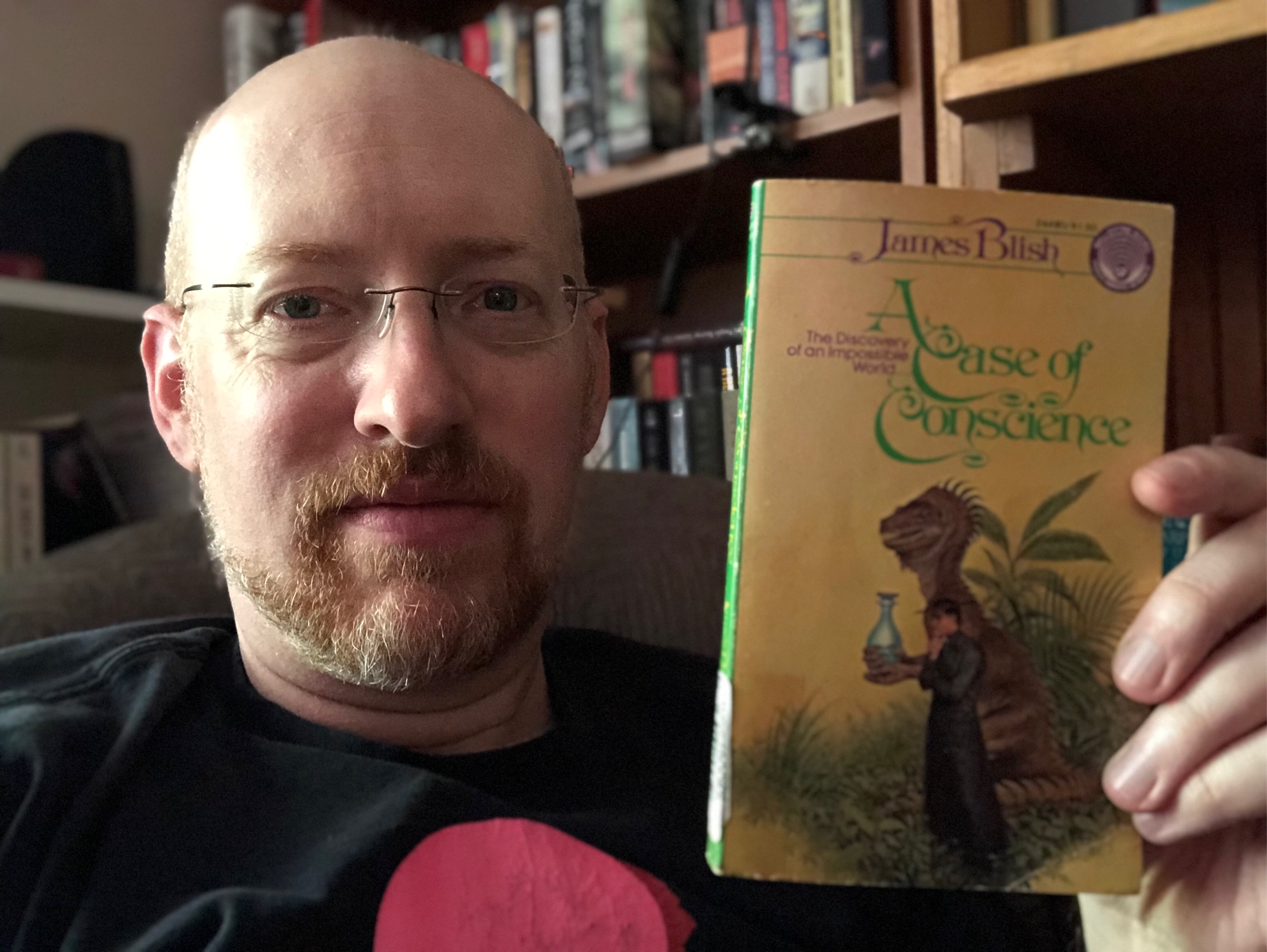
Me at 46. Not terribly shabby, I think, even at officially being closer to 50 than 40.

Book thirty-two of 2019: White Trash Zombie Apocalypse, by Diana Rowland ⭐️⭐️⭐️

This series continues to entertain, as the filming of a zombie film provides backdrop to expanding the political and scientific worlds of the zombie population. Conspiracies galore!

Book thirty-one of 2019: The Big Time, by Fritz Leiber. ⭐️⭐️ 1958 Hugo Best Novel

For some reason, I couldn’t get invested in this one. I didn’t dislike it, and it being structured very much like a single-set play was interesting, but I had to work my way through it.

Book thirty of 2019: Even White Trash Zombies Get the Blues, by Diana Rowland. ⭐️⭐️⭐️ 📚

Upping the stakes with conspiracies, some zombie virus science and military experiments, and a little undead romance. Definitely as enjoyable as the first in the series.

Book twenty-nine of 2019: Double Star, by Robert Heinlein. ⭐️⭐️1/2 1956 Hugo Best Novel 📚

Still too much early-Heinlein manly men and weepy women characterizations, and I saw the end coming, but at least I didn’t roll my eyes through the entire thing. An improvement!

Book twenty-eight of 2019: My Life as a White Trash Zombie, by Diana Rowland. ⭐️⭐️⭐️ 📚

An enjoyable bit of modern zombie fun. Superficial similarities to I, Zombie (recently dead 20-something woman works in a morgue for easy access to brains), but goes its own way.

Book twenty-seven of 2019: The Forever Machine, by Mark Clifton & Frank Riley ⭐️⭐️ 1955 Hugo Best Novel 📚

Odd mix of early postulation about how AI might affect society and almost new-age “woo” of psychoanalysis rejuvenating the physical body to youth. Not very engaging.

Book twenty-six of 2019: Fahrenheit 451, by Ray Bradbury. ⭐️⭐️⭐️⭐️⭐️ 📚 1954 Retro Hugo Best Novel

Wow, does this one ever hold up. Incredibly (and possibly sadly) as relevant now as…wow, 65 years ago. Impressively prescient in many ways, as well.

Book twenty-four of 2019: The Demolished Man, by Alfred Bester. ⭐️⭐️⭐️⭐️ 1953 Hugo Best Novel

Psychic police are now something of an SF trope, but this was apparently one of the first to use this idea, and its implementation (both in plot and typography) is still effective.