📚 Ender’s Game by Orson Scott Card

5/2023 – ⭐️⭐️⭐️⭐️ 1986 Hugo Best Novel

It had been long enough since I’d last read this that I only remembered the broad strokes: Ender’s training, the zero-G battles, the simulations, the revelation after his final exam, and a few misty bits and pieces about the fantasy game he explores on his computer. But the threads with his brother and sister and, somewhat amusingly (where was my brain when I read this before?), the entire final chapter where Ender explores the colony world, were almost as new to me as if was my first time reading them.

The parts I remembered were as fun (in their way) as I remembered: the zero-G team combat games and their techniques and strategies, all while watching as Ender is manipulated and molded into what they need him to be. The political maneuvering of his brother and sister were interesting, and in some ways reminded me uncomfortably of the modern world, and in ways that wouldn’t have resonated quite so much when the book was published in ‘85. Now, instead of Valentine and Peter posting to discussion forums on their “nets” to influence politics, we have Qanon and Twitter on our Internet. At a few points, it was more than a little disturbingly prescient. (Plus other little details, like Ender’s “desk” where he can read, learn, program, communicate, and play games — basically, an iPad.)

While it’s perhaps a bit too militaristic to be a five-star read for me, it’s still an excellent book, well worthy of the awards it got, and I’m looking forward to reading more in the series (which I’ve never done before).

ADDED NOTE: It should be noted that OSC had long held and promoted viewpoints that I vehemently disagree with. The books of his in my collection were purchased before I knew of his standpoints, from secondhand stores, or both. I knew going into my Hugo reading project that there would authors and works I would find problematic, and that there might be situations (like this one) where I enjoyed a work by a problematic author. I do what I can to mitigate those situations by purchasing used copies of books so as not to directly contribute to those problematic authors who are still with us, and by noting when I run into those situations – like here (and again down the road, as one of JKR’s HP books also won a Hugo).
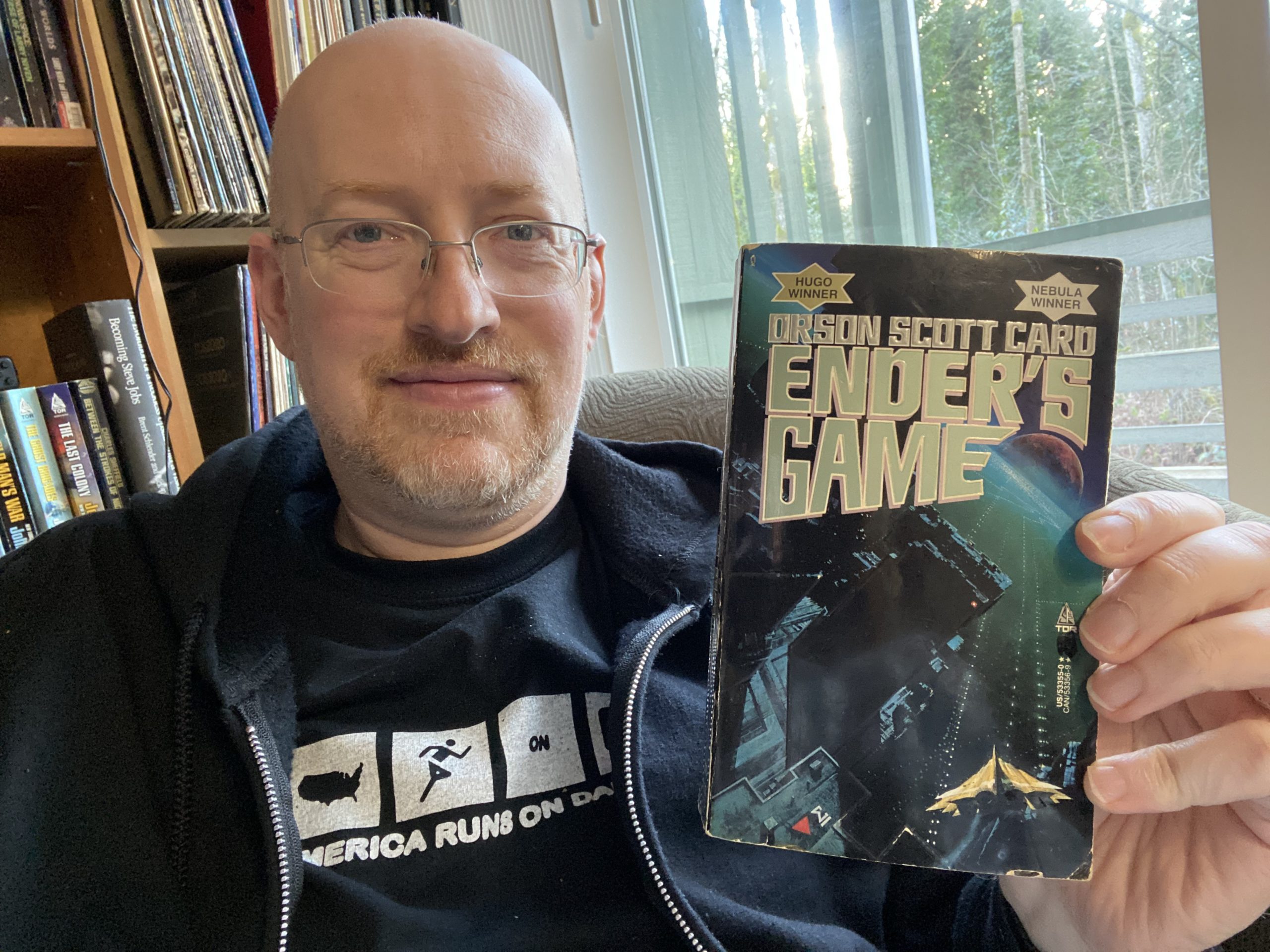
Michael holding Ender's Game

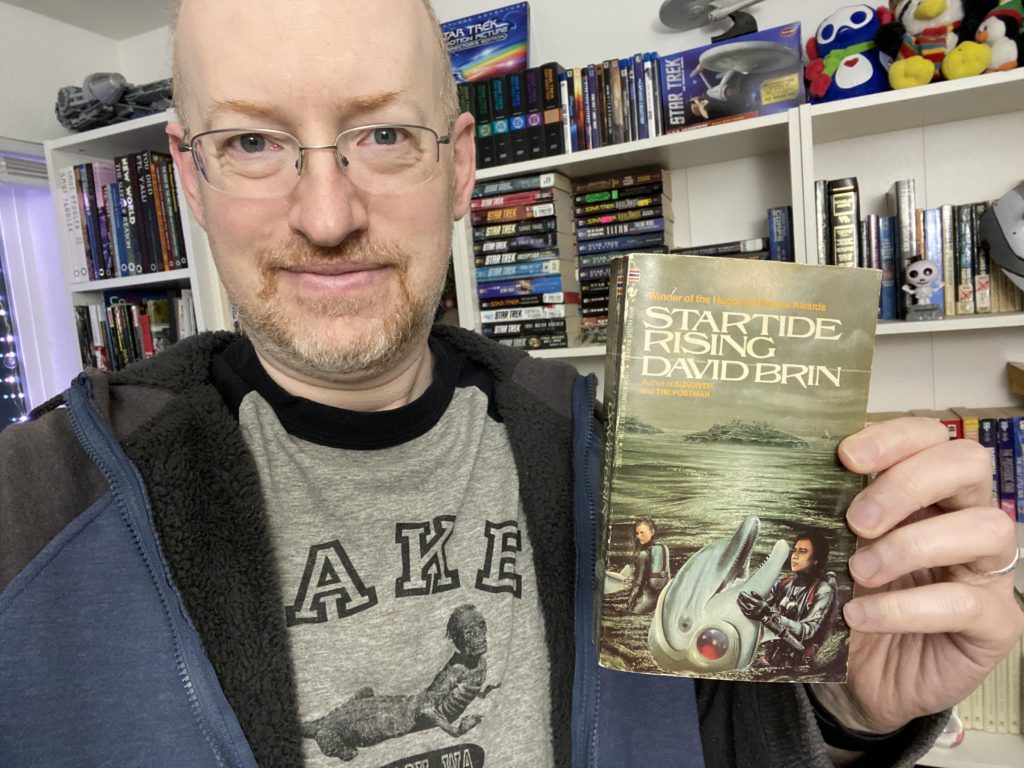
📚 Startide Rising by David Brin

59/2022 – ⭐️⭐️⭐️⭐️ 1984 Hugo Best Novel

Dolphins in space! Which sounds jokey, but it’s not at all. Minimal connections to Sundiver, other than being in the same universe, but 200 years later. I really enjoyed this – the uplifted dolphins are a neat choice for a spacefaring crew, and Brin mixes in touches of plenty other alien races as they battle each other and chase the dolphins for the secret they stumbled across. Brin also does a good job of making this part of a much larger universe, dropping in bits and pieces and adding mysteries that don’t get solved, without making it frustrating or feeling like a tease.

Michael holding Startide Rising

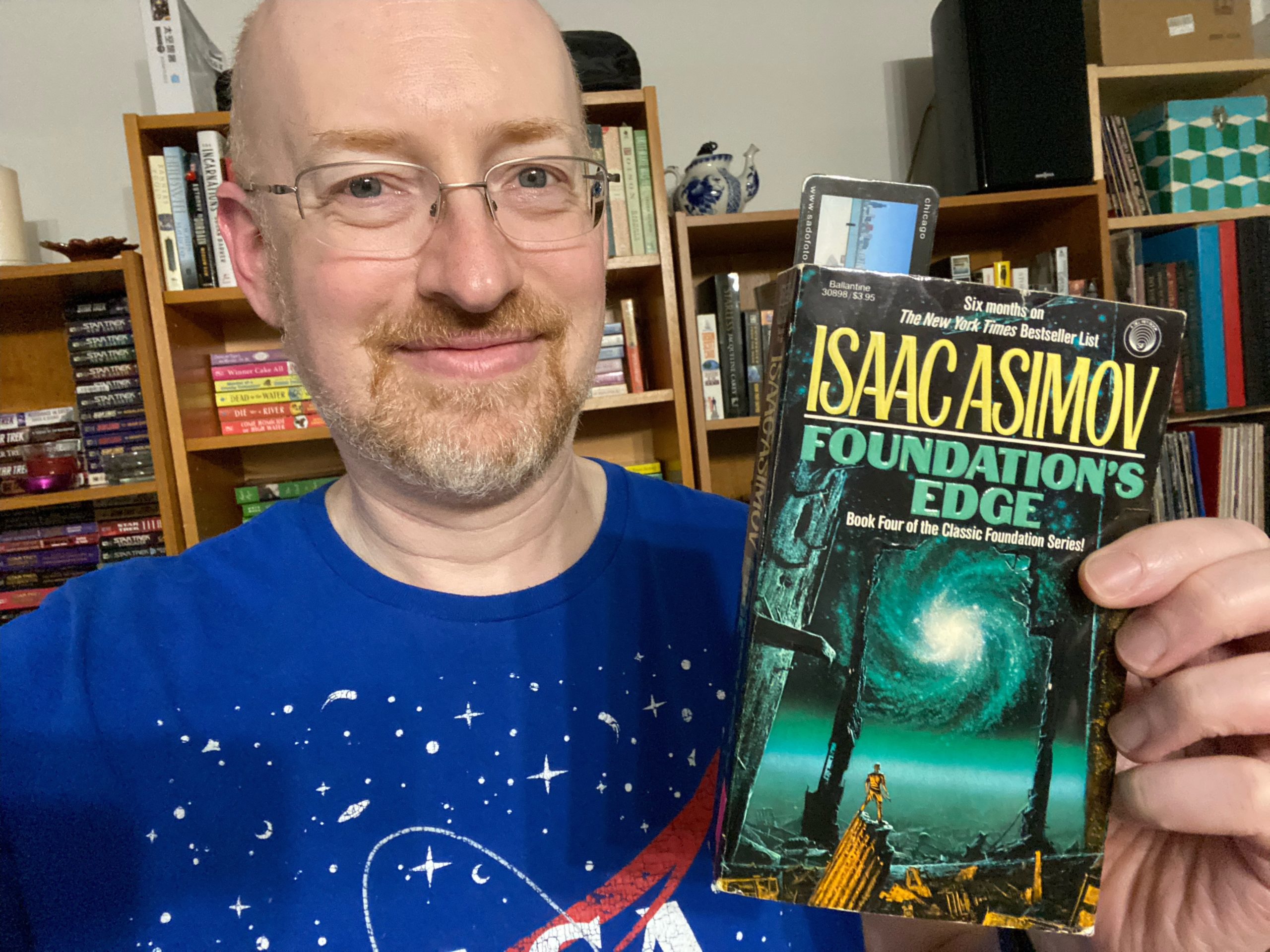
📚 Foundation’s Edge by Isaac Asimov

43/2022 – ⭐️⭐️⭐️ 1983 Hugo Best Novel

I didn’t find this one to be a strong as the original trilogy, and Asimov’s writing style doesn’t seem to work for me in the context of other Hugo winners published around this time as much as it does with his earlier works. He’s still a very good SF writer, but more obviously one of an earlier era, in both style and in his fumbling around with female characters.

Michael holding Foundation's Edge

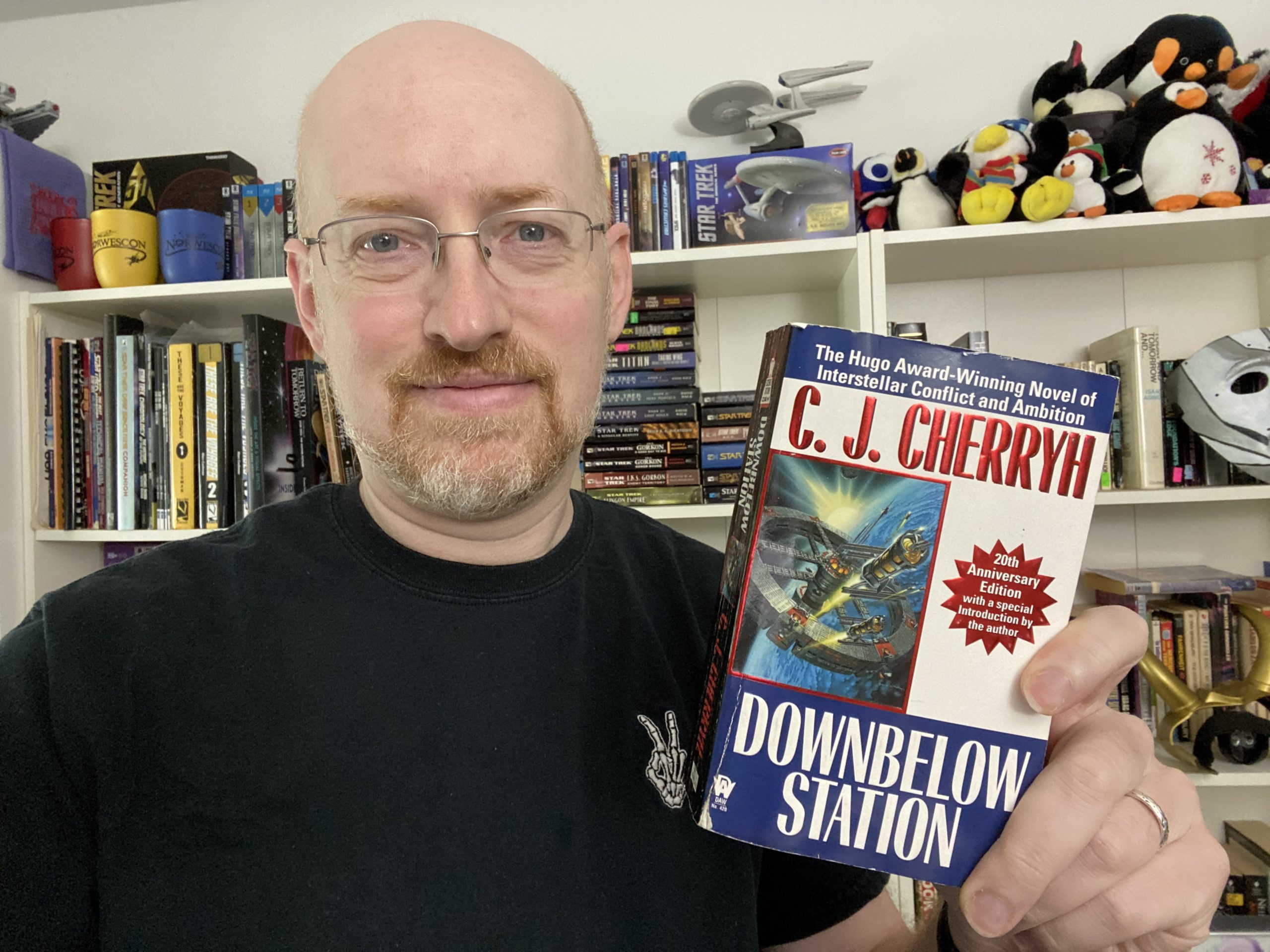
📚 Downbelow Station by C.J. Cherryh

39/2022 – ⭐️⭐️⭐️ 1982 Hugo Best Novel

High concept interstellar politics and space battles that just never really got me invested. Though I’ll admit, I may have been slightly put off by this particular edition having a lot of typos (usually punctuation, but at least once a misnamed character that made things quite confusing for a bit). Good space opera, but doesn’t rank highly for me among Hugo winners.

Michael holding Downbelow Station

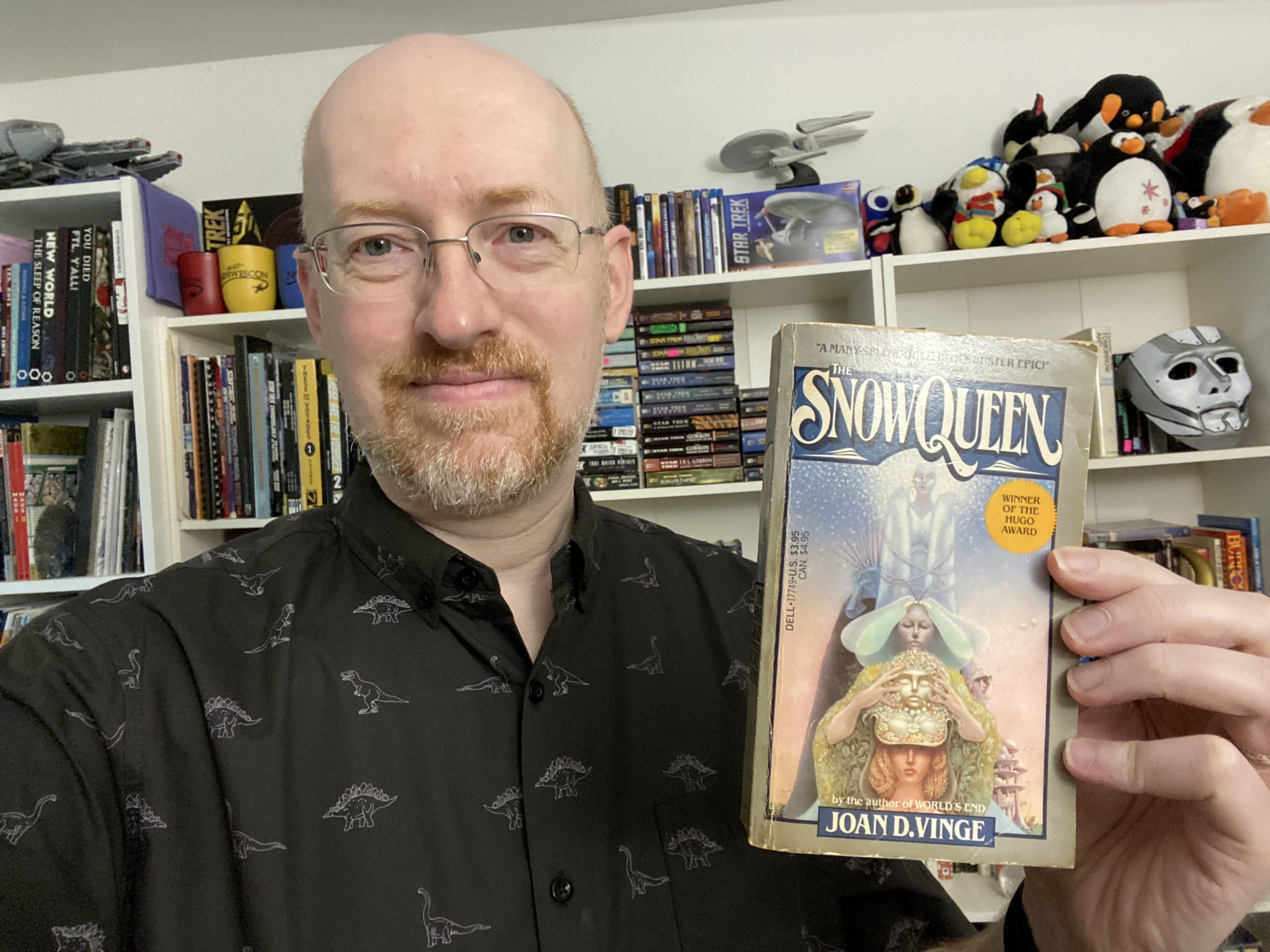
📚 The Snow Queen by Joan D. Vinge

35/2022 – ⭐️⭐️⭐️⭐️ 1981 Hugo Best Novel

Science fiction that somehow reads like fantasy (that’s not a complaint, to be clear). At times almost feels like a alternative take on Asimov’s Foundation universe, with a galaxy-spanning empire crumbling, and a repository of knowledge meant to rebuild civilization, only going in a somewhat different direction.

Michael holding The Snow Queen

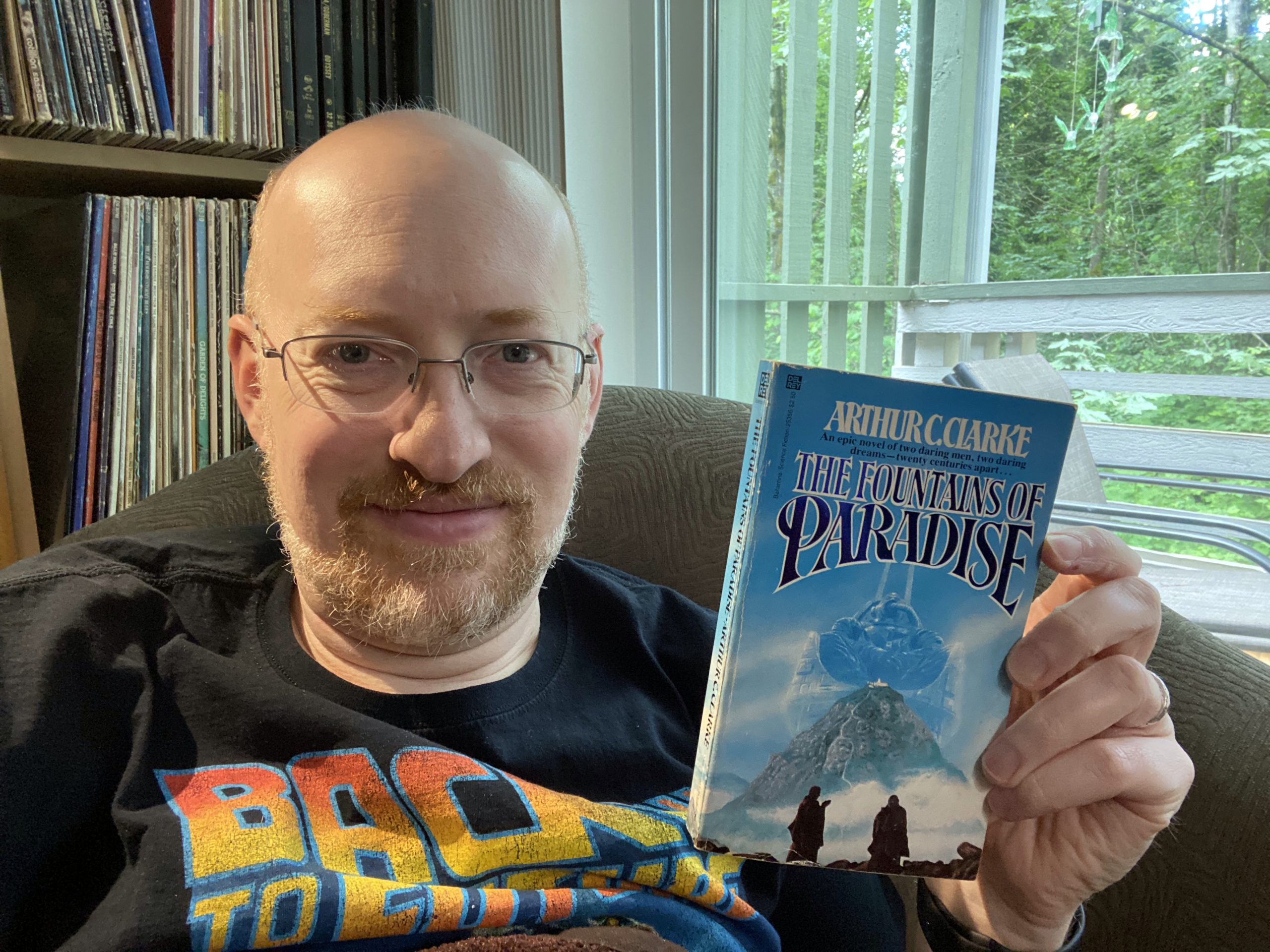
📚 The Fountains of Paradise by Arthur C. Clarke

33/2022 – ⭐️⭐️⭐️⭐️ 1980 Hugo Best Novel

The story of the construction of humanity’s first space elevator, tied to the history of the (semi-fictional) island that serves as its base. An easy read, concerned primarily with exploring how such an engineering feat might happen, and without any real antagonist or great interpersonal dramas.

Michael holding The Fountains of Paradise

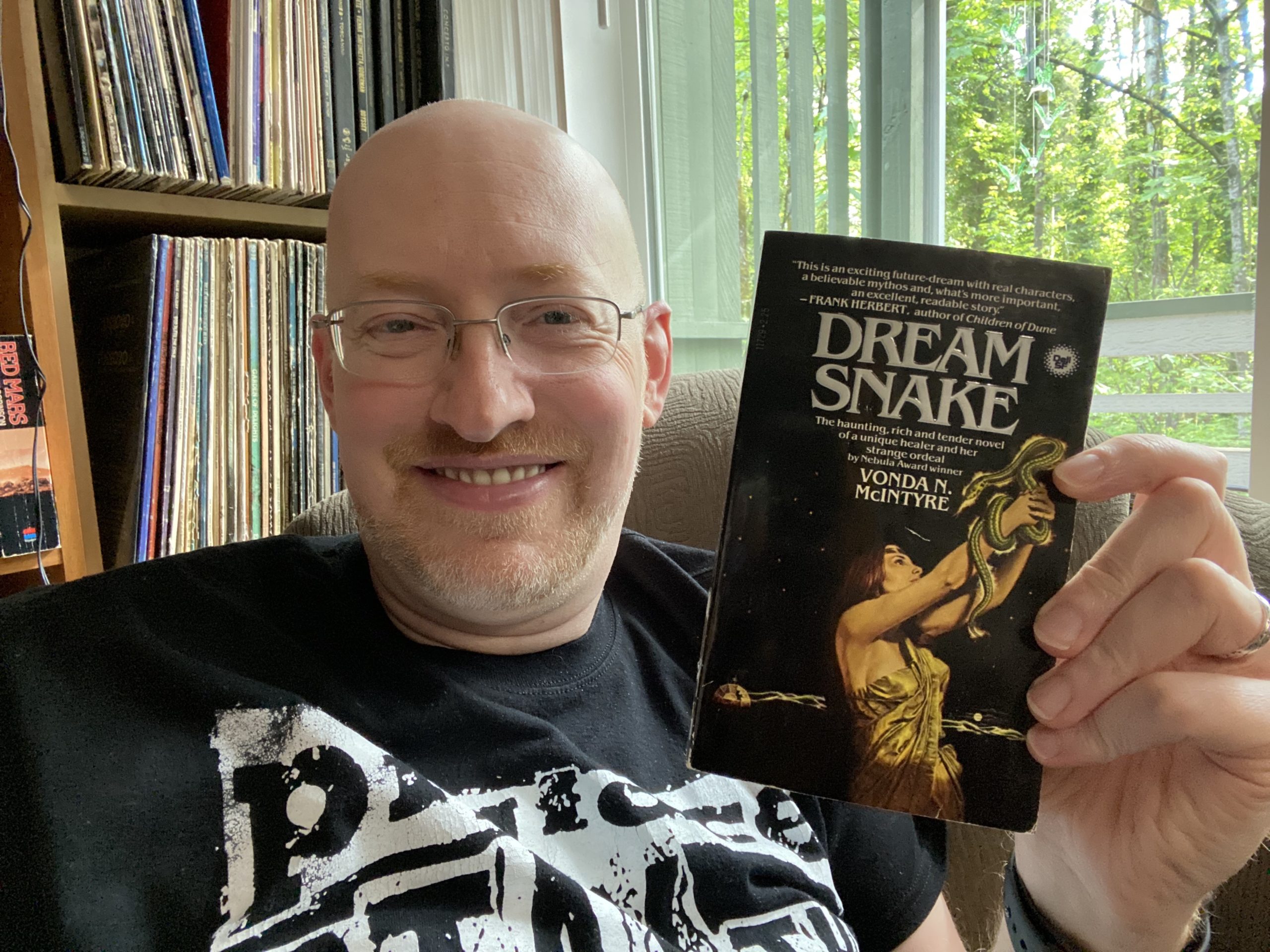
📚 Dreamsnake by Vonda N. McIntyre

26/2022 – ⭐️⭐️⭐️⭐️⭐️ 1979 Hugo Best Novel

Neat tale of a woman traveling across a far-future post-apocalyptic earth, healing others with the help of her snakes while searching for an alien snake to assist her, and finding more people to help along the way. Adventuresome, but quiet, with some interesting hints at the wider world that go unanswered as the story unfolds. Really enjoyed the (somewhat groundbreaking at the time, apparently) feminist reworking of the hero’s journey, where conflict is solved by caring and healing rather than combat.

Michael holding Dreamsnake

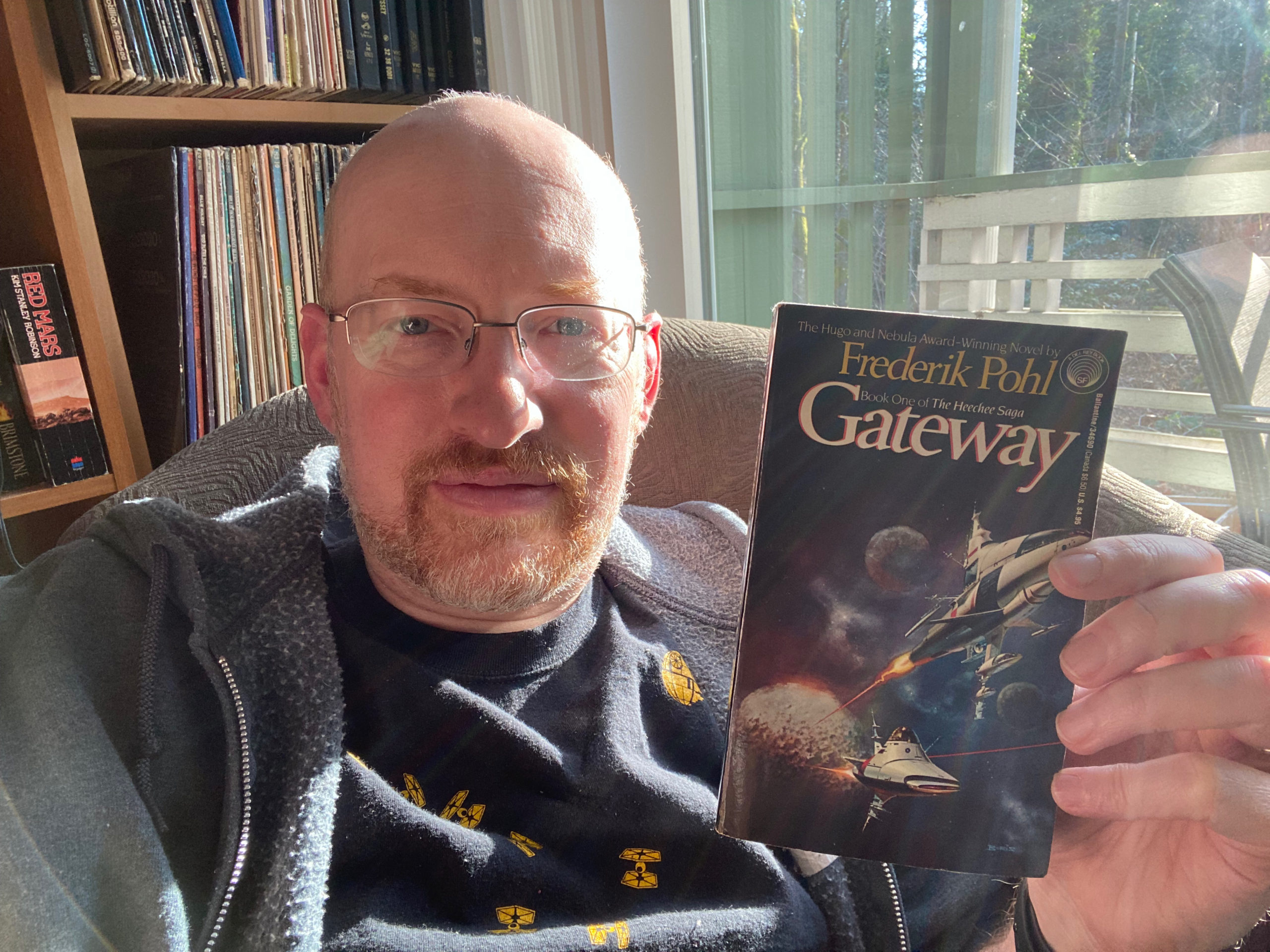
📚 Gateway by Frederik Pohl

15/2022 – ⭐️⭐️⭐️ 1978 Hugo Best Novel

The main character’s something of an ass (admittedly, this is part of the story, so at least he’s not an ass for no reason), but the general conceit and worldbuilding is fascinating. Humanity has found the remnants of an alien race, including a fleet of FTL ships…but nobody really knows how to work them. Take one out and you might come back with treasures worth millions, you might come back with nothing, you might come back dead, you might not come back at all…and the odds aren’t in your favor.

Michael holding Gateway