Well, it’s been a busy month. I kept meaning to come back to this “Weekly Notes” series and get caught up, and then there were more things to do, and here we are! So let’s just do a quick catch up.
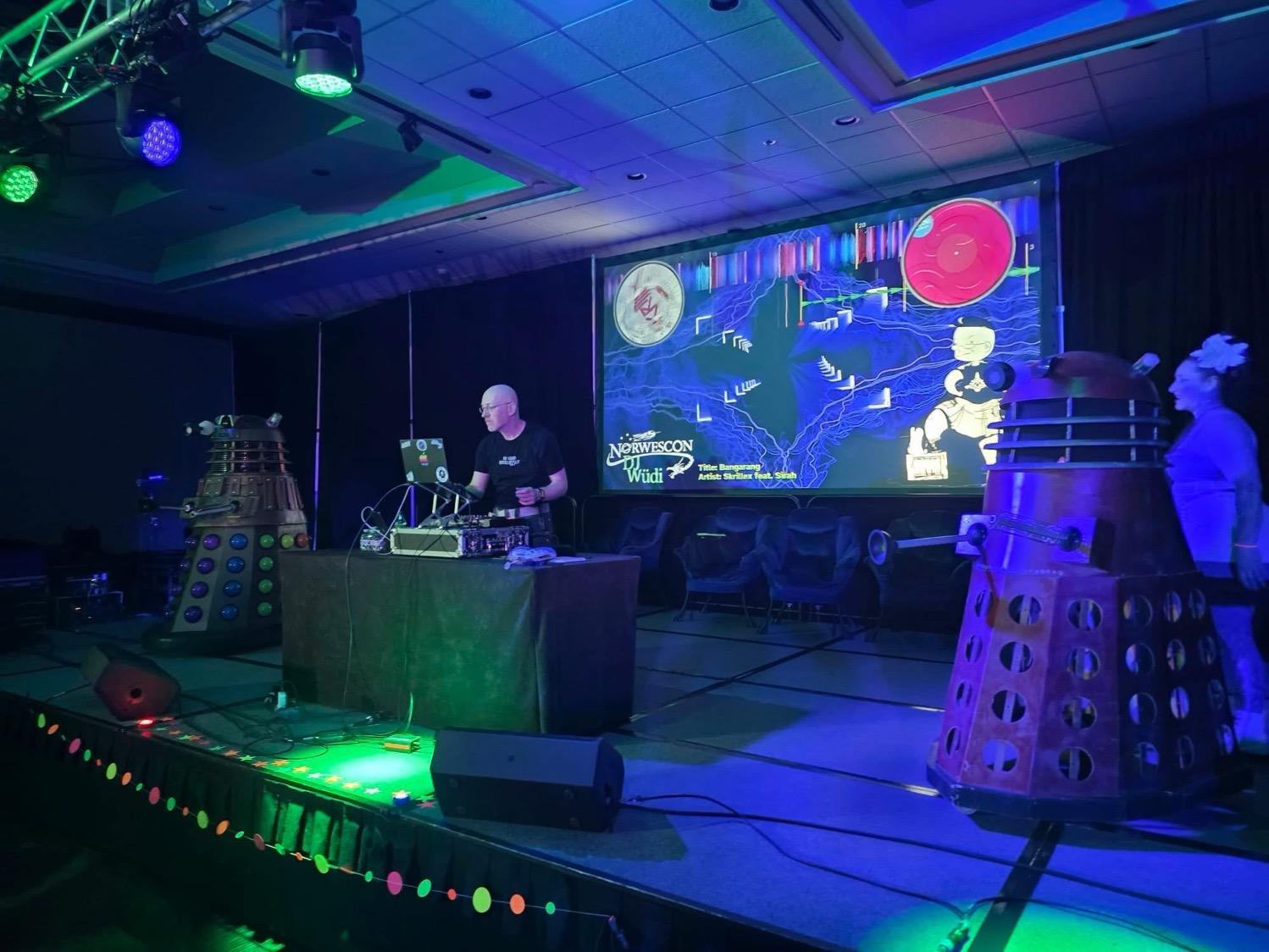
- March 30–April 5: Norwescon week! I have a half-written post-con wrap-up in progress, but who knows if it will ever get finished, so I’ll just say that it was a really good year. Had a lot of fun with friends, DJ’d a good dance on Thursday, the Philip K. Dick Award ceremony on Friday went well, and my accessibility presentation on Saturday was lightly attended, but everyone who was there was very engaged and expressed how much they appreciated the information they got.
-
April 6–12: A quiet week, somewhat intentionally so, as this was between Things Going On.
-
April 13–19: A busy work week, with a weekend jaunt down to Vancouver, WA for a work conference for my wife, while I took a day to explore the Vancouver area and bounce down into the Portland area to visit my mom.
-
April 20–26: Another busy work week, a lot of which was concerned with the sudden (if not entirely unexpected) delay of the ADA Title II update implementation deadline from this Friday the 24th to a year from now. It could have been a lot worse than a one-year delay, but there are a lot of us wondering what else is going to happen over the next year….
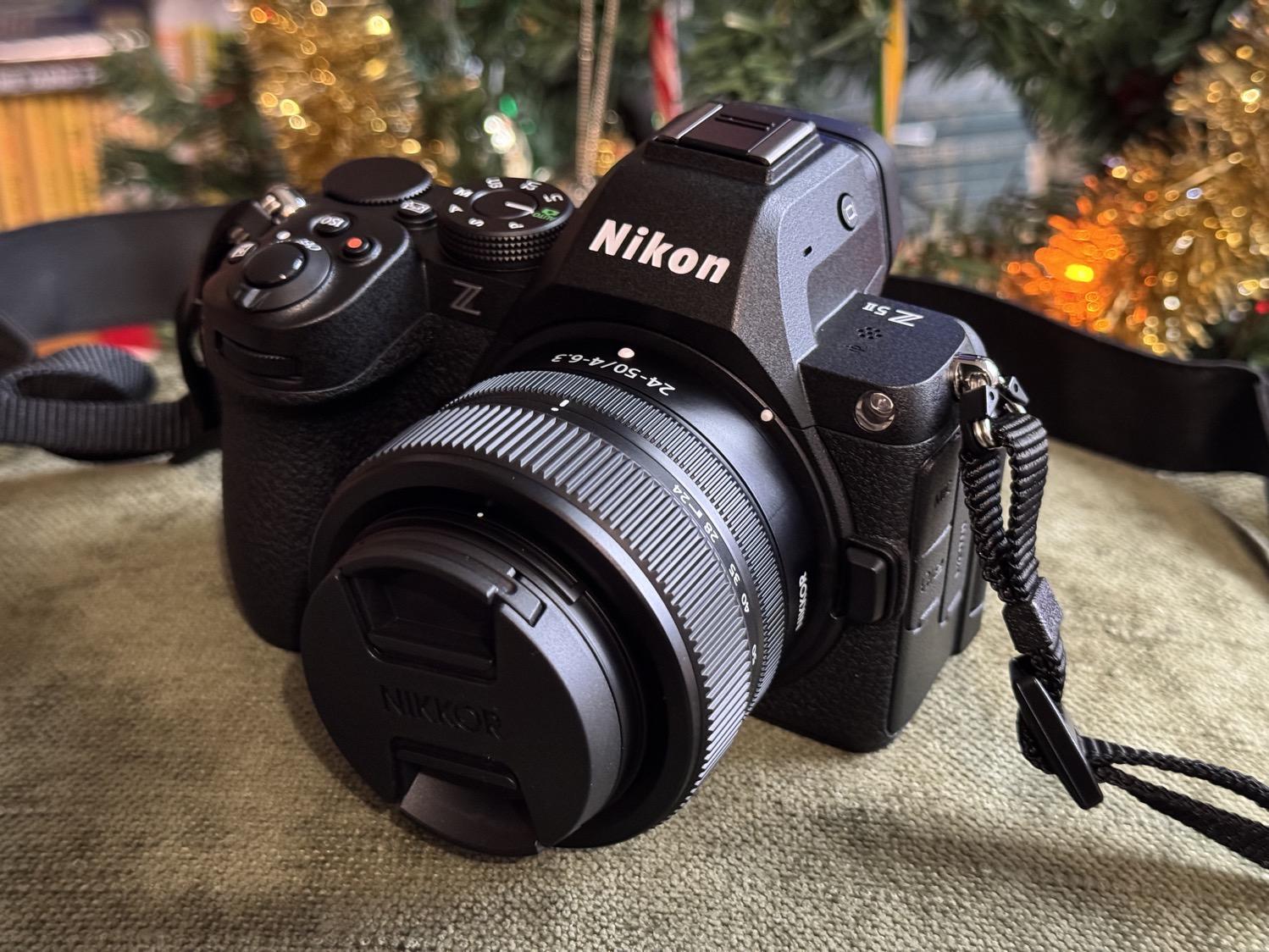
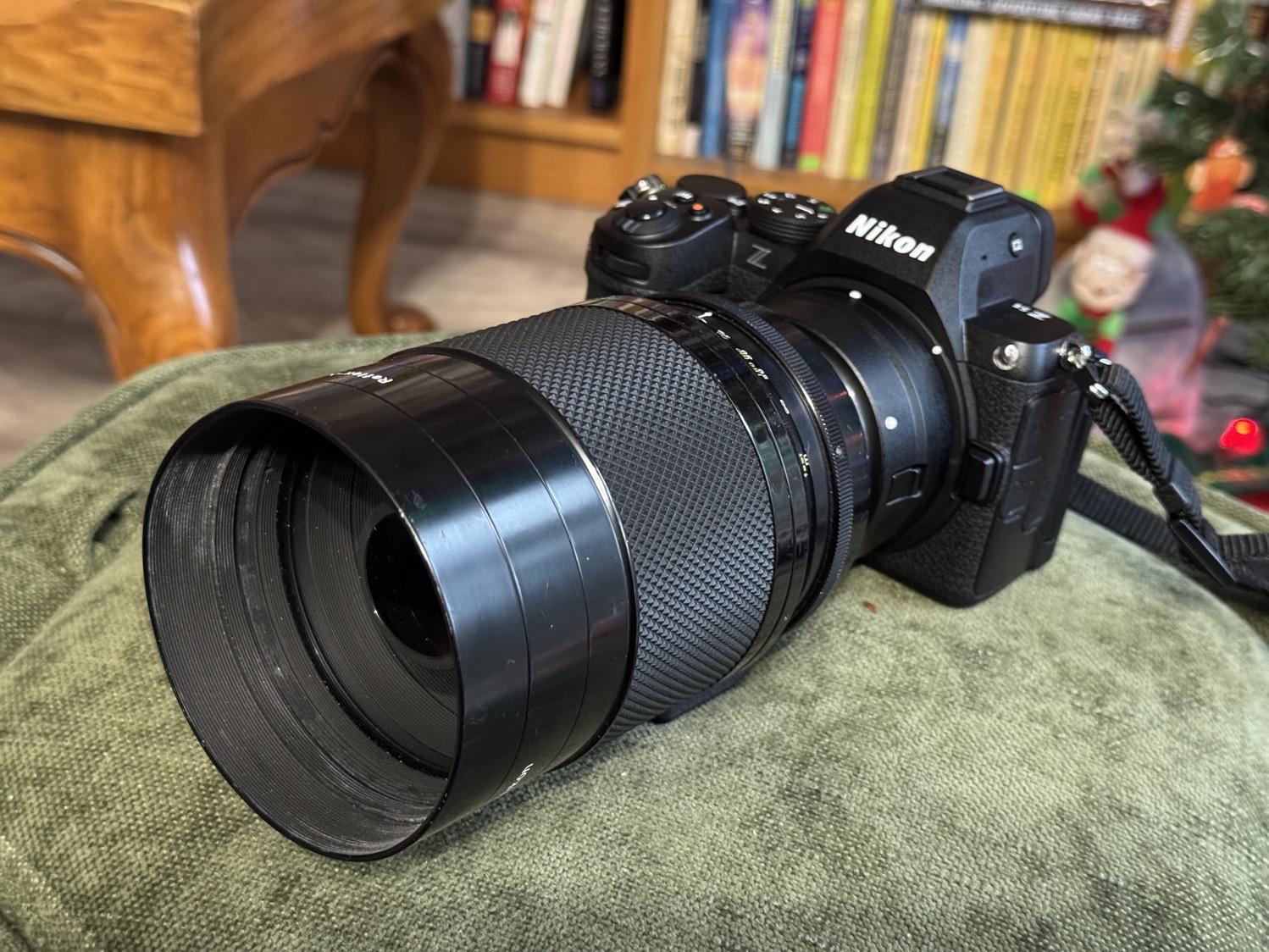
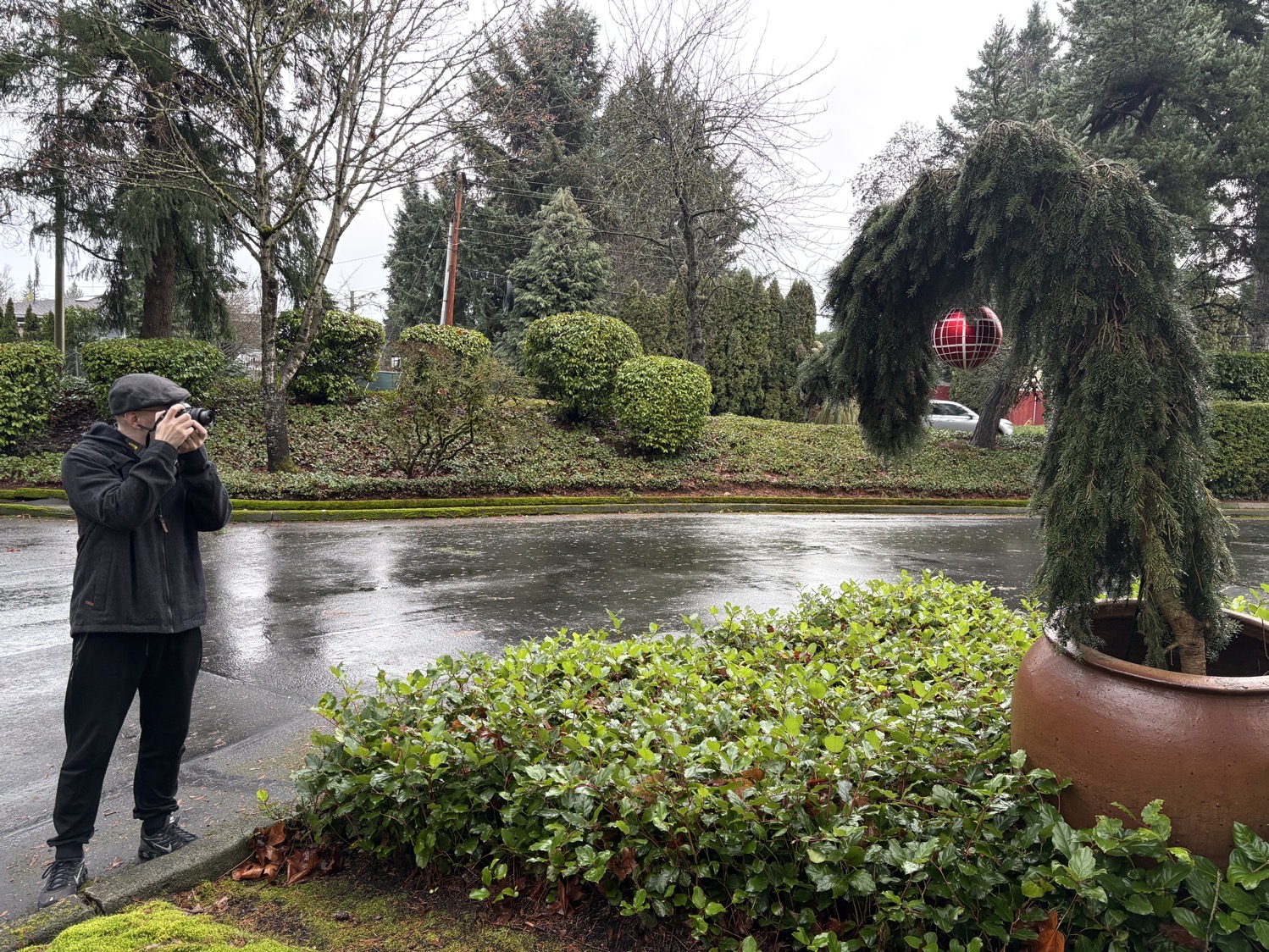
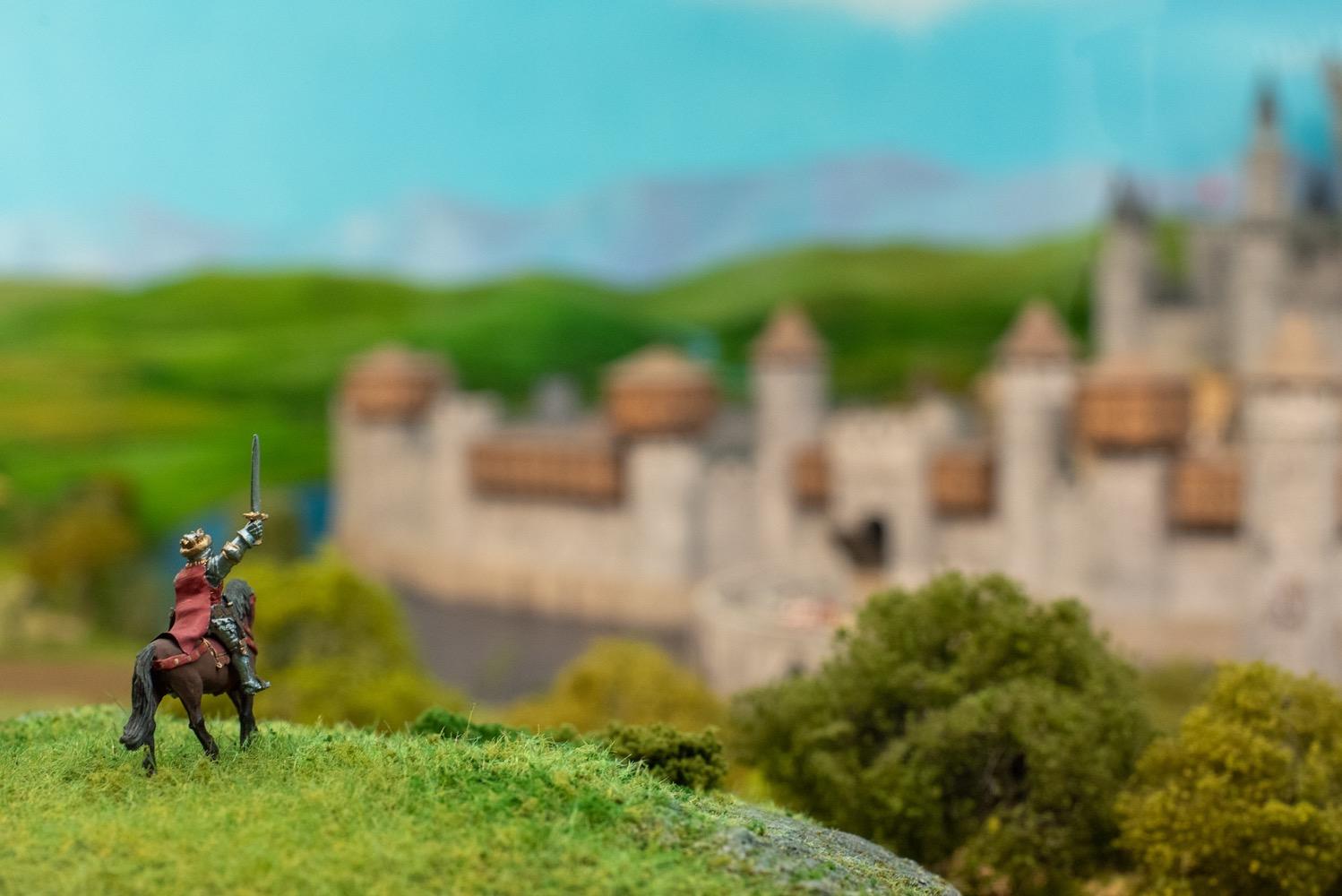
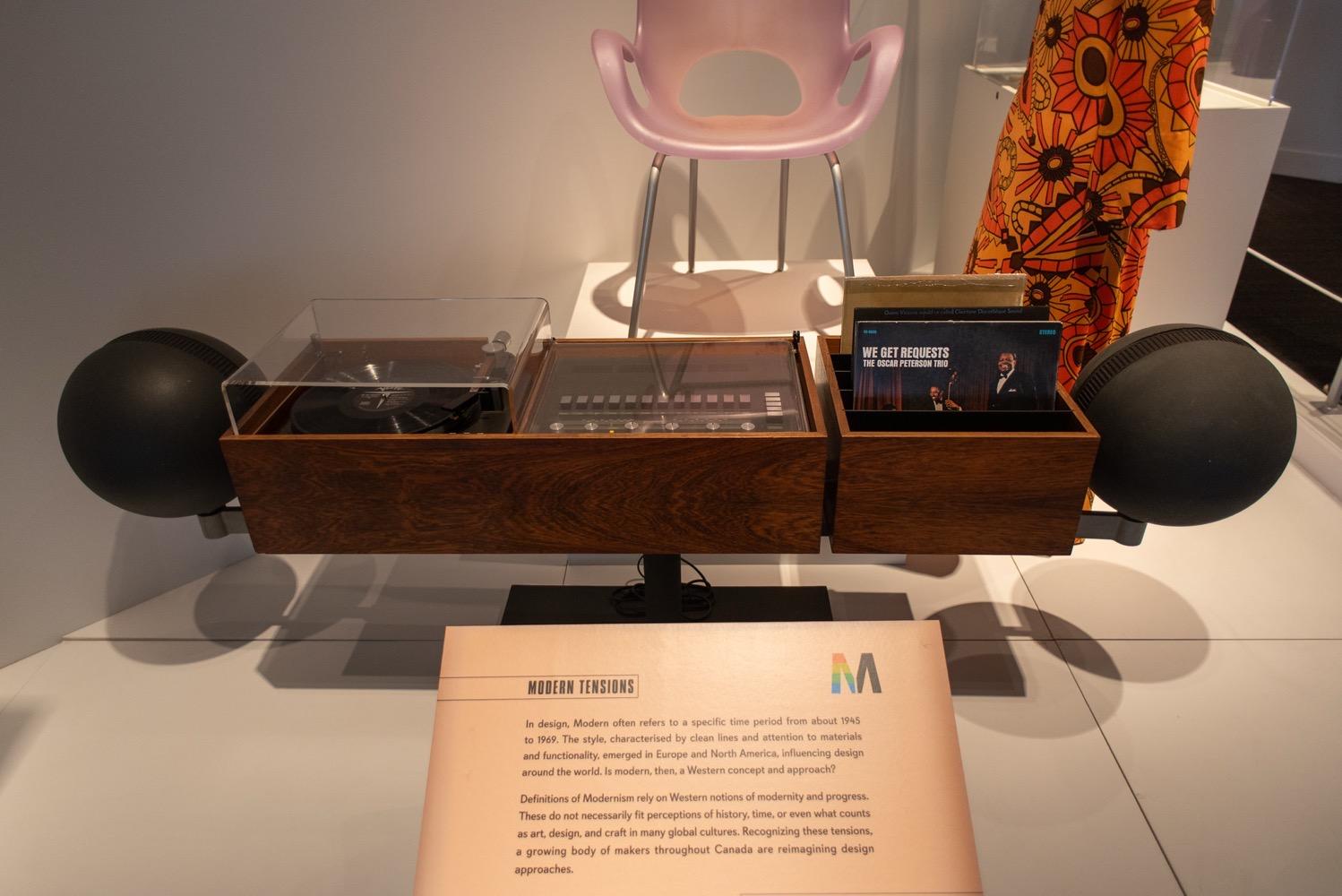
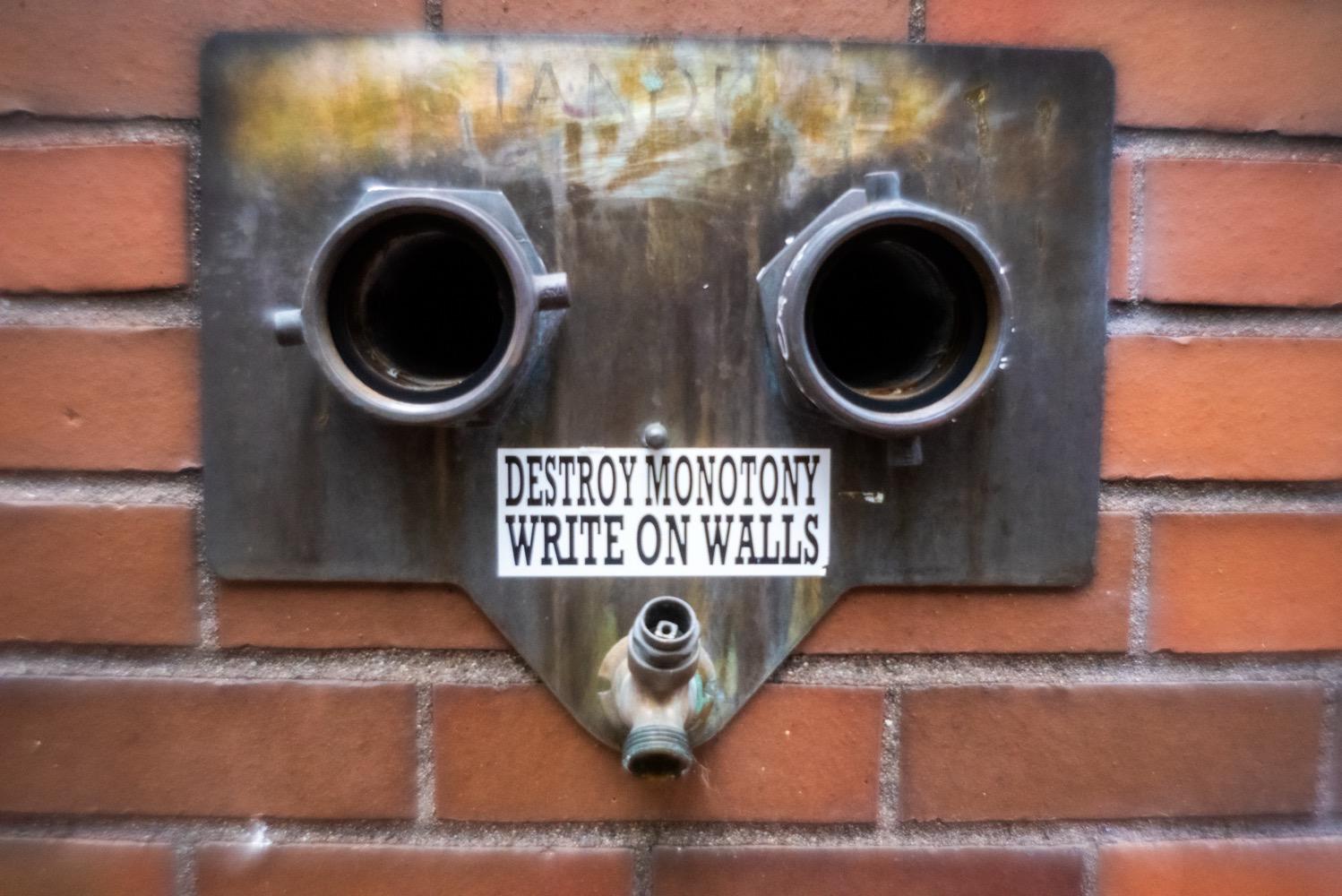
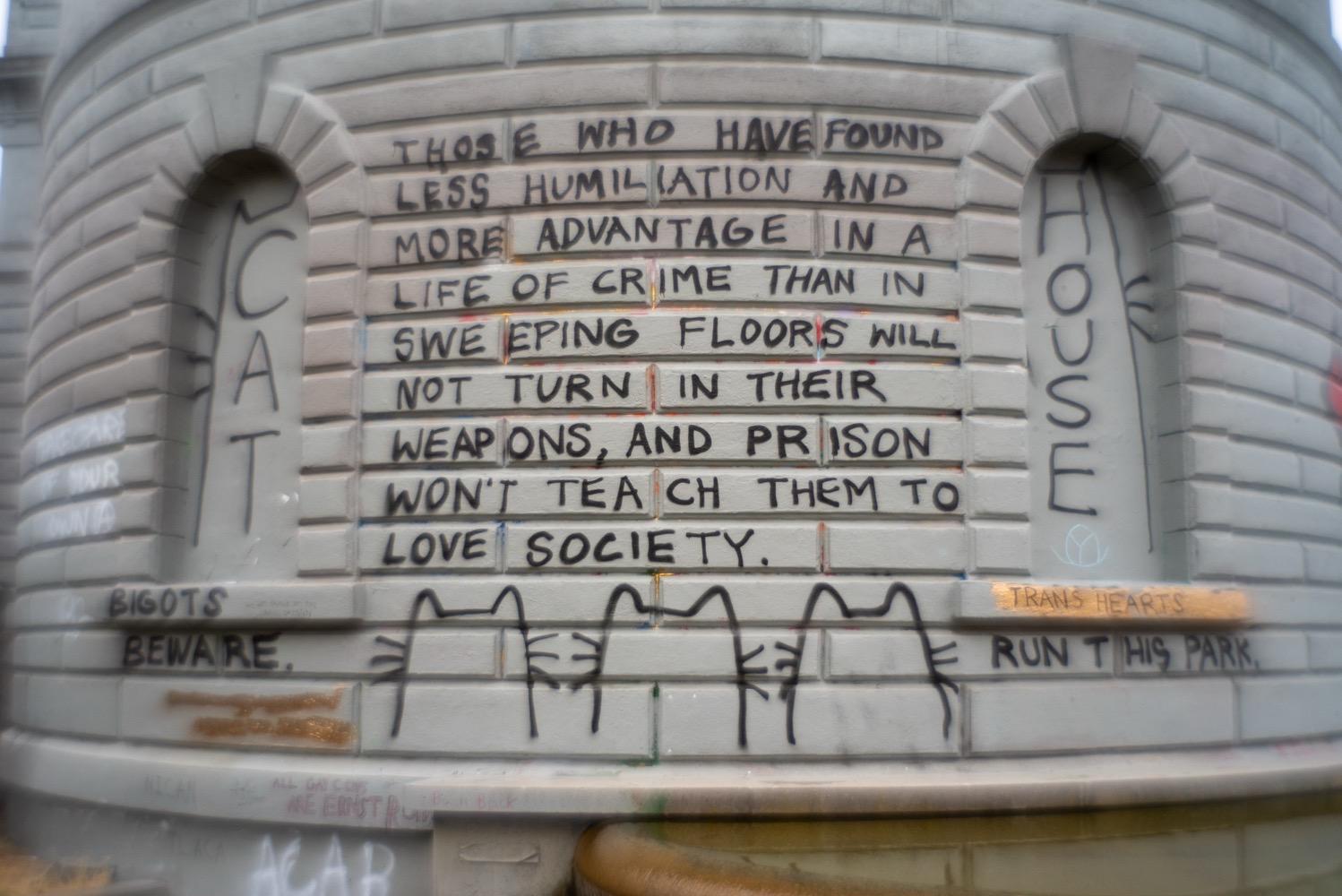
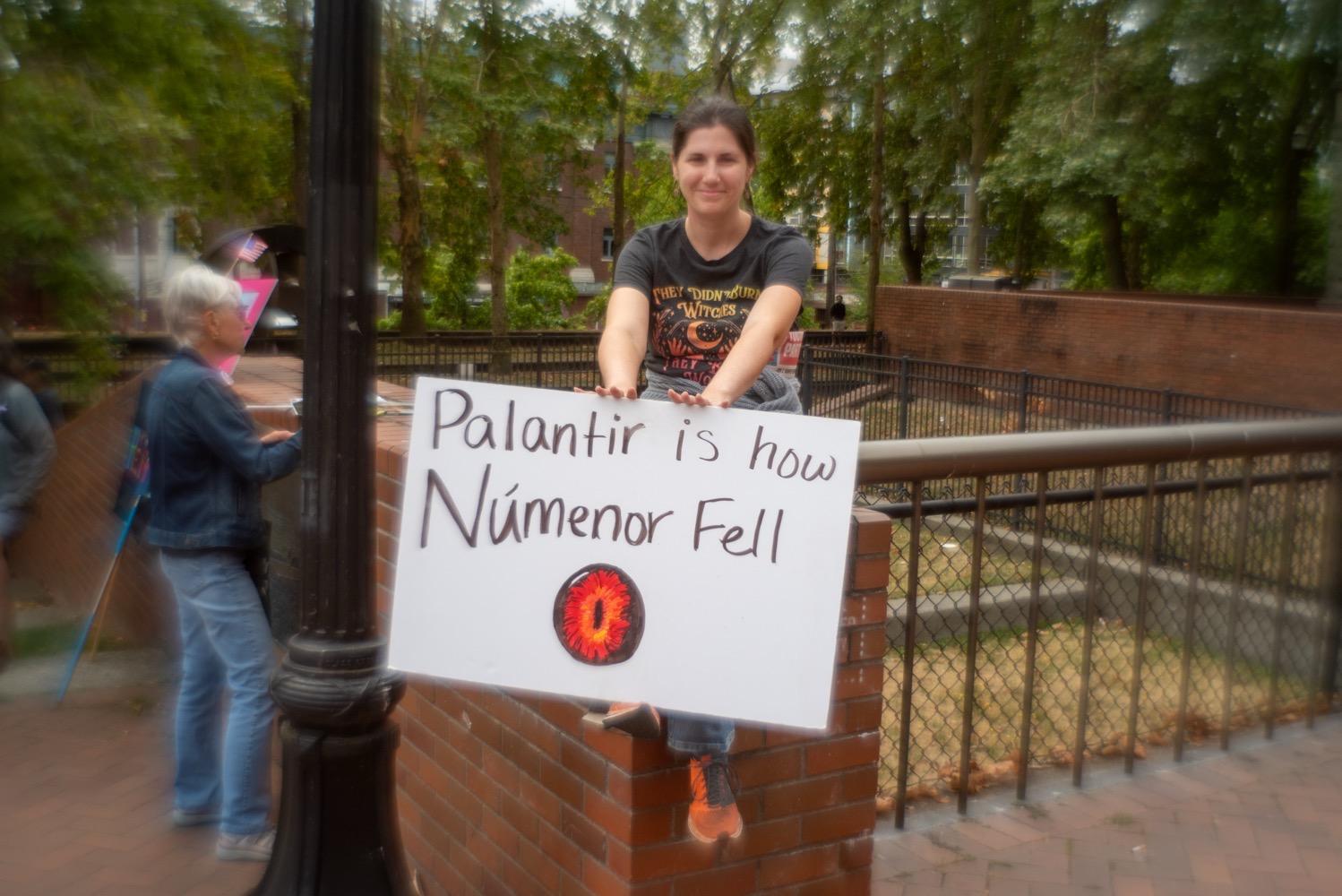
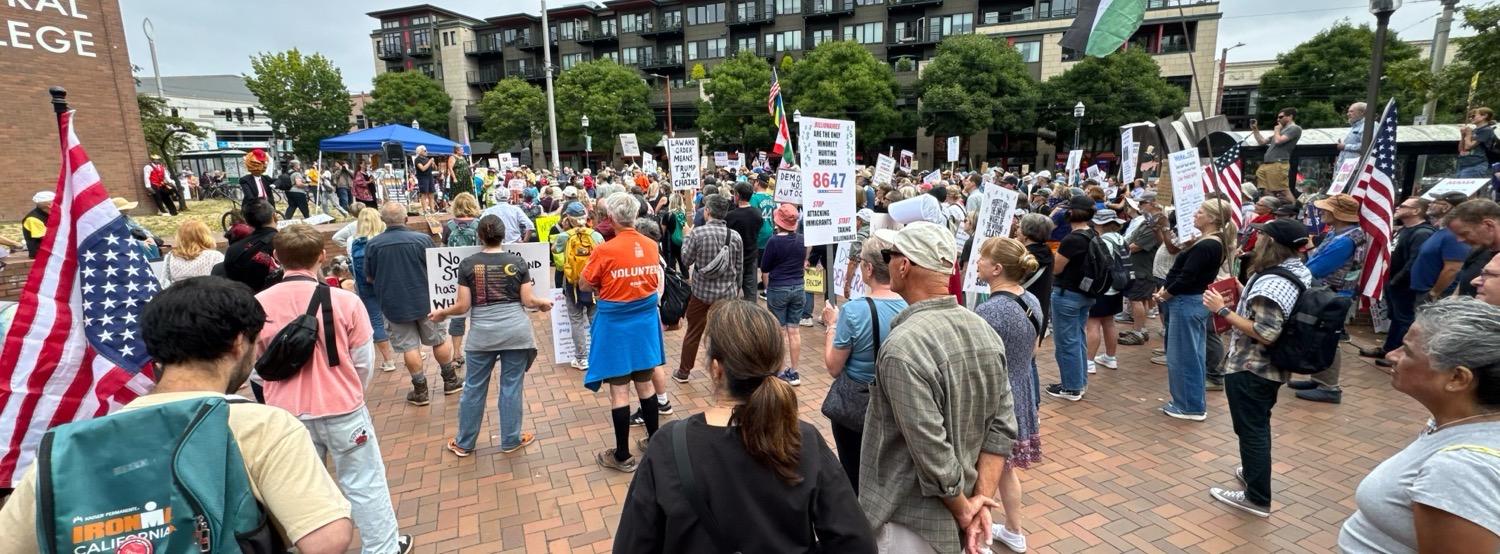
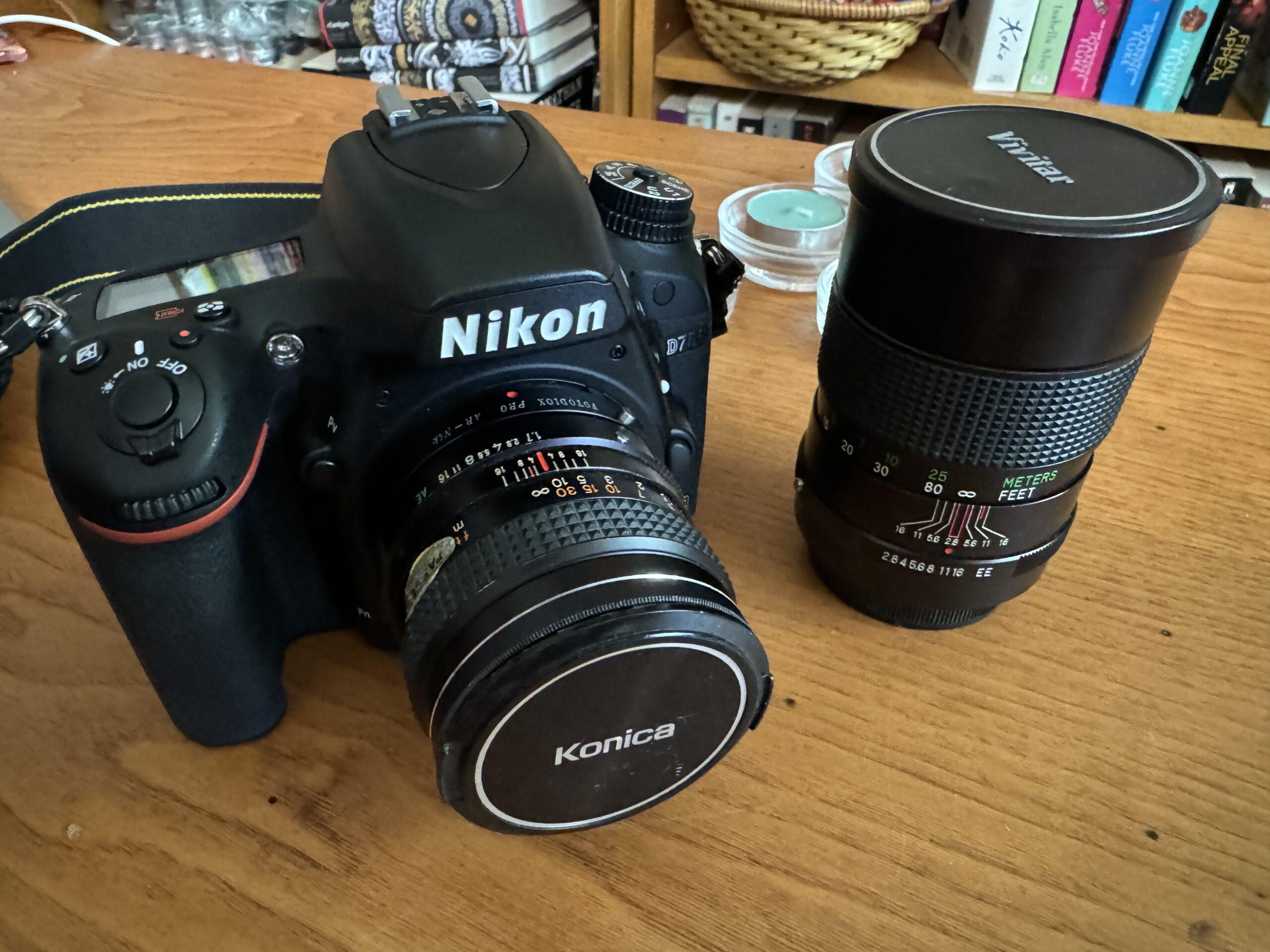
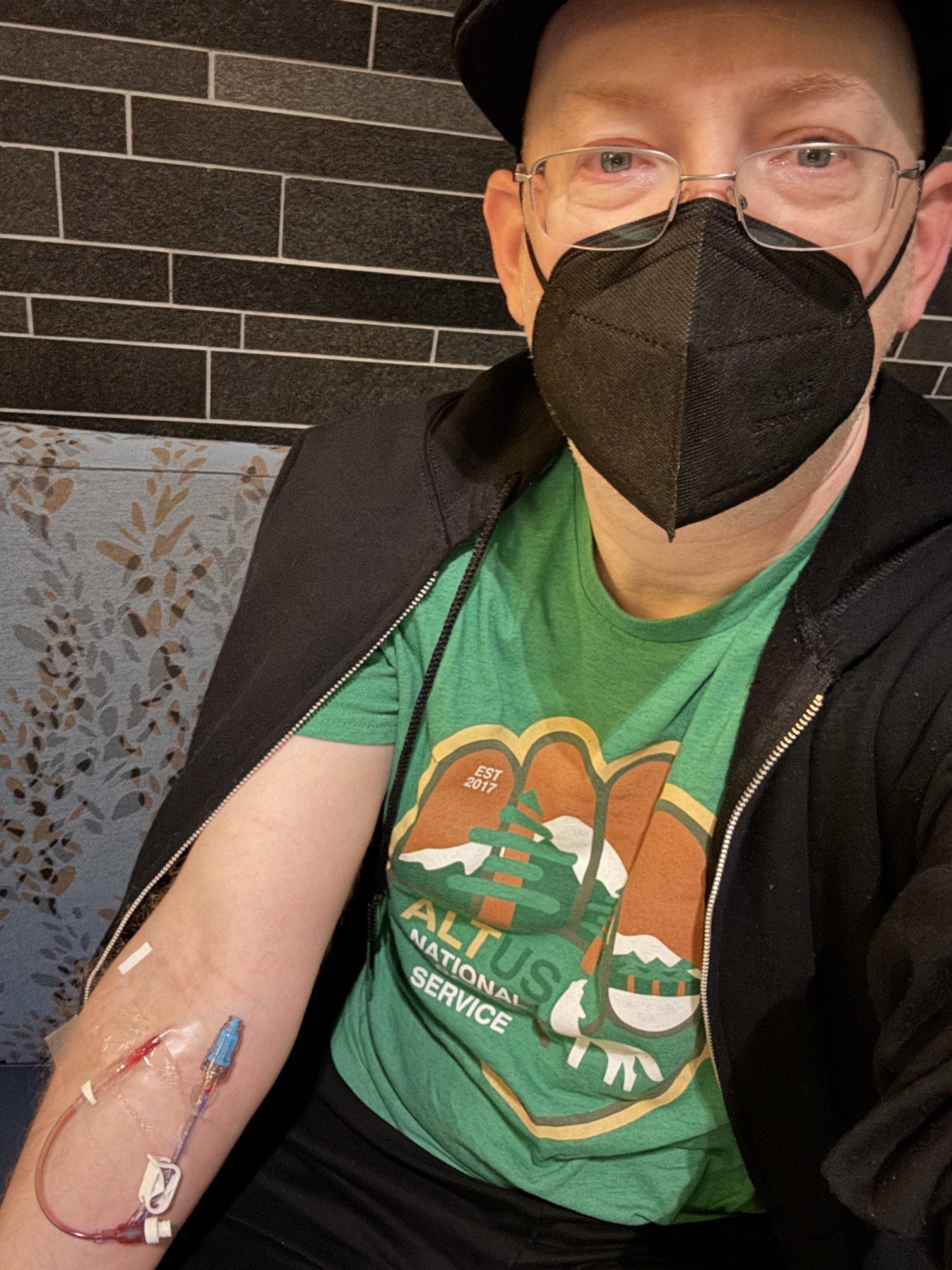
📸 Photos
Each of the following photos is linked to a larger photo album on Flickr. Click on through for more!

📚 Reading
I’ve finished four books over the past four weeks:
- Wet Visions edited by Cyn Mason; an anthology from 1988 of stories by Pacific Northwest authors that I discovered because it was regularly mentioned in old Norwescon program books.
- Identity Theft by Greg Cox; the most recently published Star Trek TOS novel.
- Usurpation by Sue Burke; the last of her Semiosis trilogy, which I’ve really enjoyed.
- Captain to Captain by Greg Cox; the first of a Star Trek TOS-era trilogy. I’m a bit behind on my book-a-week goal for the year, and diving into Trek books is generally a good way to get caught up.
📺 Watching
We’ve been enjoying History’s Greatest Mysteries from the History channel. It’s about 85% really interesting history, 10% crackpot conspiracy theories, and 5% “ALIENS!!!”
🎧 Listening
As usual, I recorded my set at Norwescon. If you’re looking for some background music to listen to during your day, you could (hopefully) do worse than this! Here’s my First Contact Galactic Gala, three and a half hours of music recorded live at Norwescon 48!
🔗 Linking
-
Brigid Delaney at The Guardian: Expat influencers sold Dubai to the world and were paid to look the other way. Now the dream is crumbling: “The Maseratis are borrowed, the helicopters rented by the hour. But deep down Dubai is a lonely place, built by oppressed people.”
-
Foz Meadows: Politics in SFF: Arguing With Andy Weir: “…just as baffled, angry transphobes can successfully use a variety of pronouns in everyday life without realizing that’s what they’re called, so too can authors like Andy Weir include politics and social commentary in their works without realizing that’s what they’ve done.”
-
Catherynne M. Valente: Blood Money: The Anthropic Settlement: “They took the best work of my mind and used it to build the very thing that is actively ruining just about everything all the time. They took the books I wrote for children and used them to make it possible for children to not bother with reading ever again. They took the books I wrote about love to create chatbots that isolate people and prevent them from finding human love in the real world, that make it difficult for them to even stand real love, which is not always agreeable, not always positive, not always focused on end-user engagement. They took the books I wrote about hope and glitter in the face of despair and oppression and used it to make a Despair-and-Oppression generator. ¶ They took my heart and used it to replace me and everyone else.”
-
Eric Eggert: Screen readers are not testing tools: “Screen readers show the symptoms of bad code, but not the actual problems. They are an indirect way to test.”
-
Jonaki Mehta at NPR: These blind students say their college blocked their education. A new rule could help: “Digital accessibility is a major concern for students with blindness and other disabilities — an ever-changing landscape that often isn’t designed with disabilities in mind. ¶ Now, that could change: An update to regulations in the Americans with Disabilities Act (ADA), set to take effect at the end of April, will require public institutions to meet new standards that dictate what accessibility should look like.”
-
Ben Andrews at Digital Camera World: NASA chose an old DSLR as its primary Artemis II camera – here’s why: “There are plenty of premium cameras that could potentially work well for such a special task, but NASA has a long history of trusting Nikon for its photographic requirements, so it’s of little surprise NASA has again picked Nikon for Artemis II. What’s more surprising is the particular Nikon camera bodies you’ll find on board.”
-
Sophie Hardach at the BBC: Wit, unker, git: The lost medieval pronouns of English intimacy: “Tales of love and adventure from 1,000 years ago reveal a dazzling range of now-extinct English pronouns. They capture something unique about how people once thought about “two-ness”. But why did they die out in the first place?”
-
Christopher Weber at the AP: From Early Nirvana To Phish, A Chicago Fan’s Secret Recordings Of 10,000 Shows Are Now Online: “Aadam Jacobs has secretly recorded over 10,000 local concerts since 1989. Now, they are cleaned up and ready to listen to for free online.”
-
Clifford Winston at the New York Times: Where Did All the Affordable Cars Go?: “While politicians and economists scratch their heads at voters upset about affordability in a decent economy, they seem to somehow miss the fact that for most Americans, the purchase of a car has become a debt sentence.”
-
Spencer Mortensen: Email address obfuscation: What works in 2026?: “Here are some of the best techniques for keeping email addresses hidden from spammers—along with the statistics on how likely they are to be broken.”
-
Maggie Harrison Dupré at Futurism: AI Use Appears to Have a “Boiling Frog” Effect on Human Cognition, New Study Warns: “In a new study, researchers claim to provide the first causal evidence that leaning on AI to assist with ‘reasoning-intensive’ cognitive labor — mental tasks ranging from writing to studying to coding to simply brainstorming new ideas — can rapidly impair users’ intellectual ability and willingness to persist despite difficulty.”
-
Colleen Gratzer: Can You Create Accessible PDFs in Affinity?: “I hope that Affinity will continue adding the basic and necessary accessibility features that designers need. But, sorry to say… Affinity just isn’t there yet as a full-on replacement to InDesign for accessibility work.”
-
Oliver Schöndorfer: Dyslexia friendly fonts: Are they any good?: “TL;DR: So-called dyslexia friendly fonts perform worse than other typefaces, while conveying an either broken or playful aesthetic that might not fit to your project. As a rule of thumb, prefer more common typefaces with a looser spacing, open shapes, and distinct letters.”
-
Emily M. Bender and Decca Muldowney: Why you should refuse to let your doctor record you: “So what’s the big deal with ‘AI’ charting? Here are nine reasons why we recommend refusing to consent to the use of scribing tools in healthcare settings.”
-
Shri Khalpada at PerThirtySix: How The Heck Does Shazam Work?: “How audio fingerprinting and a connect-the-dots trick lets Shazam identify a song in seconds.”
-
Newcastle University: Accessible conferences and events: “These guidelines that we have produced are intended as a checklist for use when planning and running an event. It might feel slightly daunting at first as you are having to rethink aspects of your approach to planning these events but please be reassured that doing something is better than nothing and any attempt to improve accessibility will be welcomed.”
-
Chris Klimek at NPR: Before sci-fi was everywhere, this pioneering magazine championed ‘scientifiction’: “His portmanteau never quite made it into port. But Gernsback’s innovation of collecting previously-diffuse bits of literature ruminating on scientific discovery or technological advancement in one place proved to be an idea with staying power. The evidence is all around us, on all your streaming services and movie marquees, if not your bookshelves.”
-
Michaeleen Doucleff at NPR: The surprising origin of 4 features that superglue kids — and adults — to screens: “During the trial in California, the attorney bringing the case accused Meta and Google of designing their apps to behave like ‘digital casinos.’ That’s an apt comparison, according to Schüll’s research, because major design elements of social media have surprising roots in the gambling industry.”