Best-Selling Singles of All Time

Archie Henderson on Twitter:

I am a music historian, and with @AdrianRMG I have researched the best-selling single of every decade all the way back to 14,000BC. Here’s a thread:

This is a really amazing piece of musical historical research, and I strongly recommend going all the way through the thread. The snippets he was able to track down are incredible.

Today’s geeky triumph: Figuring out how to use Automator to create a service that pipes selected text through pandoc to speed up converting old posts on my blog to proper markdown format from the current HTML/markdown hodepodge.

Plex Offers Over a Thousand Ad-Supported Movies on Demand: The films are “free” as in “ad supported”, but it’s still an interesting move. While I’m a long-time Plex user, I’m not sure if I’ll take advantage of this (I have an extensive personal movie and TV collection as it is, plus some of the big-name streaming services), but it may well be worthwhile for plenty of other people.

Downtown Seattle Barnes & Noble to close January 18th: “When the downtown Barnes & Noble closes, there will officially be no bookstores in the downtown retail core. While there are quite a few bookshops in surrounding neighborhoods like the Pike Place Market, Pioneer Square, Capitol Hill, and Queen Anne, this will be the first time in decades that shoppers won’t be able to browse the stacks of a bookstore without leaving downtown Seattle.”

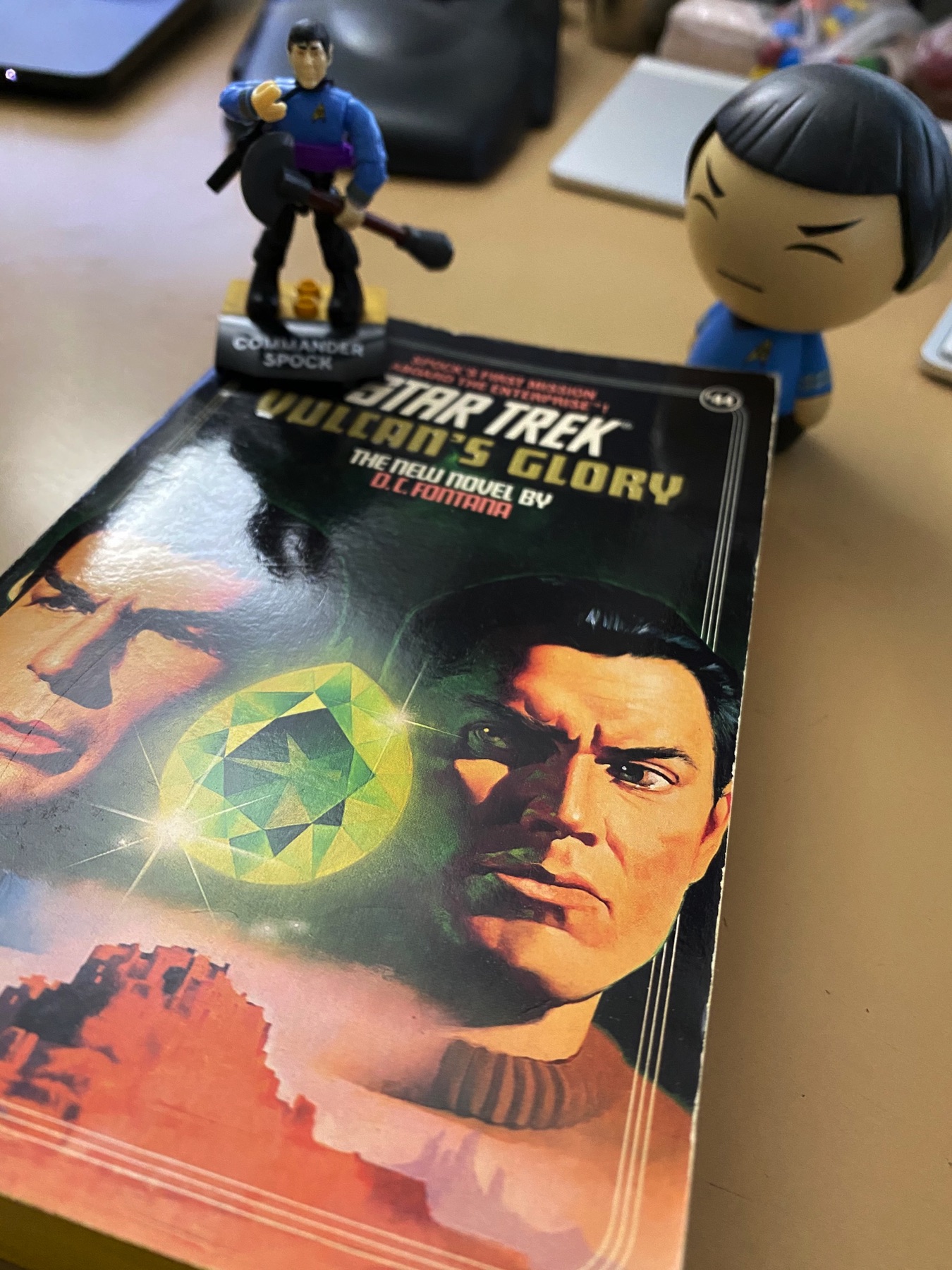
RIP D.C. Fontana

Sad news — D.C. Fontana, one of the pillars of Star Trek, has died.

As a writer, Fontana is credited with many episodes focusing on Vulcan culture and helped blaze a trail for female writers in sci-fi television. She is the mind behind The Original Series and The Animated Series episodes like “Yesteryear” and “Journey to Babel,” which introduced Spock’s father Sarek and mother Amanda. She co-wrote the Hugo Award nominated The Next Generation episode “Encounter at Farpoint” with Gene Rodenberry, and she continued to write for TNG and Deep Space Nine. Her last produced credit was an episode of webseries Star Trek: New Voyages, starring Walter Koenig.

Hopepunk

I first ran across the term “hopepunk” just about a year ago, and more and more these days, it’s the attitude that is helping me cope with the state of the world today.

As I posted on Facebook earlier today, along with the Tank Girl image in this post:

Tank Girl is hopepunkI post occasionally about the #hopepunk idea, and this is the essence of it (what I’ve also seen termed as “weaponized optimism”, which I love).

Yes, many things are horrible. Yes, far too much of the world is shit. And yes, not only can it be better, but we can make it better. And we’ll drag the rest of you with us into a better world, whether you like it or not.

Here’s more on the hopepunk idea, from a few sources. In each of these links, there’s a lot more than what I’ve excerpted here, and I highly recommend spending some time going through them all.

Read more

There are no humans in Star Wars.

This should be obvious from the title card. We’re a long time ago, in a galaxy far, far away. Human beings evolved on this planet, Sol 3, over the last sixty million years or so depending on how you count. If we don’t want to go all “Chariots of the Gods?” we have to throw out the notion that the people represented by human actors in Star Wars movies are in fact human. They’re something else.

Why represent them as human? Let’s assume that the Star Wars movies are dramatizations of real history: that Luke, Leia, Han et. al. actually existed in a galaxy long, long ago (etc.), and that George Lucas accessed this history via the Force and wanted to represent it on film. Star Wars tells the story of a dominant-species empire arising from a pluralistic society, then being overthrown by courageous rebels and warrior monks. Lucas had to cast this drama with human actors, and the obvious choice was to use unmodified humans to represent the most common species.

While convenient, this approach does present one problem: watching the Original Trilogy, we assume that the ‘humans’ of the GFFA (Galaxy Far Far Away) are biologically and sociologically identical to Sol 3 humans. When obviously they’re not! In fact, I think a few important context clues present a very different picture of the dominant race of the Original Trilogy.

Read the rest of Max Gladstone’s theory for what he thinks is the most likely answer. From 2013, but I just came across this link today.