About that new Star Trek show…

This morning, CBS announced a new Star Trek series debuting in January of 2017. Yay!

Well, maybe yay. Hopefully yay. But, of course, since we’re geeks, and since many of us feel that Trek hasn’t been treated terribly well lately, there’s a lot of trepidation mixed in with the general surprise at the news. So, a few thoughts on what little we know so far.

  1. Yes, the executive producer is Alex Kurtzman, notorious among many for being part of the team behind the recent reboot movies, which were successful but are regarded by many as being more than a little problematic. (Personally, I enjoyed the first and thought that though there were some issues, it did a good job of rebooting the franchise for modern times while still respecting its roots; the second is a big dumb summer action flick that is very, very questionable from a lifelong Trek fan’s standpoint.) However, Kurtzman is listed as executive producer, and his work as a series producer has often been on shows that have been worth watching (Alias, Fringe, and Sleepy Hollow are particular high points), and his greatest travesties have been as a film screenwriter (the Transformers franchise, the Trek reboots).

  2. Kurtzman’s aforementioned screenwriting problems (Transformers, nuTrek) were done in concert with Roberto Orci (notorious for essentially telling Trek fans critical of the new films to fuck off). Since the two decided to go their separate ways, it’s possible that he might do better shepherding a Trek show on his own than in partnership with Orci. (It’s also interesting that Kurtzman is doing the new show for CBS, while Orci is still part of the production team for the upcoming Star Trek Beyond for Paramount. Maybe that will help us figure out which of the two has a better handle on Trek?)

  3. I think it’s a safe bet that the new show will probably be part of the reboot universe. With three movies in the new universe out by the time the series debuts, and another planned for 2019, that simply makes the most sense. But that’s not definite: all we really know from the announcement is that it will “introduce new characters” and that “is not related to the upcoming feature film Star Trek Beyond“. This makes sense, as CBS controls Trek’s TV rights, while Paramount controls the feature film rights. So, while I think keeping it in the new universe (even if it doesn’t directly integrate with the films) makes the most sense, there’s no way to know for sure at this point.

  4. I’m in agreement with Ron Moore (and others) that while the films are fun, Star Trek works best on TV.

    I think that Star Trek, in its DNA, is a television show. The features are great. They’re a lot of fun and they’ve certainly opened it up to a lot of different audiences, but the features all are basically atypical episodes, if you think about it. The features are very big action-adventure movies, lots of spectacle, run and jump, shoot-em-up and blowing things up. The fate of the Earth, or the universe itself, is always at stake. It’s always about the captain, and one other character has a strong B-story, and everyone else sort of has very small roles beyond that. But Star Trek, as originally conceived, and as you saw play out in all the other series, was really a morality play every week, and it was about an ensemble of players. They were exploring science fiction ideas, sociological ideas and moral ideas. That’s really what the shows are about….

  5. It’s still over a year away. There’s a lot of time for rumors, speculation, hopes, fears, and everything else. I choose to remain cautiously optimistic.

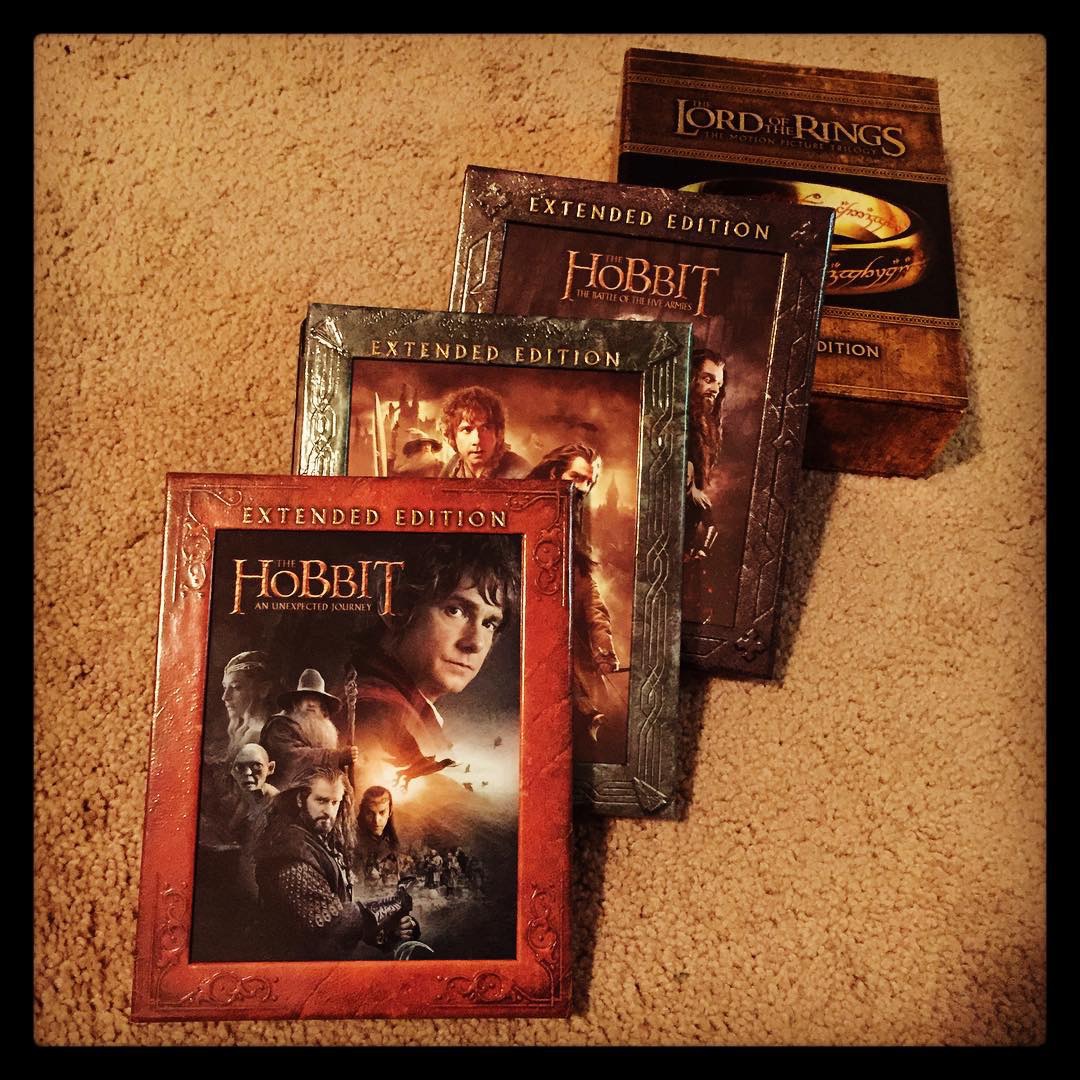
More goodies! The movies are birthday presents from Prairie’s mom (we’ll have to let her know what she got me), the book I’ve had on preorder for months. Our plan is to find time to watch the Jurassic Park trilogy before seeing Jurassic World. No real reason for the Pirates series other than that we enjoy them. And Stephenson is probably my favorite current SF author. Good thing this quarter is almost over!

DVD/Blu-Ray conversion with text soft subs on Mac OS X

NOTE: This post should be considered deprecated in favor of this update for 2021. I’m leaving this here, but the new post is the preferred version.


Saved here for my own reference, and possibly others’ if they should stumble across it: the easiest workflow I’ve found yet for converting DVDs or Blu-Rays (if you have a Blu-Ray reader, of course) for personal use on OS X, including OCR conversion of subtitles in either VOBSUB (DVD) or PGS (Blu-Ray) format to text-based .srt files suitable for use as soft subtitles, either as a sidecar file or included in the final movie file.

Movie Rip Workflow

The flow diagram to the right gives an overview of the process I’ve landed on. Here’s a slightly more detailed breakdown.

  1. Use MakeMKV to rip the DVD or BluRay disc to an .mkv file (if I run into a stubborn DVD, or one with a lot of multiplexing, I’ll use RipIt to create a disk image first, then run that image through MakeMKV). To save space, you can select only the primary audio track for inclusion, or you can select others if you want other languages or commentary tracks archived as well (though this will require more storage space). I also select all available English-language subtitle tracks, as some discs will include both standard subtitles and subtitles for the hearing impaired or closed captions, which include some extra information on who is speaking and background sounds, or occasionally even transcriptions of commentary tracks.
  2. Use Subler to OCR and export the subtitle files. This takes two runs through Subler to complete.
    1. First run; drag the .mkv file onto Subler, and only select the subtitle track(s). Pop that into the export queue, and after a few minutes of processing (this is when the OCR process happens) Subler will output a tiny .m4v file.
    2. Second run; drag that file back onto Subler, click on the subtitle track, and choose File > Export… to save the .srt file(s). The tiny .m4v file can then be deleted.

    Now, the OCR process is not perfect, and the resulting .srt file(s) are virtually guaranteed to have some errors. How many and how intrusive they are depends on the source. BluRay subs seem to come out better than DVD subs (likely due to the higher resolution of the format giving better quality text for the OCR process to scan), DVD subs are also affected by the chosen font and whether or not italics were used. For correction, I use one of two methods.

    1. For a quick-and-dirty “good enough for now” run, I use BBEdit (but just about any other text editor would work) to do a quick spellcheck, identifying common errors and using search-and-replace to fix them in batches.
    2. For a real quality fix, I use Aegisub to go through line-by-line, comparing the text to the original audio, adding italics when appropriate, and so on.

    Of course, these two processes can be combined, done at different times, or skipped entirely; right now, I’m just living with the OCR errors, because I can always go back and use Subler to extract the .srt files for cleanup later on when I have more time.

  3. Use HandBrake to re-encode and convert the .mkv file (which at this point will be fairly large, straight off the source media) to a smaller .m4v file. You can either embed the .srt files at this point, under HandBrake’s ‘Subtitles’ tab, or if you prefer…
  4. …you can use Subler to .srt files into into the .m4v: Drag the .m4v file from HandBrake on to Subler, drag the .srt file(s) into the window that opens, and then drop that into the queue for final remuxing (optionally, before adding the files to the queue, use Subler’s metadata search tools to add the description, artwork, and other metadata). Then run the queue to output the final file.

And that’s it. Now, you should have a .m4v file with embedded text-based soft subtitles for programs that support that (VLC, Plex, etc.), or you can just use the .srt file(s) created by Subler earlier as a sidecar file for programs that don’t read the embedded .srt.

Default Human Being

From Sociological Images: Why do the Japanese draw themselves as white?

Why do the Japanese draw themselves as white? You see that especially in manga and anime.

As it turns out, that is an American opinion, not a Japanese one. The Japanese see anime characters as being Japanese. It is Americans who think they are white. Why? Because to them white is the Default Human Being.

If I draw a stick figure, most Americans will assume that it is a white man. Because to them that is the Default Human Being. For them to think it is a woman I have to add a dress or long hair; for Asian, I have to add slanted eyes; for black, I add kinky hair or brown skin. Etc.

The Other has to be marked. If there are no stereotyped markings of otherness, then white is assumed.

I came across this in the context of people not understanding the dissatisfaction with the whitewashing of Ghost in the Shell with Scarlett Johanssen being cast as Major Motoko Kusanagi, but I believe it’s important in a lot of other contexts as well: we need to realize that our concept of the “default human being” is highly dependent upon our own culture and ingrained biases.