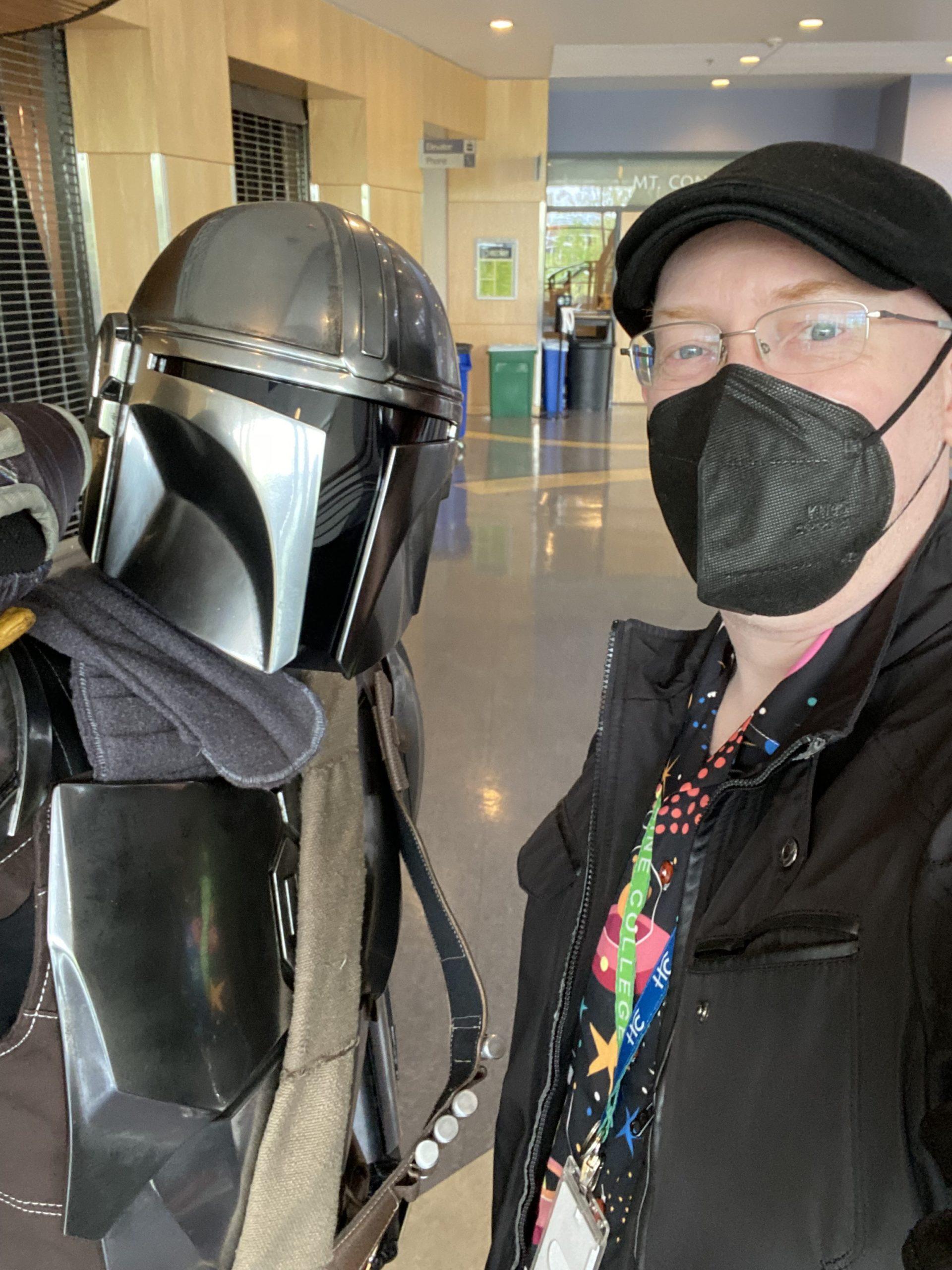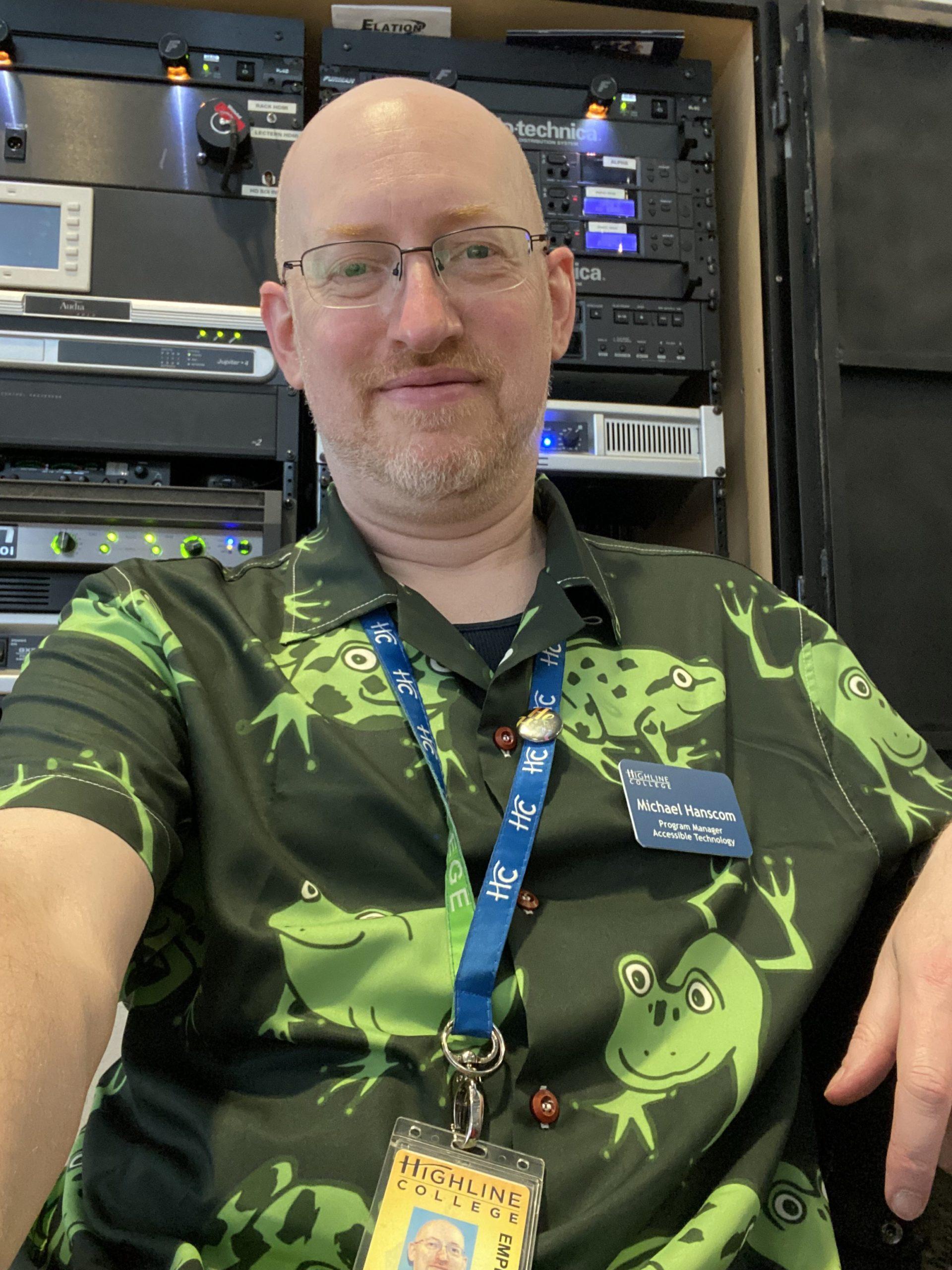
Day 3: A long and tiring day of running around making sure captions work and doing impromptu tech support for professional development day at work. The frog shirt is another birthday addition.

Enthusiastically Ambiverted Hopepunk
The stuff about me and my life. The “diary” side of blogging.
Day 3: A long and tiring day of running around making sure captions work and doing impromptu tech support for professional development day at work. The frog shirt is another birthday addition.
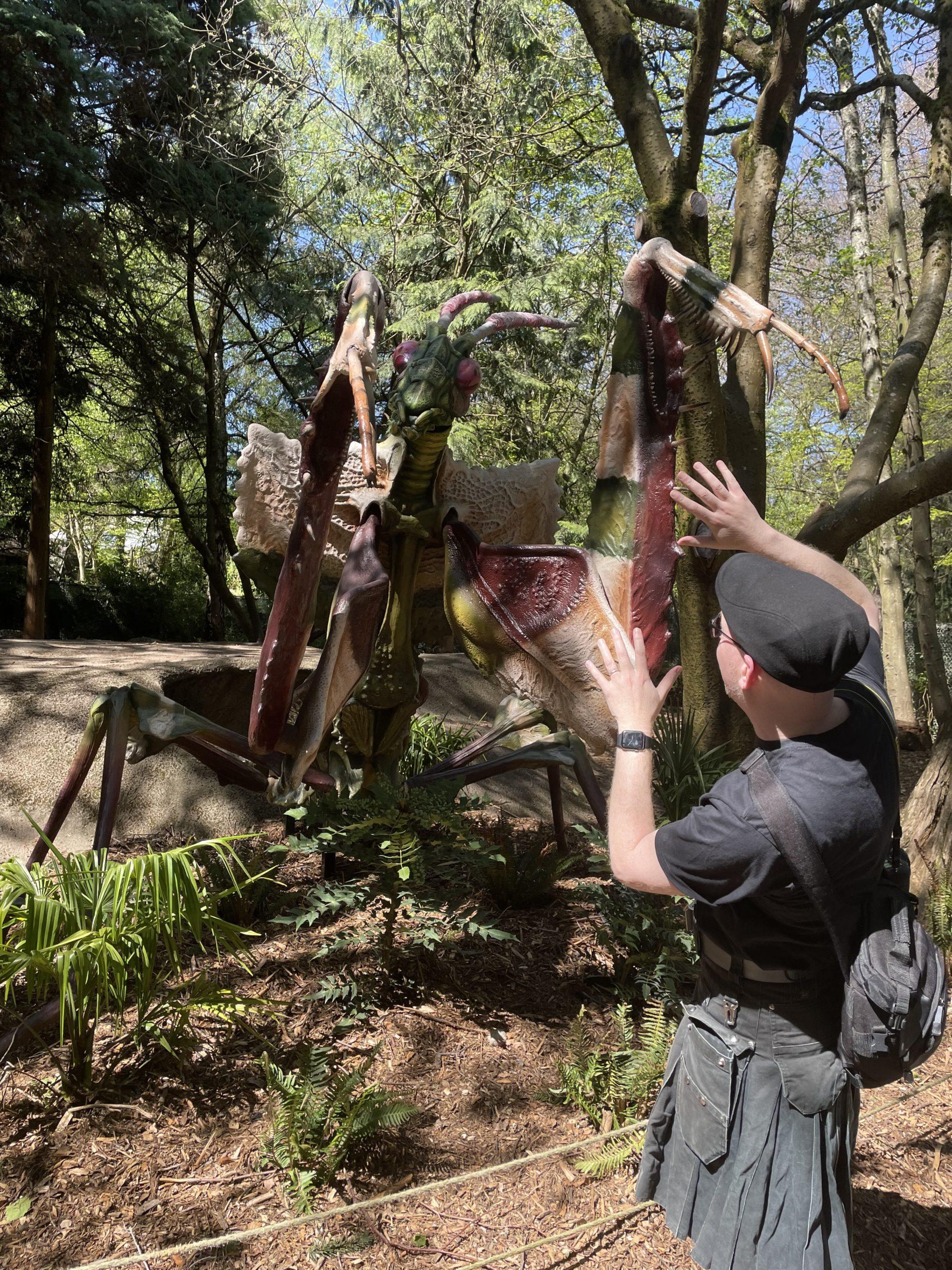
For my 50th year, I’m going to try to post an selfie (or image with me in it) a day. Day one: From my birthday trip to Seattle’s Woodland Park Zoo, having fun with their new A Bug’s Eye View exhibit.
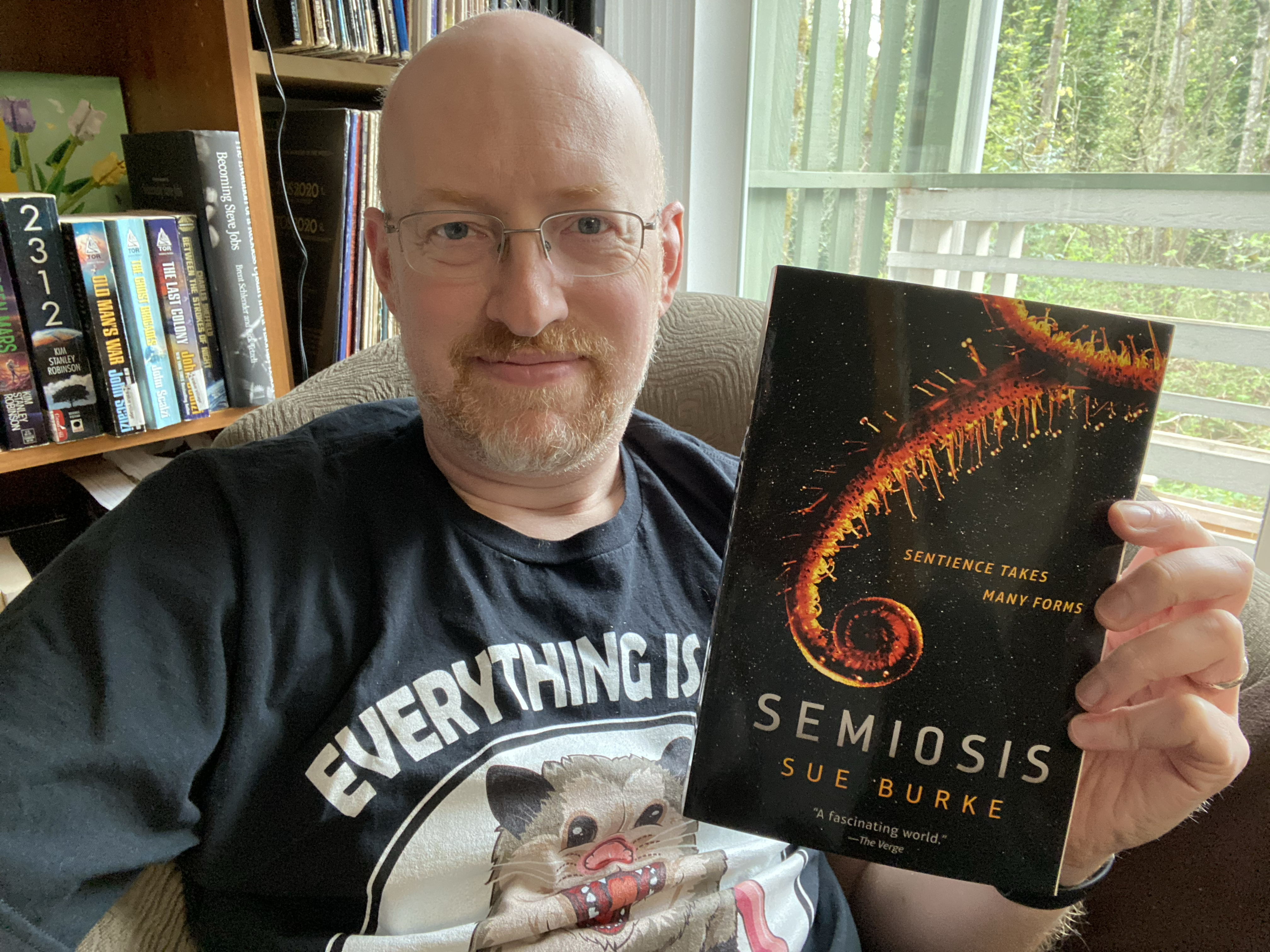
23/2023 – ⭐️⭐️⭐️⭐️
Fascinating story of colonists struggling to survive on a new planet and working to communicate with the intelligences already on this world. Rather than a single central protagonist, the first few chapters are almost individual standalone stories, jumping a few decades at a time, before events accelerate towards the latter half of the book into a somewhat more traditional narrative. Really neat ideas on how very different species might find ways to communicate with each other. Enjoyed this enough that I just ordered its sequel.
Washington’s COVID-19 exposure notification app to end May 11:
Washington’s COVID-19 exposure notification app is scheduled to conclude May 11 in tandem with the end of the Public Health Emergency.
Sigh.
Admittedly, I have no idea what the backend costs (monetary, time, employee hours, etc.) for this system have been. It’s (theoretically) possible that things have slowed down enough that the cost/benefit ratio has shifted. But it still feels like one more sign that we’ve just…given up.
Since its launch in November 2020, approximately 235,000 participants confirmed a positive test result in WA Notify. This “successful, lifesaving,” app, as the state describes it, has generated more than 2.5 million anonymous exposure notifications, preventing tens of thousands of COVID-19 cases.
Washington was one of the first states to implement exposure notification technology and consistently had one of the lowest COVID-19 death rates in the country, despite also being host to the earliest known domestic case of the virus.
Boy, all of that sure sounds like something you’d want to keep going, doesn’t it?
After May 11, DOH encourages people who test positive for COVID-19 to tell their close contacts that may have been exposed to the virus.
Which I’d expect most (responsible) people have been doing already, but this takes out a key way of letting me know if I’ve been around someone who tested positive but who isn’t a close contact.
Few, if any, places bother checking or requiring vaccines anymore. Masking exists somewhere between “encouraged” (if you’re lucky) and “tolerated”. And now this. Just one more step.
And the worst part is that if we’d handled all of this better over the past few years, I might be able to look on these shifts as positive signs that things were actually improving. But I just don’t have that level of trust in our public health institutions anymore.
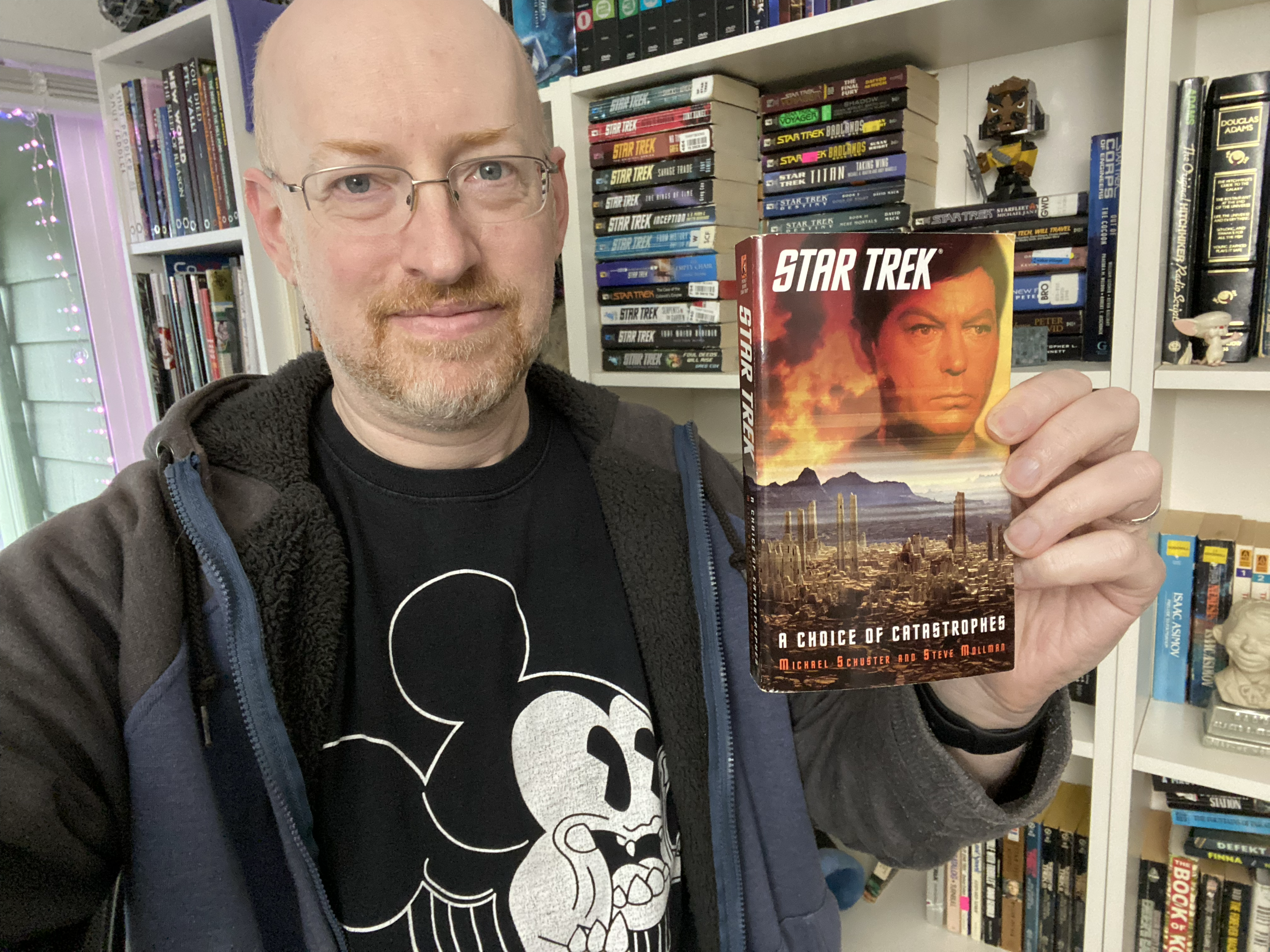
22/2023 – ⭐️⭐️
Much of the story focuses on McCoy being forced to deal self-doubt driven by his past mistakes. While it’s meant to be an exploration into McCoy’s psyche and history, it ended up just kind of dragging on and getting monotonous.
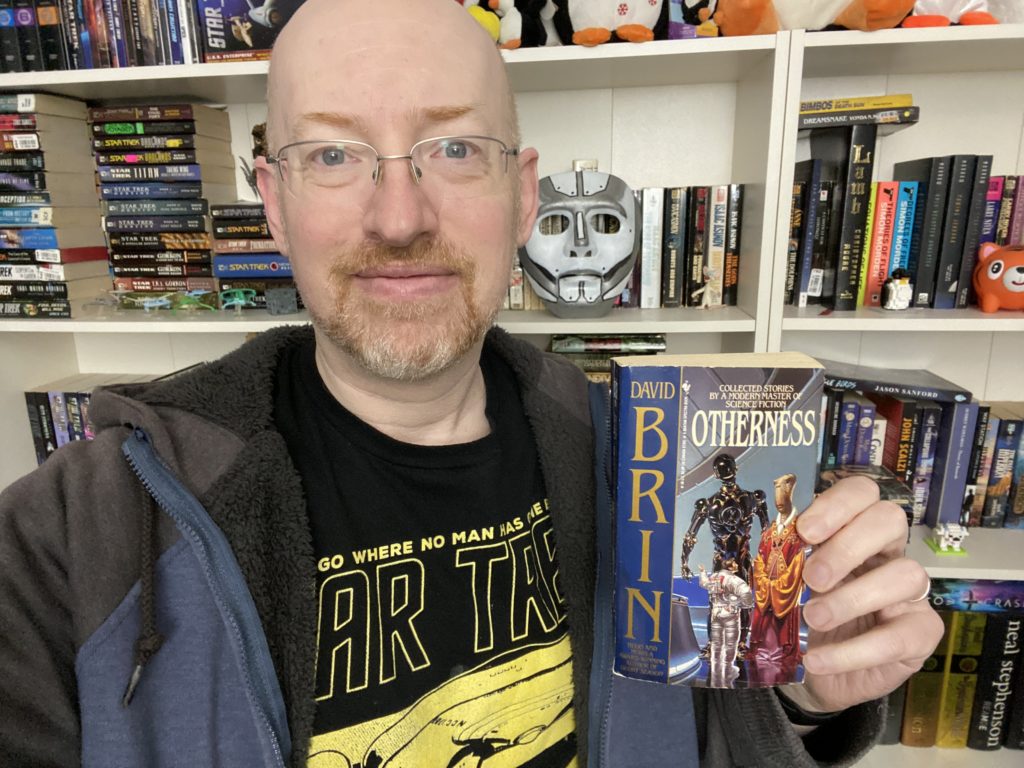
21/2023 – ⭐️⭐️⭐️
Not bad, but it as it turns out, I definitely prefer Brin’s novels to his short fiction. To my mind, he does better when he can really dive into something. His shorter works are missing a certain spark.
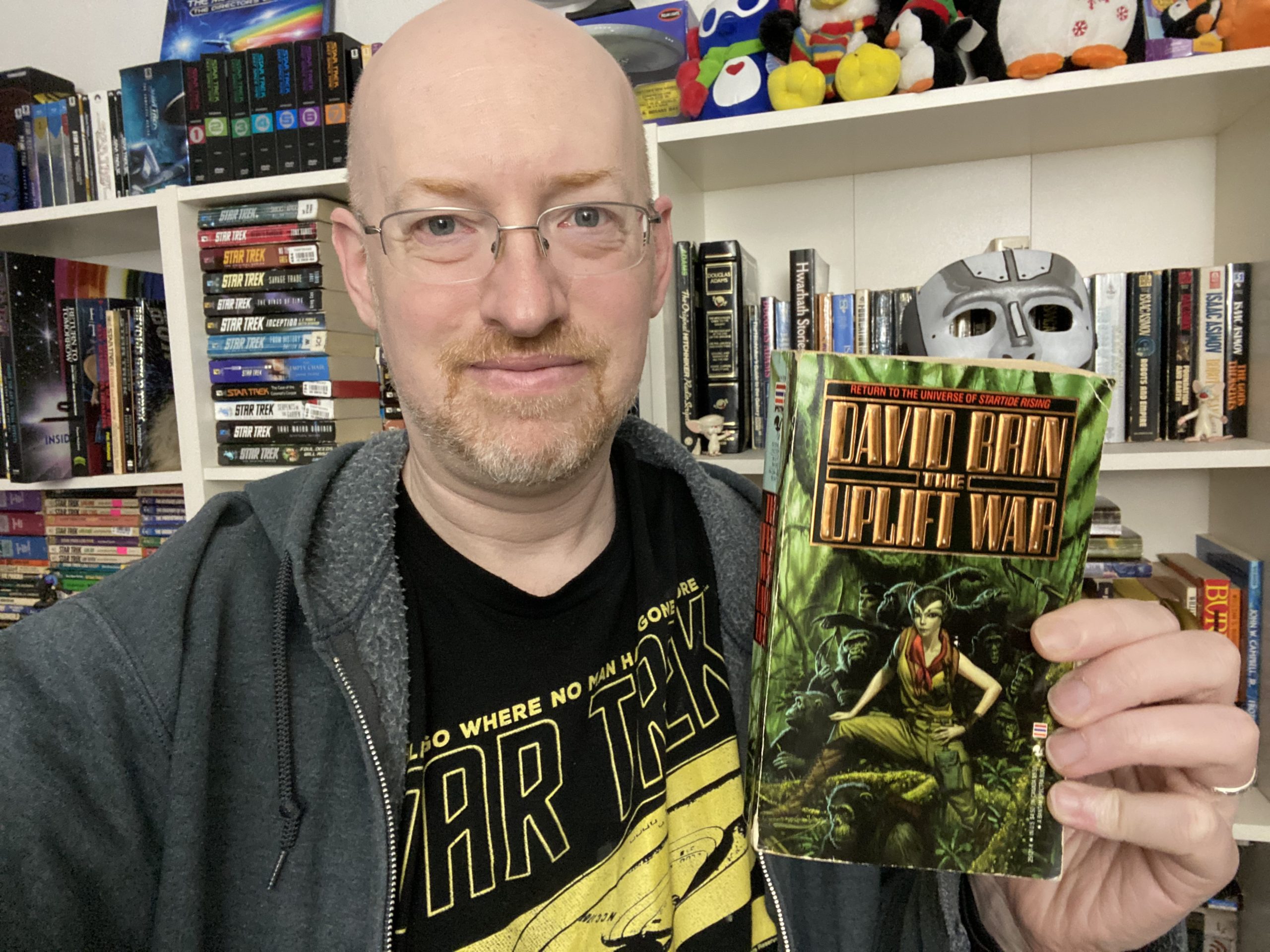
20/2023 – ⭐️⭐️⭐️⭐️ 1988 Hugo Best Novel
I find it kind of fascinating that Brin wrote his first three Uplift novels (particularly the second and third) as obviously connected and part of the same universe, but not directly continuing the story, even when the story is obviously unfinished. The events of Startide Rising are referred to and influence the events of this story, and the same overall mystery is a major driving element of both, but they’re otherwise unconnected. It’s a neat way to approach a very fully realized universe. I also really enjoy the way Brin creates aliens (both extraterrestrial and terrestrial) and other intelligences; close enough to human to be relatable, but also different enough to be alien. I’ve really enjoyed all of his first three Uplift novels, and one of these days plan to continue on to the second trilogy.
19/2023 – ⭐️⭐️⭐️
Not quite what I expected. There’s a pretty standard Trek adventure as a framing story (with a surprising connection to post-TOS Trek that I’m curious about), but it’s really more focused on Sulu and his having to deal with a tragic event. Not bad, just be aware the back cover blurb is a very small part of the actual plot.
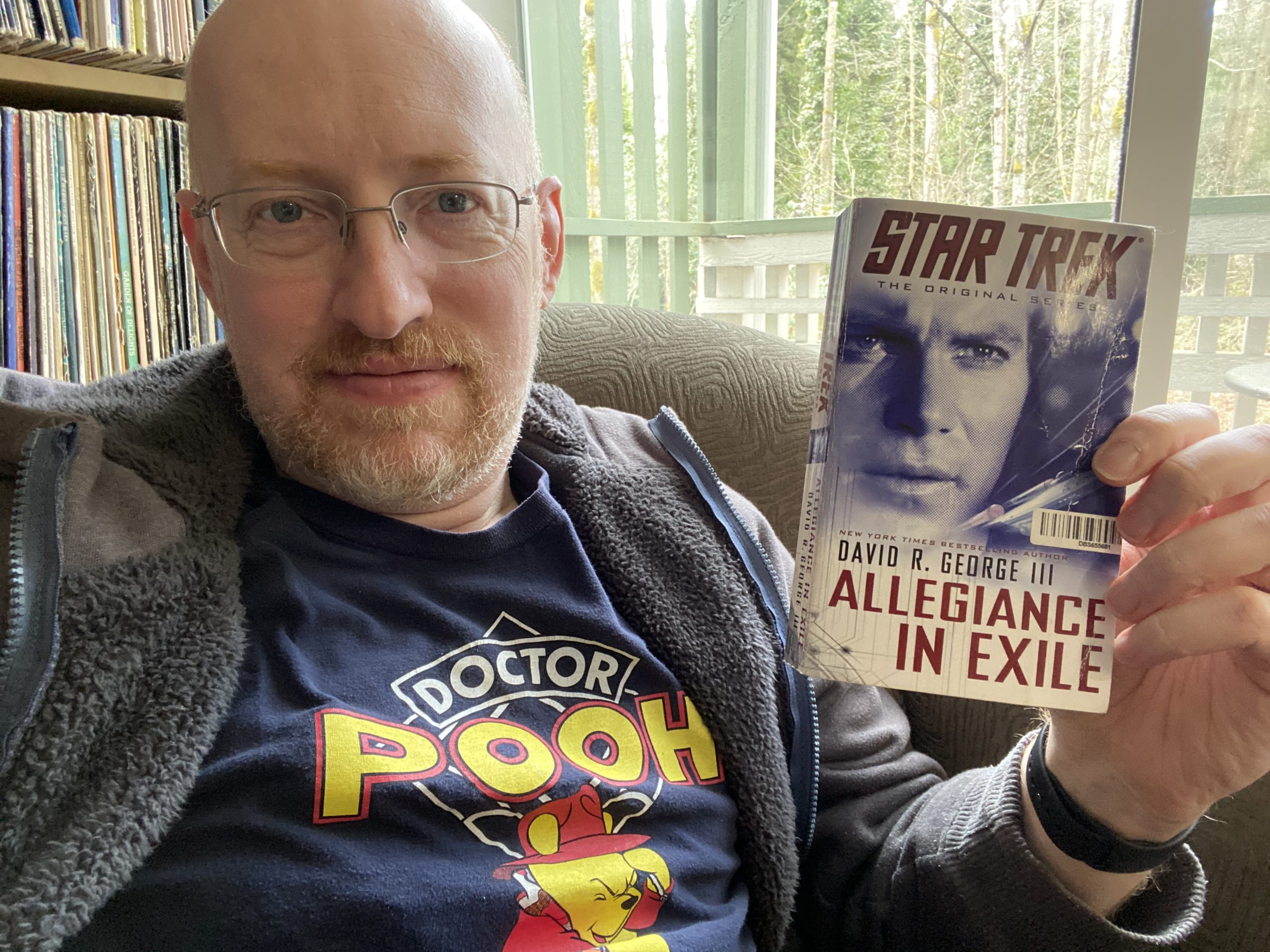
18/2023 – ⭐️⭐️⭐️
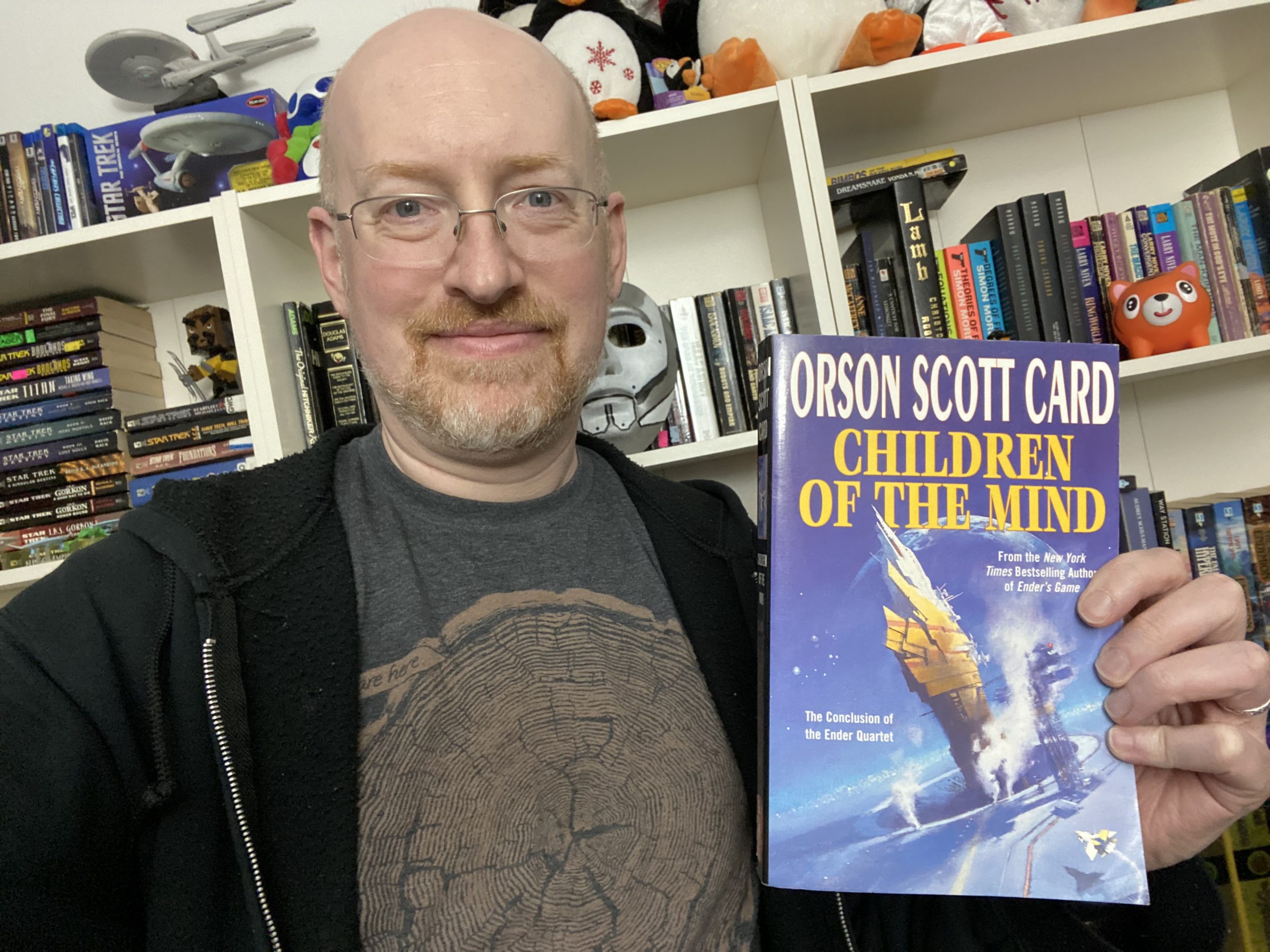
Not the strongest book in the series, but with a series this strong, that’s not at all a bad review. A good end to Ender’s story, and wraps up the various pieces in satisfying ways.
(That said, see my earlier disclaimers on OSC and his works. Extremely good writer, but one with rather unfortunate beliefs. While I’ve enjoyed reading through these, it’s time to move on to other authors for a while.)