(This was originally published on Facebook a few days ago in a slightly shorter form.)
Thanks to the world’s weirdest advertising campaign, we watched a dumb comedy that we’d otherwise have had no interest in. And in the end? Yes, dumb, but we’ve definitely seen far worse, and there were some laughs to be had (bracketed by moments of pushing gags too far, but then, we were expecting that). It was an acceptably amusing way to spend an hour and a half, leaving us neither enriched nor regretting the experience. It didn’t suck.
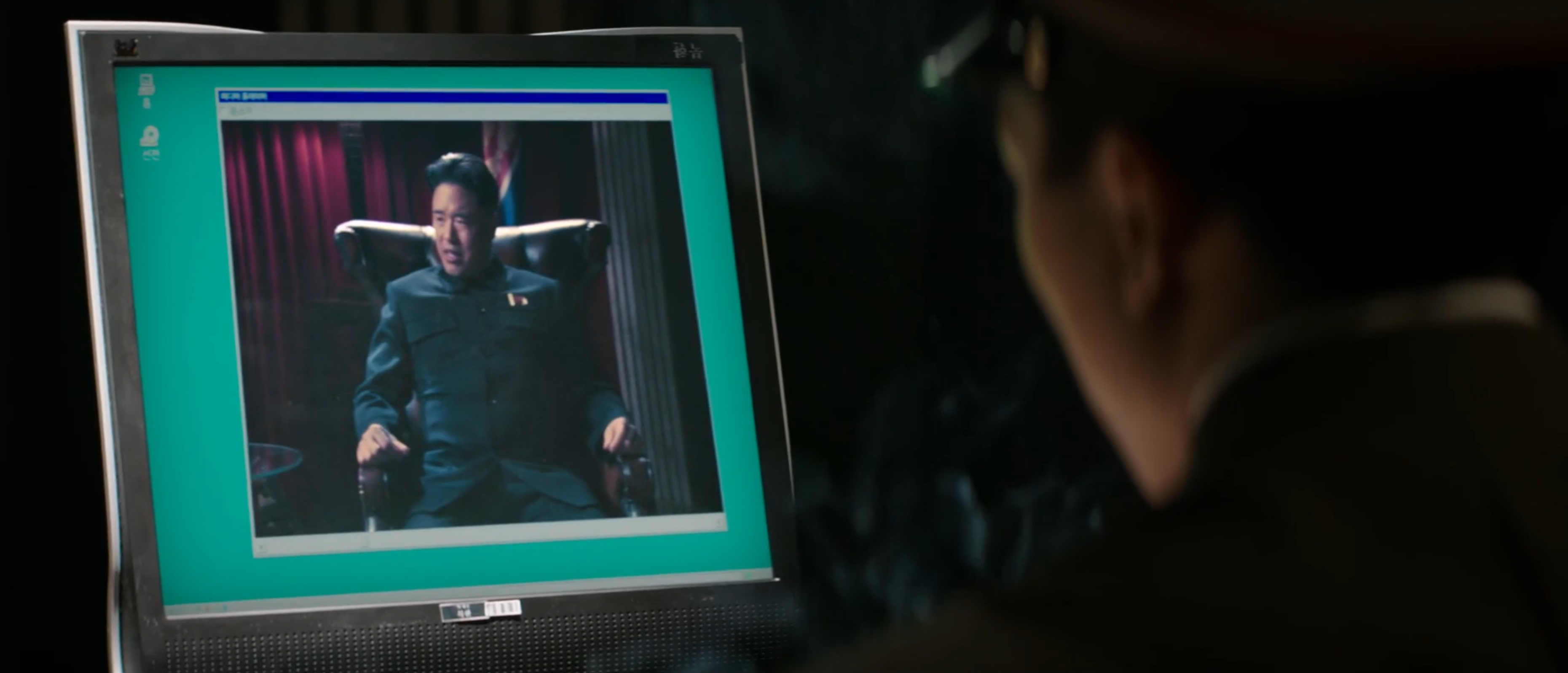
One of my favorite gags was one of the more subtle ones (which is likely why this genre of comedy isn’t my usual thing, as subtlety doesn’t seem to be a major concern most of the time): the titular interview being watched by a North Korean guard on a PC running Windows 3.1.
Yay…more behind-the-scenes Trek geekiness! Only 1,000 printed, and mine is one of only the first 100 to come autographed. #startrek #trekkie #trekker #geek More info: http://creaturefeatures.com/shop/books/returntotomorrow/
So, the first full trailer (following the teaser from a couple months ago that was almost entirely clips from prior Pixar films) for Pixar’s next film showed up today. I’d been cautiously optimistic about this one, hoping for a change from the past, but after watching the trailer…I have concerns.
On the pro side, the main character is a little girl, something that’s been lacking in Pixar films until now, and the general concept looks like a very interesting one.
However, some things jumped out at me.
Stereotypes: Mom is caring, nurturing and interested in her daughter’s day, while dad is absentmindedly dreaming about sports and has to be prompted to show interest in his daughter. When prompted to actually interact with his family, his first thoughts are right in line with very typical male stereotypes: my wife wants my attention, so I must be in trouble; did I forget the garbage or leave the toilet seat up?
This leads directly to what to me is problematic language: “What is it, woman?!” Just…ugh.
Odd choices: When the promo material released so far highlighted the emotion characters inside the girl’s head, there was a nice 3-to-2 mix of feminine to masculine characters. However, all of the mom’s emotion characters are definitely feminine, and the dad’s are definitely all masculinized (with pornstaches, no less). Why do their characters get uniformly gendered while the girl’s are a mix? I suppose it could be commentary on gender being still somewhat unformed in a pre-pubescent child and settling later in life, but that seems a bit much to expect of a Pixar film.
I had hopes, Pixar, and they weren’t even that high. And yet, I don’t think you’re living up to them.
Last Christmas, Prairie got me the 50th anniversary James Bond collection, and over the year, we worked our way through the entire canon, all the way through Skyfall. On the whole, Bond movies are a lot of mindless fun (some more mindless than others, to be sure), but boy does the quality vary. At the end, we were glad that we undertook this project after Skyfall was released, because it ended up meaning we went out on a high note.
We hadn’t been terribly impressed with the first two Daniel Craig films — Casino Royale took Bond too far to the modern, gritty style, and devolved into a nonsensical mess by the end; Quantum of Solace…well, I barely even remember what that one was even about — but we both felt that Skyfall was easily the best Bond film since Goldfinger (or, arguably, The Thomas Crown Affair). It was the first one in years that felt actually felt like a “real” Bond movie (that is, the Connery era) in the modern era: exciting action pieces, neat spy games, and an undercurrent of humor. Realistic without having to be ultra-violent or ultra-serious, and recognizing the inherent silliness of the spy genre without playing so far to that side that it devolves into farce (the Moore era).
So finding this quote from a two-year-old interview with Craig impressed me. It sounds to me like he and the team behind Skyfall had some of the same thoughts…
I think we set a good tone [in Skyfall], I think we set a real tone, but I am happy for fucking exploding volcano lairs. Obviously I am joking but what I love and what I really wanted to achieve with Skyfall was a level of fantasy, it’s one of the less violent ones, there’s less blood, and people aren’t dying in a horrible way, and it feels like much more of a family movie, and they should be family movies. I don’t want to go ludicrous and we’ve got to keep them in reality, but Christ almighty, the world’s fucking weird and there’s plenty we can start mining and taking out. If Blofeld turned up again, it wouldn’t be a bad thing.
Given the recent announcement that the next film is titled SPECTRE, this does sound promising indeed.
Snow White didn’t remember how she ended up in the forest. She remembered her stepmother’s huntsman leading her into the forest to gather flowers, and setting the flowers aside so she could speak with a lost bird. The next thing she knew, she was wandering alone, feeling colder than she had ever felt before.
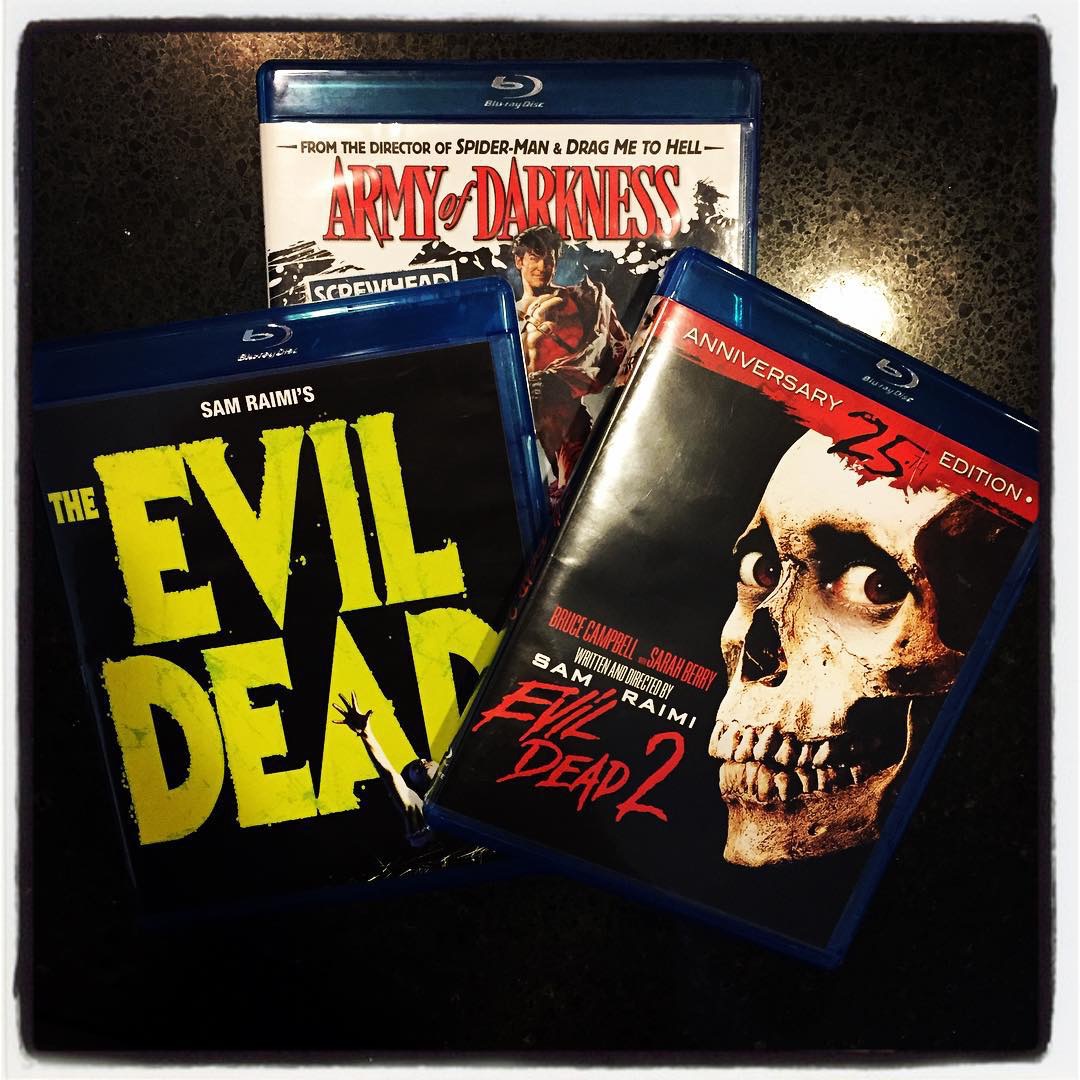
Just watched the red band trailer for the new Evil Dead remake/reboot. That is so not for me. I like the original with and because of its crazy low-budget camp, and love that they just ran with that for the rest of the series and went completely goofy. This new, ultra-realistic, ultra-violent, ultra-bloody take, even if it’s more in line with what they originally wanted to do, doesn’t appeal to me in the least.
I like my horror creepy and/or with a good dose of humor mixed in. Today’s trend towards ultra-violent torture porn just makes me feel ill.
Watched The Cabin in the Woods today. Crazy, and really good. Glad I hadn’t read any spoilers beforehand. http://t.co/rIngl2A3 #IMDb
Then just a few minutes ago, Prairie and I finished watching the fourth season of Dexter, and while the ending cliffhanger was upsetting, it was upsetting in the way a good TV cliffhanger should be, and we’ll definitely continue watching the series.
There seems to be some possible irony in all of that.
Honestly, I’m not entirely sure just where the boundary between “acceptable” and “unacceptable” violence lies for me. There were definite moments in The Cabin in the Woods that were more violent than I was really comfortable with, and Dexter occasionally pushes right up to the edge, but in both cases, I think there are three things that make the difference and keep me watching:
The stories are good. Even in the moments where the violence pushes further than I might like it to, I’m already invested enough in the characters and the plot that I’m willing to deal with the occasional cringe and “was that really necessary?” thought in order to continue with the story.
They don’t dwell on the violence. The acts, while necessary to the story, aren’t the point of the story, and as such, even when they’re shown on screen, it’s generally not a huge, long, drawn-out scene. It happens, there’s that moment of shock, and then they move on.
The violence is a part, but isn’t the point. I’ve seen other films (the first Saw film, for instance, which was two hours of my life whose only useful purpose was to convince me that I have no need to ever waste time on any of the rest of the series) that are truly deserving of the “torture porn” designation. The violence is the point of the film, and any bare minimum of plot is there only to move from one violent act to the next. Even films that aren’t part of the modern “torture porn” style of horror can fall victim to this kind of approach: For instance, part of why I didn’t think much of Tim Burton’s take on Sweeny Todd (which I’ve enjoyed on stage) was his insistence on showing every slit throat in loving closeup. Once would have been quite forgivable in order to get the point across, but I found the repeated shots of gaping bloody throats to be quite unnecessary.
Of course, there’s a lot of grey area in all of this, and the boundary between what works for me and what doesn’t is definitely very, very blurry. Sometimes it just boils down to the old cliché about the difference between erotic art and pornography: I know it when I see it.
One of the gifts I got for Christmas was the 50th anniversary James Bond collection on Blu-ray. Prairie and I have started watching our way through the series, and while it will take a while to get through them all, I figured I’d start ranking the films as we watch. Here’s where we’re at so far, in order by how I like them:
So I noticed something that amused me while watching Big Bang Theory the other night — apparently Sheldon has a holographic display on his laptop.
Obviously, some evidence in the form of screenshots is in order (all from Season 4, Episode 15, “The Benefactor Factor”, though I noticed this in Episode 14, “The Thespian Catalyst”, as well).
First up, a shot of Sheldon videoconferencing with Amy. This is mostly to set the scene, there’s nothing much to see here.
Sheldon videoconferencing with Amy.
Next, a POV shot of what Sheldon sees while sitting directly in front of the computer.
Sheldon’s POV while videoconferencing with Amy
Finally, here’s the shot that caught my eye — a shot over Sheldon’s shoulder.
Looking over Sheldon’s shoulder during the videoconference
Compare those last two shots. In the first shot, from Sheldon’s POV, we see Amy from directly ahead. She’s looking directly into the camera, as would be expected. However, in the second shot, she’s turned slightly to her right, giving us a slight profile shot (and while it doesn’t really translate in still shots, this isn’t because she was shaking her head or momentarily turned her head for some reason — she holds her head in this position through the entire shot).
The final impression is that as the camera switched from Sheldon’s POV to the over-the-shoulder shot, the perspective changed in our view of Amy, so that we see her from the same angle as if the two characters were speaking face-to-face rather than over video chat…but the only way that could happen would be if Sheldon’s computer had a holographic display!
With our normal, flat, non-holographic computer screens, of course, even when moving to the side of a computer screen, we would still see the other party looking straight into the camera…so we’d see the image something like this:
What real-world laptops would display
Of course, in the visual language of television, that looks odd. We expect characters to look at each other, and we know that Sheldon and Amy are looking at each other, so the technically correct shot seems a little odd, as Amy is still looking directly out of the screen, apparently at the viewer instead of at Sheldon. The solution, then, is to have her turned slightly to her right when filming those sequences so it still appears that she’s looking directly at Sheldon, even though it gives the somewhat amusing impression that Sheldon has a laptop far more advanced than any currently on the market (as does Amy, as she’d have to have a laptop that can both film and broadcast 3D video chat streams) — but then, would we really expect anything less from Sheldon Cooper? ;)
I have no idea how often this technique is used on other shows, as this is one of the few times I’ve noticed it. In fact, the only other time I can think of that I noticed this technique being used was in Star Trek (TNG comes to mind, though I can be relatively sure that it was also done this way in DS9, VOY, and ENT). However, in the Star Trek universe, it’s known (at least to the more geeky technobabble obsessed fans) that the main display screen on the bridge of the Enterprise is a holographic display, and it’s not that far-fetched to believe that the smaller displays might be as well, so the conceit was never as jarring when I noticed it there.
So…there’s my ridiculously over-analyzed geek moment of the day.