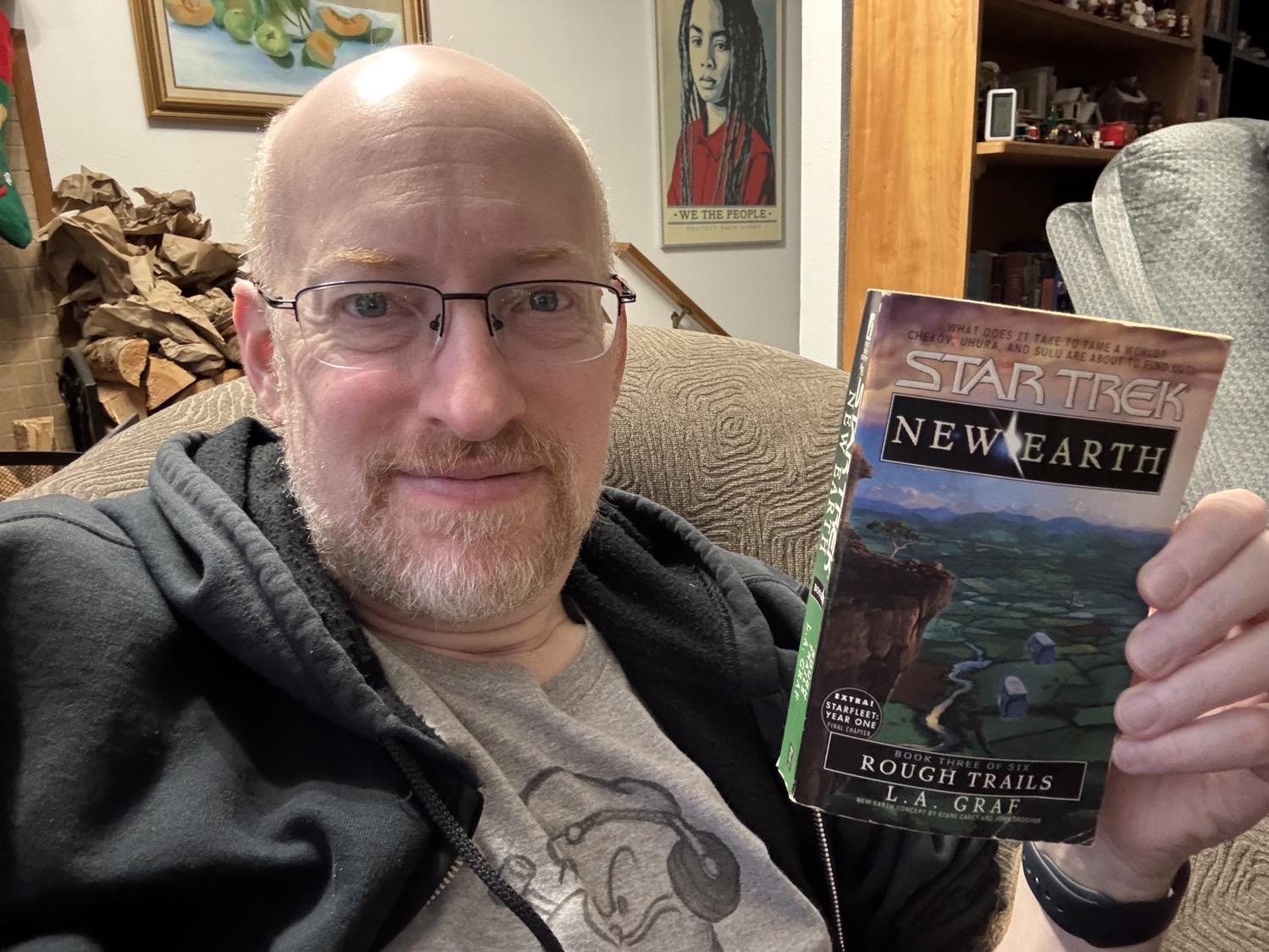
Colonization adventures continue on Belle Terre, as Sulu, Uhura, and Chekov deal with troublesome splinter groups and environmental aftereffects of the events of the prior book in the series. A solid mid-series entry, with a good focus on this secondary trio while the Enterprise is busy elsewhere.
This past week was, of course, Christmas week. One of the really nice things about working at Highline is that this entire week was designated a work from home week, and Wednesday and Friday (the two days on either side of Christmas) are considered “personal development” days, with a pleasantly broad definition of “personal development”. Email was monitored and work was done, but it definitely makes for a comfortably low-key week.
Our Christmas day was quite nice: Slept in as late as we could, had a fun breakfast of chocolate chip pancakes with chocolate-infused butter and chocolate whipped cream (there was a bit of a theme there…), a comfortable walk around the neighborhood, opening presents, and a lot of relaxing and reading.
📸 Photos
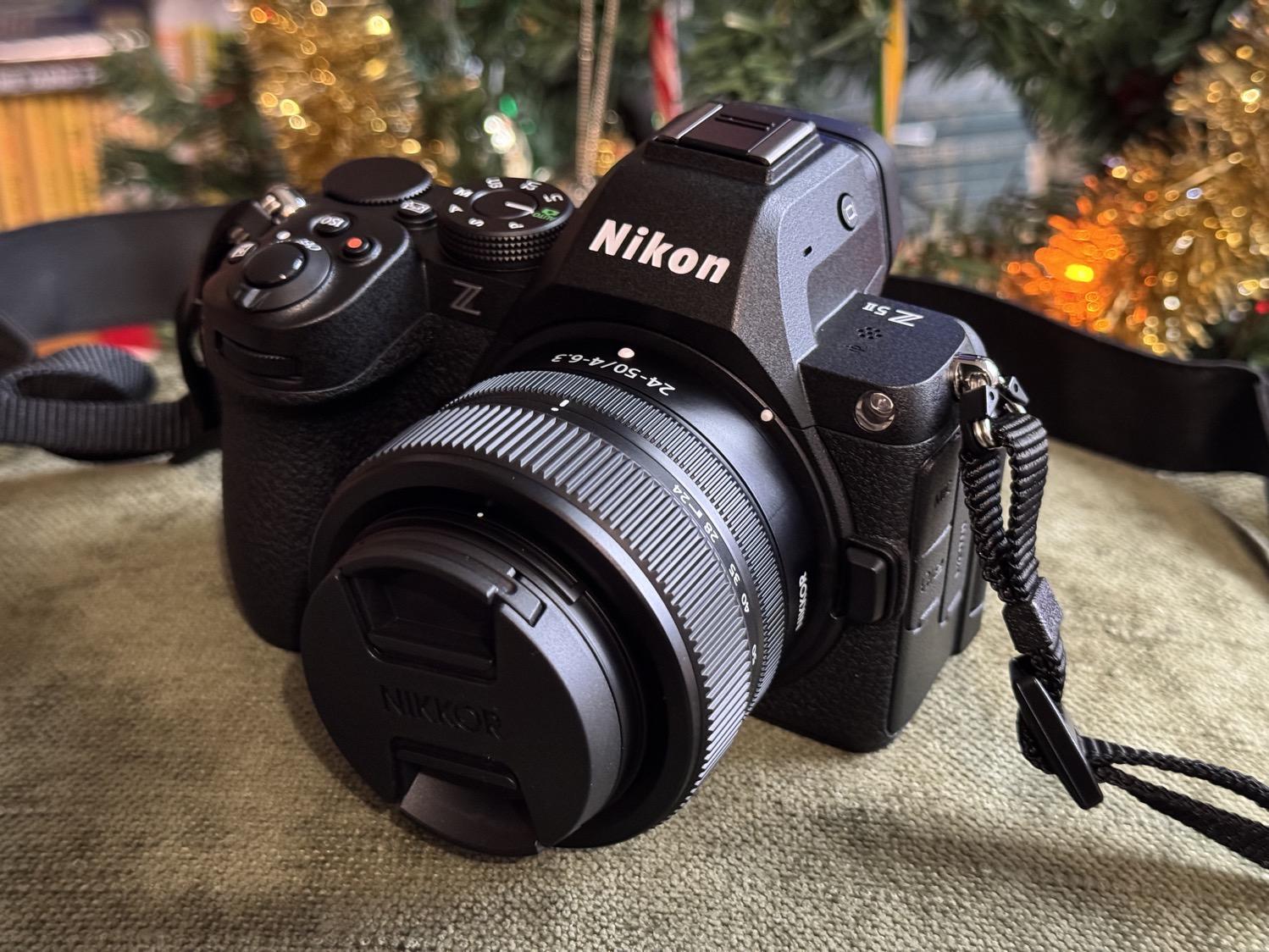
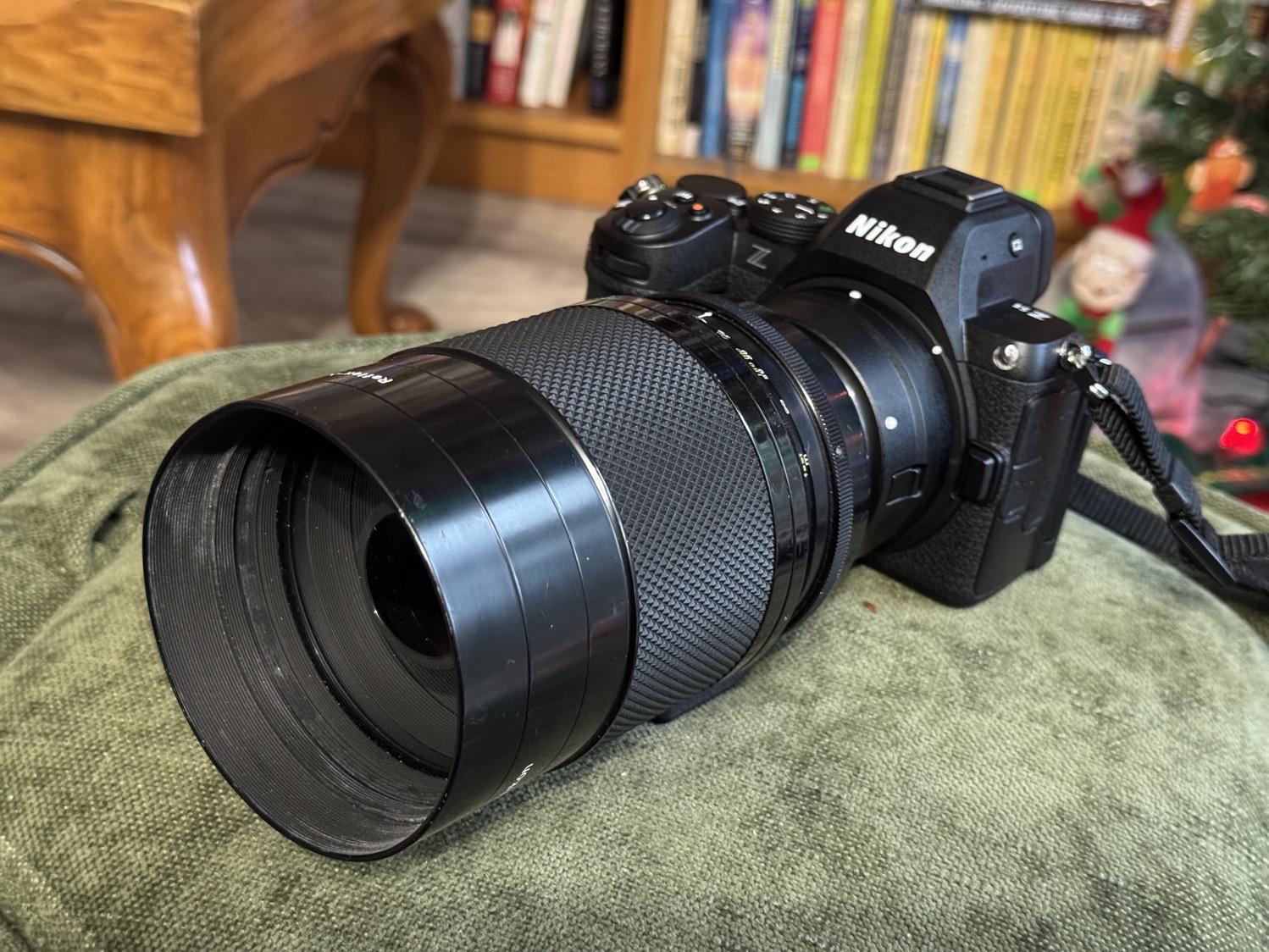
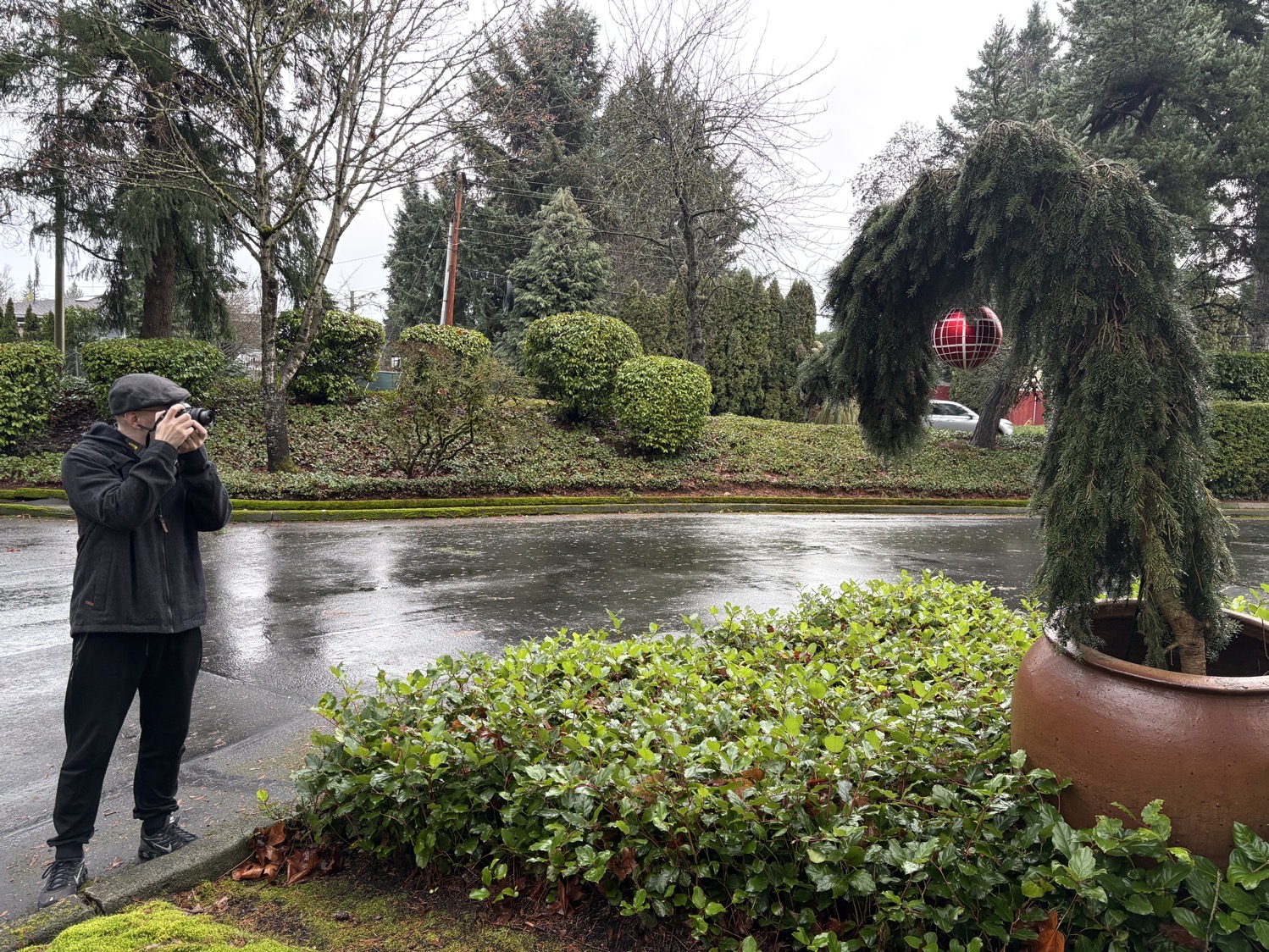
My big present this year was upgrading my camera to a Nikon Z5II mirrorless camera, with the 24–50mm f/4–6.3 kit lens and the FTZ II adapter to allow me to continue to use my existing lineup of F-mount lenses.I did make myself laugh by half-seriously wondering if the Z5II is still a mirrorless camera if I attach a 500mm reflex lens to it (if you’re unaware, this is a catadioptric or mirror lens which, as the name implies, uses a pair of mirrors to pack a long telephoto range into a physically short lens).Taking the new camera out for a first test run around our neighborhood. (Photo by my wife.)On Saturday we went up to the Seattle Art Museum, partly because it had been a few years, and partly as a good opportunity to take the new camera out for a spin. I posted a small set of photos from the museum to my Flickr account.
📚 Reading
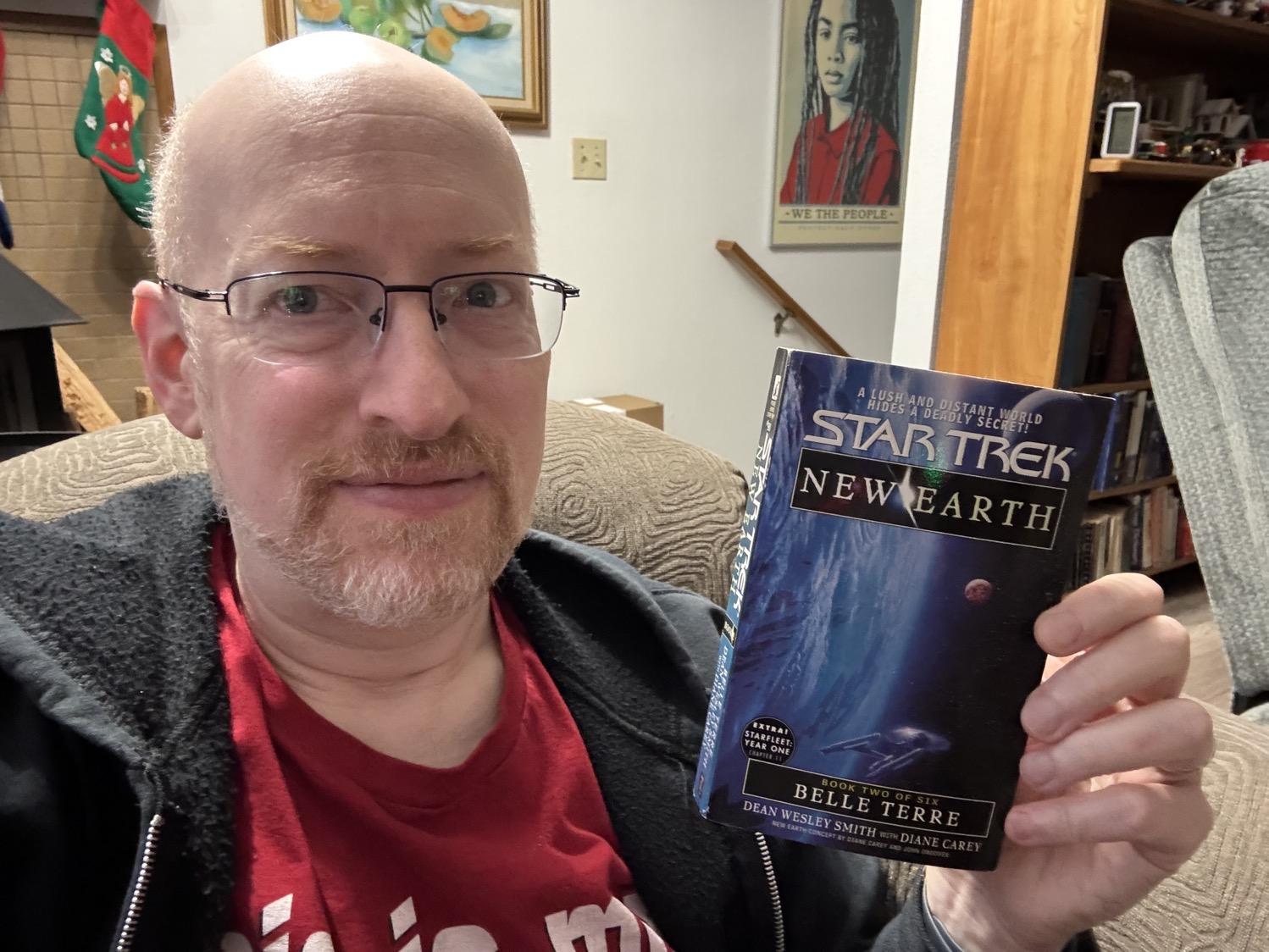
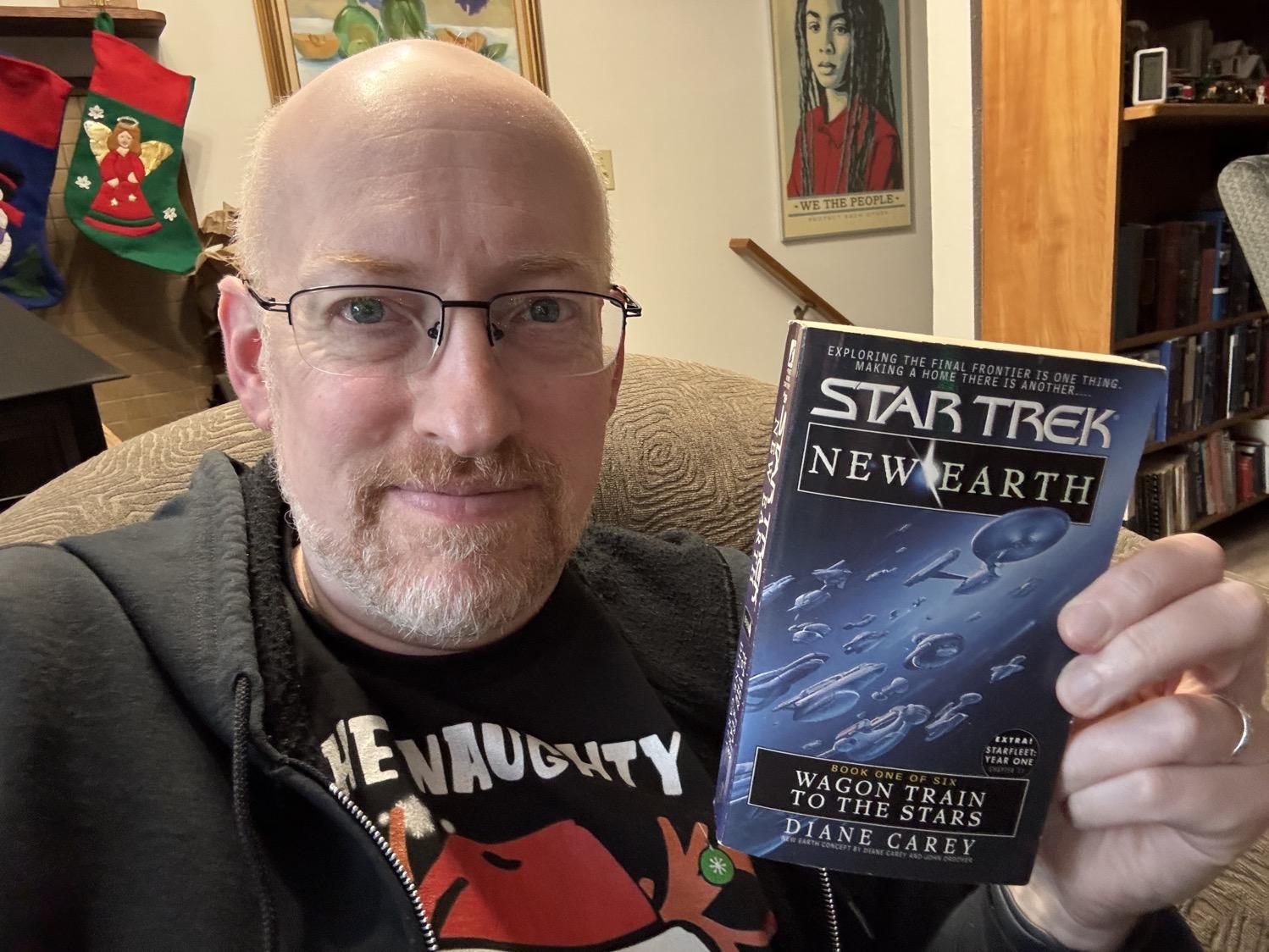
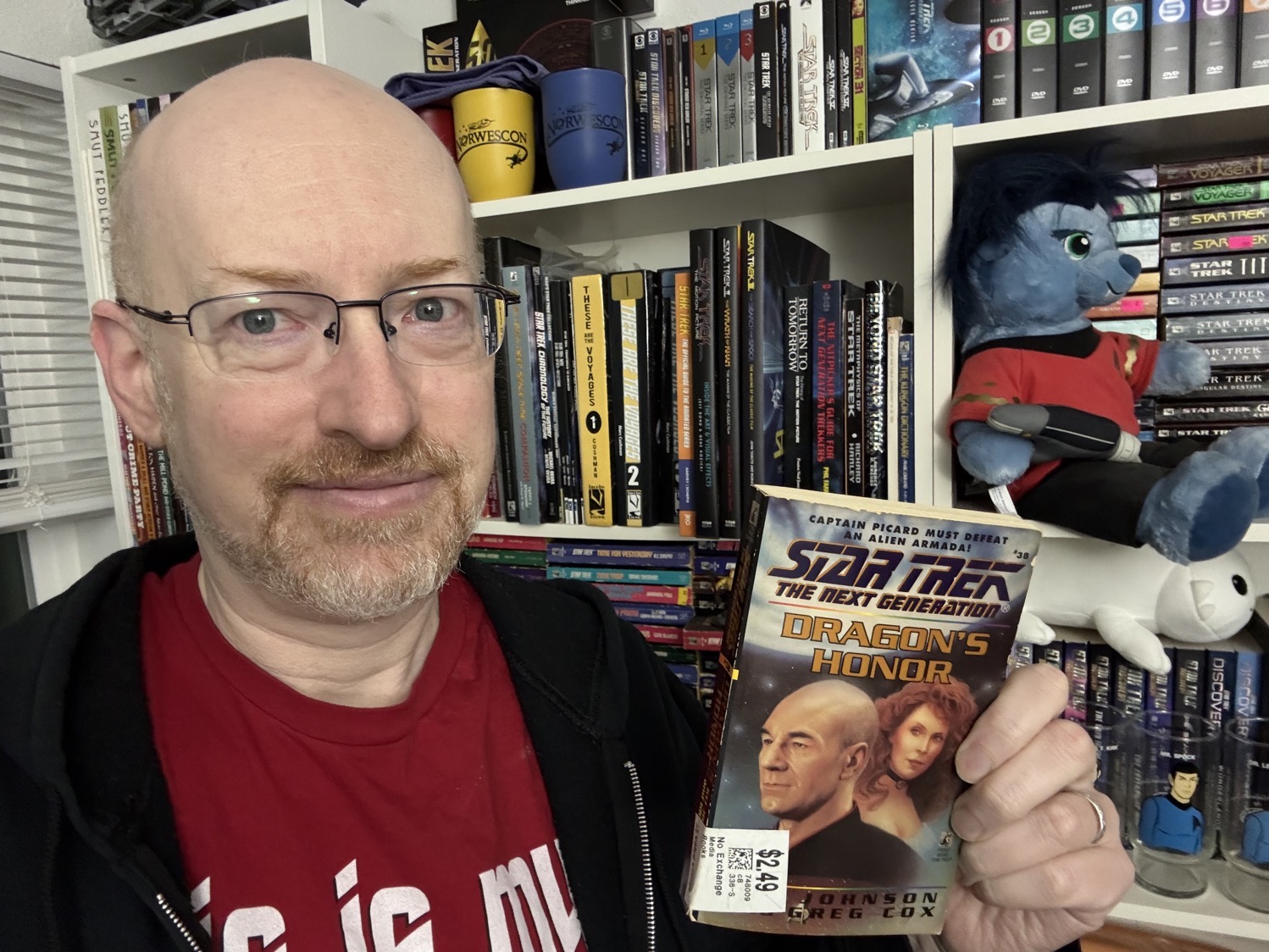
I’m on a bit of a Star Trek binge to wrap up the year. Last week (though I forgot to include it in my weekly notes) I read Kij Johnson and Greg Cox’s TNG novel Dragon’s Honor; this week I’ve been working my way through the TOS “New Earth” series, getting through the first two of the six books, Diane Carey’s Wagon Train to the Stars and Dean Wesley Smith and Diane Carey’s Belle Terre. I thought I might get through the third book in the series today, but didn’t end up making it.
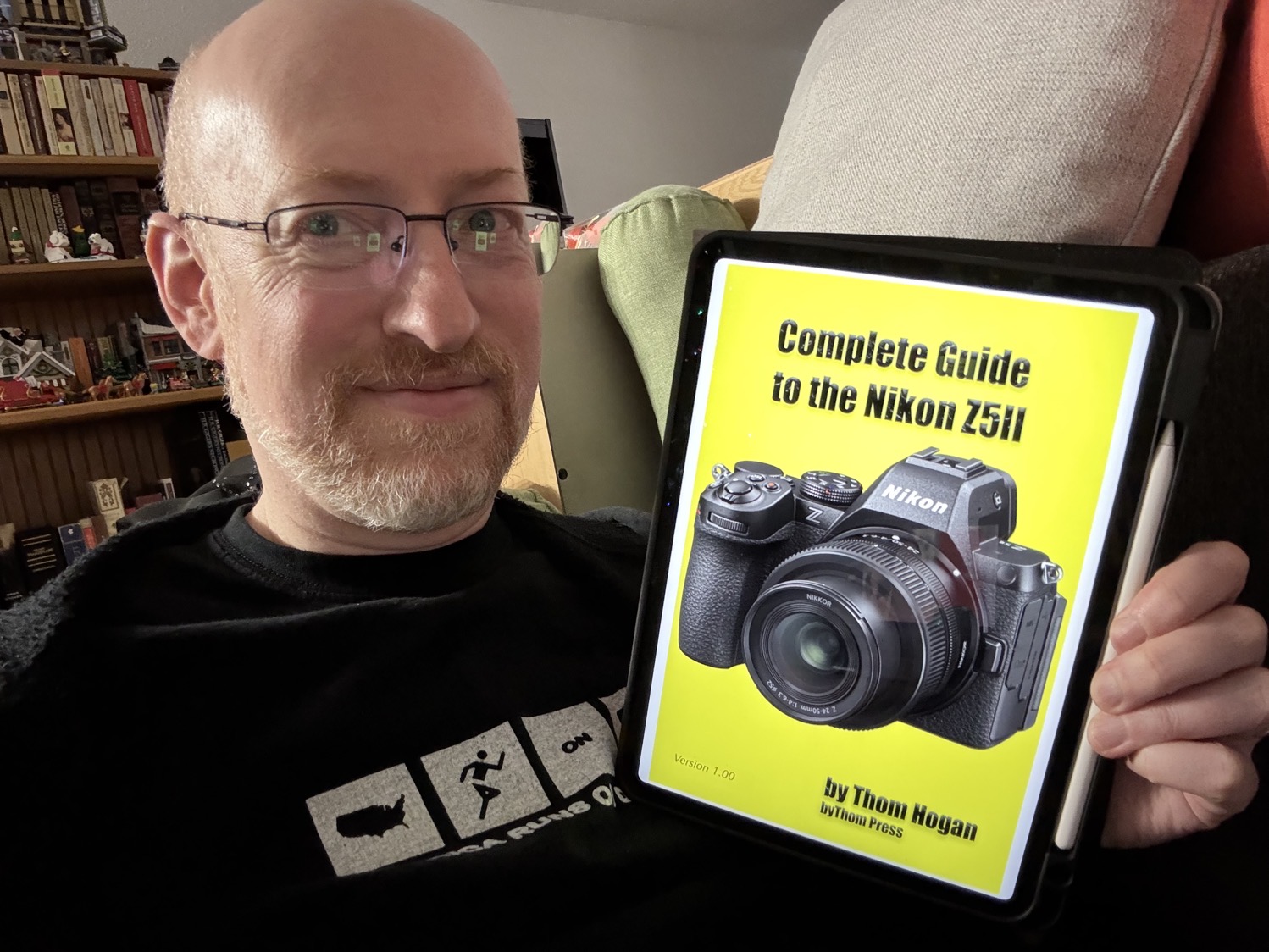
I also “finished” one I’ve been working on for a few months now (since this year’s major gift wasn’t a surprise), Thom Hogan’s Complete Guide to the Nikon Z5II. “Finished” is in quotes because as it’s something of a reference book, there were sections that I skimmed, and this is one that I’ll be sure to keep on my iPad to refer back to whenever I need.
📺 Watching
As befitting the season, we’ve binged our way through two seasons of The Great American Baking Show: Holiday Edition, which is just The Great British Baking Show but with American contestants. It’s a little jarring to be in the GBBS tent and hearing American accents, but it’s also really nice to see Americans in a competitive baking show actually being nice to each other (as is the standard for GBBS) rather than being snarky and rude to and about each other (as is the standard for, well, virtually every American reality show out there).
We’ve also watched several movies, two from the stable of holiday favorites, one new holiday favorite, and a couple that we’ve been looking forward to seeing. This week’s lineup was:
Violent Night (2022), which was new to us, but which we enjoyed more than we thought we would. It lives up to its title, but it’s a very fun holiday action/comedy.
Die Hard (1988), our annual Christmas Eve tradition (along with many others).
Fackham Hall (2025) has been on our radar for a while now, and it just became available to rent this week. It’s Downton Abbey meets The Naked Gun, and we laughed a lot — it will definitely eventually be going in our home collection once it’s available on physical media.
Wake Up Dead Man (2025), the latest Knives Out film, is excellent. Continues the twisty mystery fun of the prior two, and incorporates some really neat political and religious commentary as well. Rian Johnson is so good at what he does (I need to go back and watch Brick again at some point, too).
🔗 Linking
Walter Chaw at Film Freak Central: Avatar: Fire and Ash (2025): Absolutely devastating zero-star review of James Cameron’s latest “Dances With Ferngully” film. “The indigenous people, the Na’vi, are giant blue cats who literally meld with the natural elements on their planet, Pandora, through their naked mole-rat tails, and boast of a harmonious existence that nonetheless requires a warrior class because those are the two things indigenous people in white fantasies are allowed to be: ferocious warriors and children of the Earth.”
Randall Munroe’s xkcd: Funny Numbers: “The teens picked a new funny number.”
Ben Keough at The New York Times‘ Wirecutter: The First Nikon Z-Mount Mirrorless Lenses You Should Buy (archive.is link): Now that I have a new camera, though I can use (and absolutely will be using) my existing F-mount lenses, eventually I’ll be adding newer Z-mount lenses to my collection. Time to start dreaming!
Barry Petchesky at Defector: What Did We Get Stuck In Our Rectums Last Year?: The annual report! “This is the time of year to be grateful for not having things stuck in our asses, and to think of those less fortunate than us. So spare a thought for those Americans who misjudged the capacity of their own orifices.”
Infinite Ball Drop: “On New Year’s Eve, the Times Square Ball drops for only 60 seconds over a measly 139 feet. What if we extrapolated from that and covered the entire year?”
Robin Buller at The Guardian: How effective is protesting? According to historians and political scientists: very: “From emancipation to women’s suffrage, from civil rights to Black Lives Matter, mass movement has shaped the arc of American history. Protest has led to the passage of legislation that gave women the right to vote, banned segregation and legalized same-sex marriage. It has also sparked cultural shifts in how Americans perceive things like bodily autonomy, economic inequality and racial bias.”
Doug Henwood at Jacobin interviews Émile Torres: Tech Capitalists Don’t Care About Humans. Literally.: “…there’s also a kind of capitalist influence, the idea that human beings do not matter in and of ourselves. In this worldview, we matter for the sake of value, rather than value mattering for the sake of us. ¶ …we are just means to an end. The only end is value, this abstract yet quantifiable concept that should be maximized to the physical cosmic limits. We matter only as the conduits through which this value can come into existence.
Really, this kind of needs two ratings: Five stars for the content, and two stars for the editing. Thom is incredibly knowledgeable about photography and Nikon cameras, and this book is an incredible deep dive into the Z5II, how it works, why it works the way it does, what all those settings mean, and suggestions on how to get the best results out of the camera. However, as he has obviously (and quite transparently; he mentions some of this on his website) adapted large swaths of this book from very similar books on other cameras in Nikon’s Z series, there are a lot of instances where the shift from one camera to another wasn’t caught, leading to everything from the wrong camera model being mentioned to slight errors (I’ve not come across anything major or that would cause a problem, though). Still very worthwhile, and I’ll be sure to keep this easily available on my iPad so I can reference it whenever I need.
Having made it through saboteurs and alien conflicts, the colonists now need the Enterprise’s help dealing with a moon set to explode in a week. The setup sounds far-fetched, but works to keep the overall tension going, plus a few new mysteries are tossed in, sure to be addressed again later in the series.
An interesting start to this six-part series. Shortly post-V’ger, Kirk and the Enterprise guide a 70-ship convoy of 60,000 settlers to a new home six months away. Of course, things do not go well. Most interesting so far for its treatment of Kirk, somewhere on his road from the (perhaps overly) brash self-assurance of TMP to the depression of the start of TWoK, questioning his place and the effects of his career. The new alien races are interesting, as well. However, the primary antagonist is a little too one-note, and while “the Orions” are involved, I’m very confused by them, as they’re described in ways that don’t match the green-skinned humanoids we know as Orions (descriptive bits include: “…slimy muscular arm…”, “…arrowlike orange eyes…”, “…his many-fingered limb…”, “…his claw still tightened around [their] jaw…”, “…purple skin…”, “…turned burgundy with both fury and fear…”, “[his] excuse for eyes…those milky orbs…”). At some point in the editing process, those descriptions should have been corrected or they should have been given some other name than “Orions”.
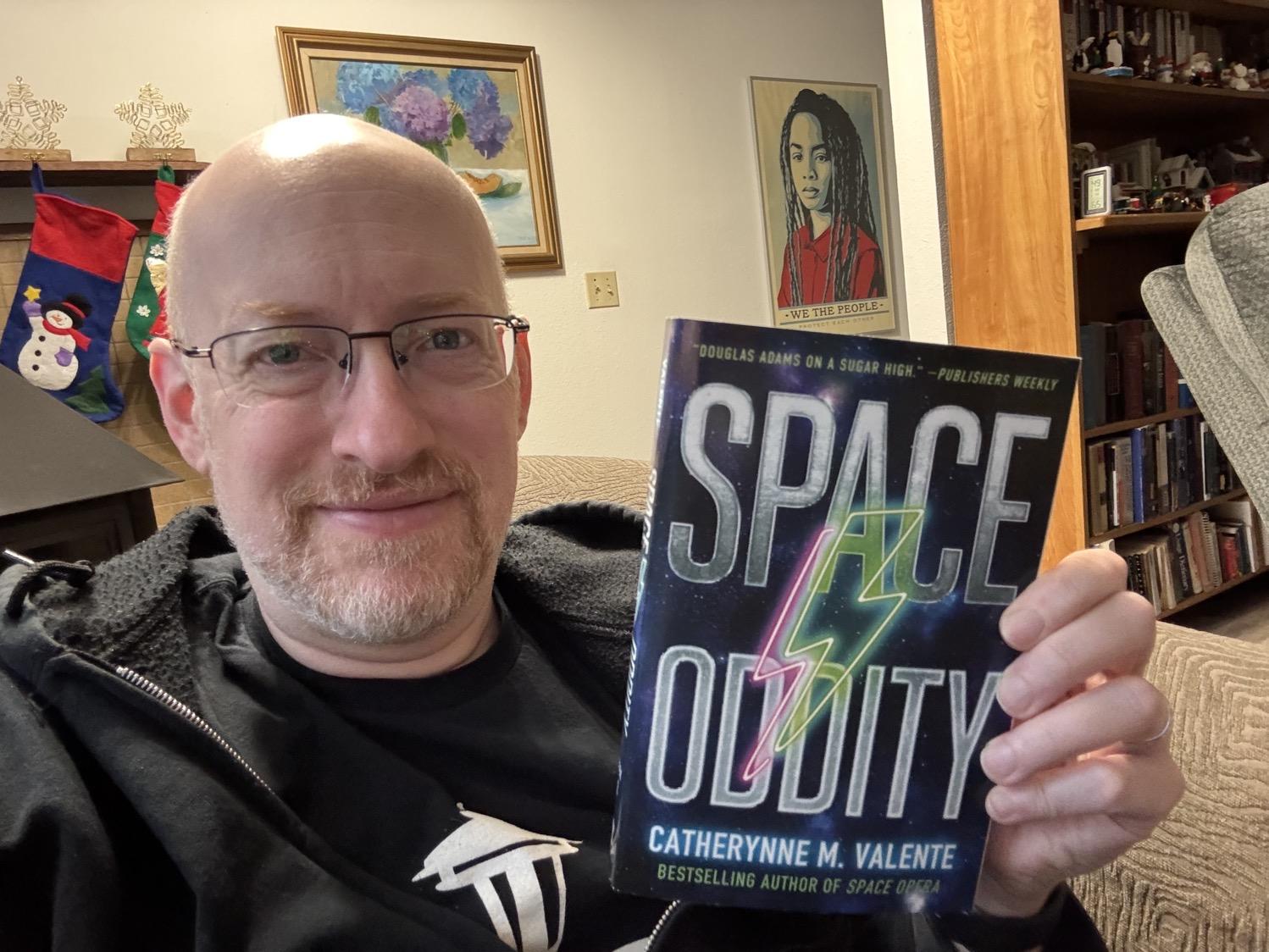
So much of this made me laugh, and it all wrapped up in an extremely satisfying way. Valente is a hilarious writer (the “Douglas Adams on a sugar high” quote on the book cover is spot on); my only disappointment (and it’s not with the book) is that I was busy enough at last spring’s Norwescon where she was a guest of honor that I barely crossed paths with her and didn’t get to say how much I enjoy her work.
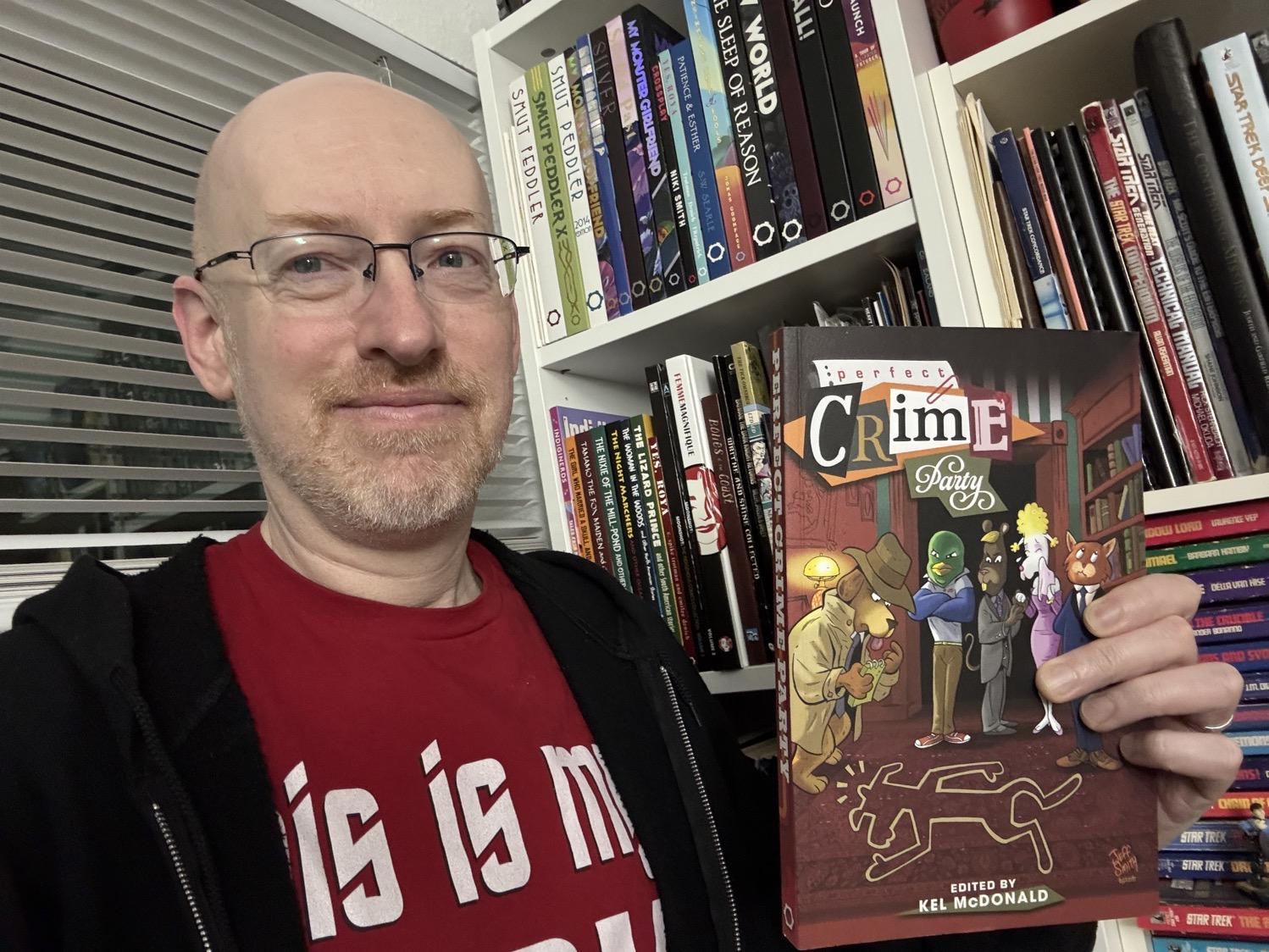
A fun anthology of short comics about crimes, capers, heists, whodunnits, and the like. Nice blend of serious and silly, even some sci-fi here and there. My favorite was “The Plague of the Living Rest Benches” by Nathaniel Wilson.
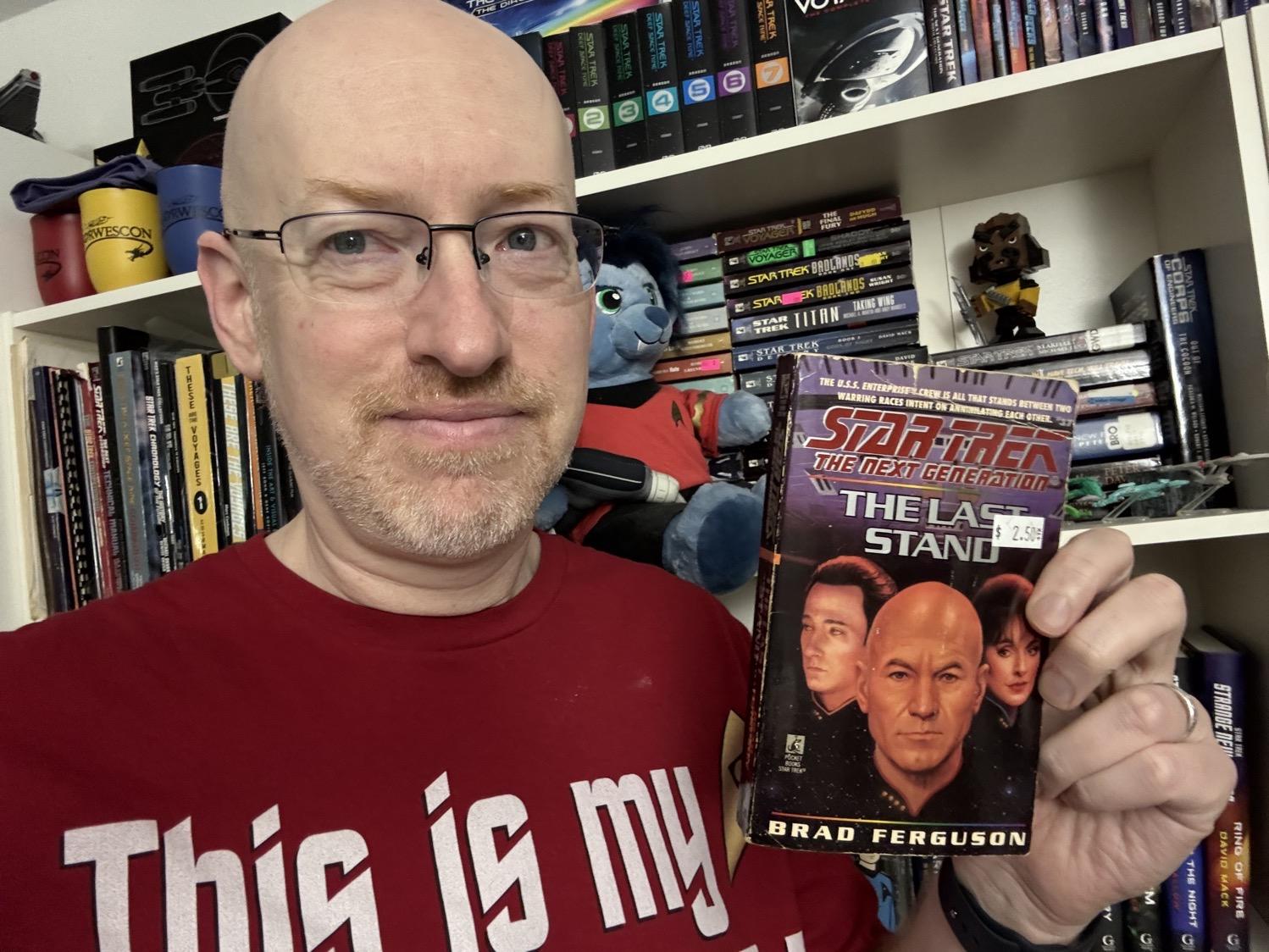
A promising setup, as the Enterprise finds itself caught between two factions of a pre-warp interstellar conflict, with one side unaware the battle was still going on as the other’s fleet slowly approached. The antagonist is a little too one-note Evil Leader, though, and I question a society holding onto a 6,000-year grudge. Still, a nicely average Trek adventure.
This, of course, was Thanksgiving week here in the U.S., so it was a three-day work week followed by a four-day weekend…which, really, is just how it should be every week, isn’t it? We did our usual thing of staying home and avoiding holiday travel, having a nice quiet holiday weekend of resting, munching on good food, reading books, watching a couple movies, and bringing out the Christmas decorations.
📸 Photos
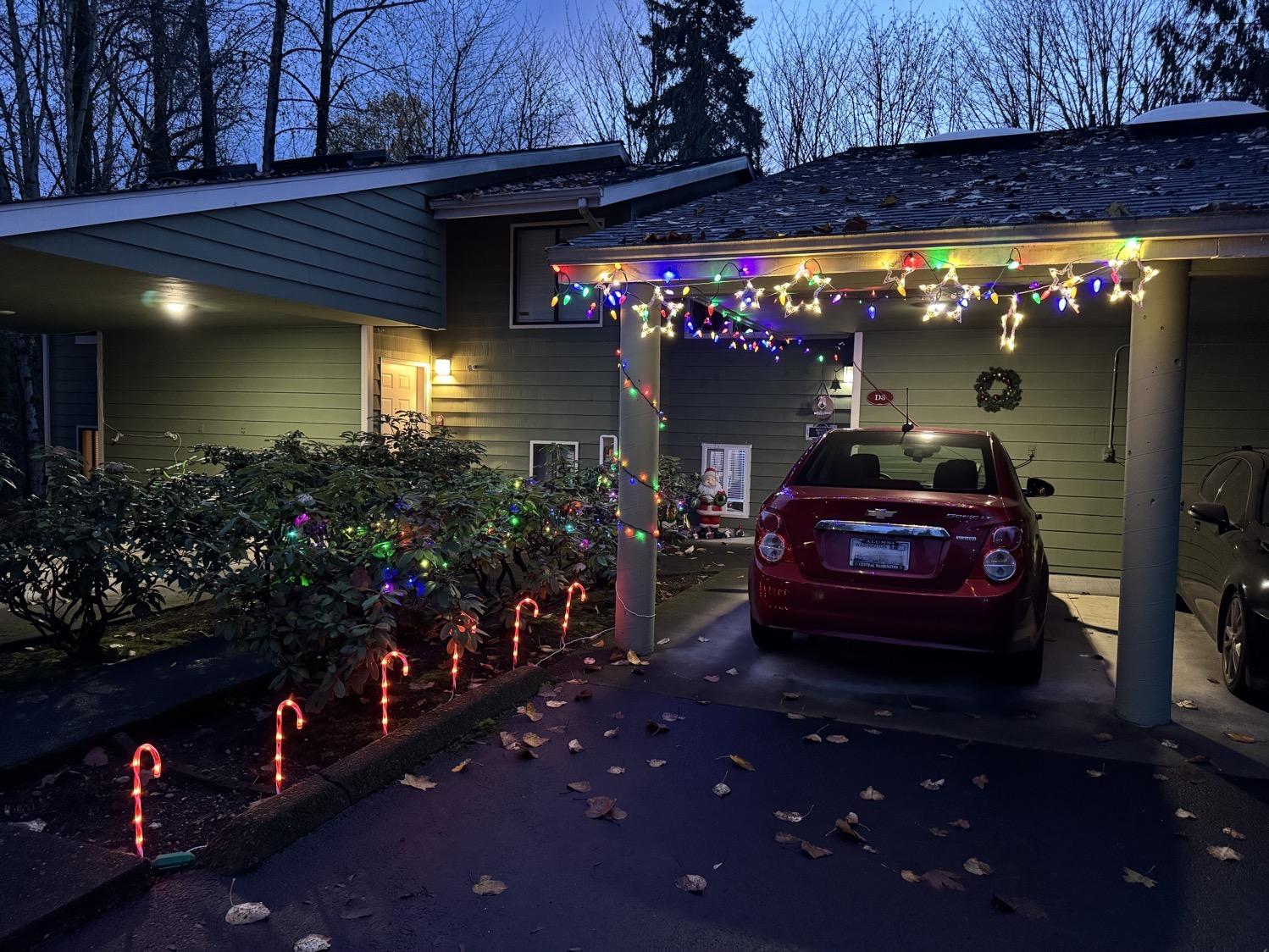
Our winter holiday LEGO village, with an ever-growing collection of creepy Santas.We’d already done our holiday shopping, so our tree is already all decked out with presents. We’ve also discovered that reusable cloth bags are much easier to deal with than wrapping paper!Out outdoor gnome corner has been refreshed again with the Christmas collection.All lit up out front as well, as always.
📚 Reading
I finally finished Jonathan Strange & Mr Norrell, which I’d been slogging through for over a month. Had it not been part of my Hugo Best Novel reading project I’d probably have given up midway through, but I’m stubborn. This just was not my kind of book.
📺 Watching
Planes, Trains and Automobiles (1987) ⭐️⭐️⭐️: Amusing, but not a regular tradition; it kind of drags on. It was fascinating seeing and remembering what travel (and dealing with travel problems) was like in the mid-80s, without cell phones, internet reservations, ATMs, and similar modern conveniences.
Edward Scissorhands (1990) ⭐️⭐️⭐️⭐️: Still excellent. Also, and amusingly, while it was all very Tim Burton, and being in the mansion on the hill was like being in Burton’s head, many of the scenes in the town struck me as having nearly a Wes Anderson feel. More saturated, of course, but there was a lot of symmetrical framing of shots and stylized dialogue that were very reminiscent of Anderson’s films.
🔗 Linking
David Roskin in The Guardian: Hollywood’s dark era: where did all the colour from movies go?: “We all know the late-night slog of finding something to watch, flicking between streaming services until settling on a series someone mentioned at work. And then a few minutes later, you’re squinting, adjusting your lighting or playing around with TV settings – it’s a night-time scene and you’re unable to make out what’s going on. Prompting the question: ‘When did everything on screen get so dark?’”
Alexa Peters at KNKX NPR: Local businesses reconsider live music as licensing fees soar: “PROs are companies that represent songwriters, composers and music publishers and collect royalties from the live performance of their copyrighted works on their behalf. Per U.S. copyright law, any establishment that presents live or recorded music must obtain a “Public Performance License” from a PRO to legally use copyrighted music they represent for performances, overhead house music, jukeboxes, and even karaoke. ¶ For years, this relationship between venues and PROs has gone on behind the scenes as a necessity of live music presentation. But, as more PROs have emerged, and rising costs make it more difficult for grassroots music venues and third places, like restaurants, to keep live music going, PROs are drawing more scrutiny.”
Brian Merchant in The Atlantic: The New Luddites Aren’t Backing Down (archive.is link): “Now, with nearly half of Americans worried about how AI will affect jobs, Luddism has blossomed. The new Luddites—a growing contingent of workers, critics, academics, organizers, and writers—say that too much power has been concentrated in the hands of the tech titans, that tech is too often used to help corporations slash pay and squeeze workers, and that certain technologies must not merely be criticized but resisted outright.”
T.M. Brown in The New York Times: They’re Trying to Ditch Their Phones. Their Methods Are Unorthodox. (gift link): “The Lamp Club is part of a growing ecosystem of ‘neo-Luddite’ groups across the country that encourage people to transform their relationship to technology. Other groups include the Luddite Club, APPstinence and Breaking the (G)Loom — organizations that, for the most part, were started not by parents wishing their teens would get off their devices but by the teens themselves, who fault phones for fraying human connections as well as accelerating inequality and climate change. There are now more than two dozen Luddite Clubs in North America, from Ithaca, N.Y., to Irvine, Calif.”
Elizabeth Spiers: Requiem for Early Blogging: “The growth of social media in particular has wiped out a particular kind of blogging that I sometimes miss: a text-based dialogue between bloggers that required more thought and care than dashing off 180 or 240 characters and calling it a day.”
Josh Collinsworth: Alchemy: “The struggle that produced the art—the human who felt it, processed it, and formed it into this unique shape in the way only they could—is integral to the art itself. The story of the human behind it is the missing, inimitable component that AI cannot reproduce. ¶ That’s what I and so many others find so repulsive about generative AI art; it’s missing the literal soul that makes art interesting in the first place.”
Aaron Greenbaum at Slashgear: Legendary Sci-Fi Vehicles: How They Were Really Built: “If a producer wants a sci-fi vehicle to have a tangible presence and a sense of realism, they have to use a live, physical model. For larger vehicles or when cars and spaceships perform feats of fantastical daring, a miniature is often required, but when the vehicle has to interact with actors or live sets, it is usually built to scale using available parts. Here are 10 iconic sci-fi vehicles and how they were made.” Light on details, but still entertaining.
ableplayer on GitHub: “Able Player is a fully accessible cross-browser HTML5 media player.”
Rebecca Solnit at The Guardian: A year on from Trump’s victory, resistance is everywhere: “Resistance is everywhere, both geographically and in terms of the constituencies participating: civil society and civil servants; human rights, climate and environmental groups (who in many cases had plans in place before the election and hit the ground running when the new administration came in); religious leaders and institutions, elected officials at all levels from city councils to the US Senate, the military, lawyers and judges, educators and students, librarians, of course, medical professionals, journalists, editors and publishers, people in the arts. Of course there’s been shameful collaboration, submission and silence from many figures in most of these constituencies as well. It has been striking that the most wealthy and theoretically most powerful have, in this crisis, often been the first to surrender. It’s non-elites who have stood on principle even when it means taking risks.”
Nicholas Deshais at The Seattle Times: Light rail’s push to Federal Way gives students, workers front-door access (archive.is link): “Unless you were looking for it, Highline College used to be kind of hard to find, even when it was right next to you. ¶ Not anymore, thanks to the region’s growing light rail and its new Kent Des Moines Station directly across 99, which, not coincidentally, was almost called Highline Station. With the train coming, Highline reoriented itself to the east, widened the alley and renamed it College Way, demolished the ice cream shop and, in 2019, erected the Campus View building, which has retail and office space on the first floor and housing for 160 students on the four floors above. Two tall signs blare out the college’s name on either side of College Way, for any driver — or light rail passenger — who may be unaware.”